

Introduction
There used to be a common saying about how "the year changed, but nothing else did." That phrase is officially obsolete. Now, with all the AI, and constant product releases, something is changing almost every single day. Ready or not, they’re coming.
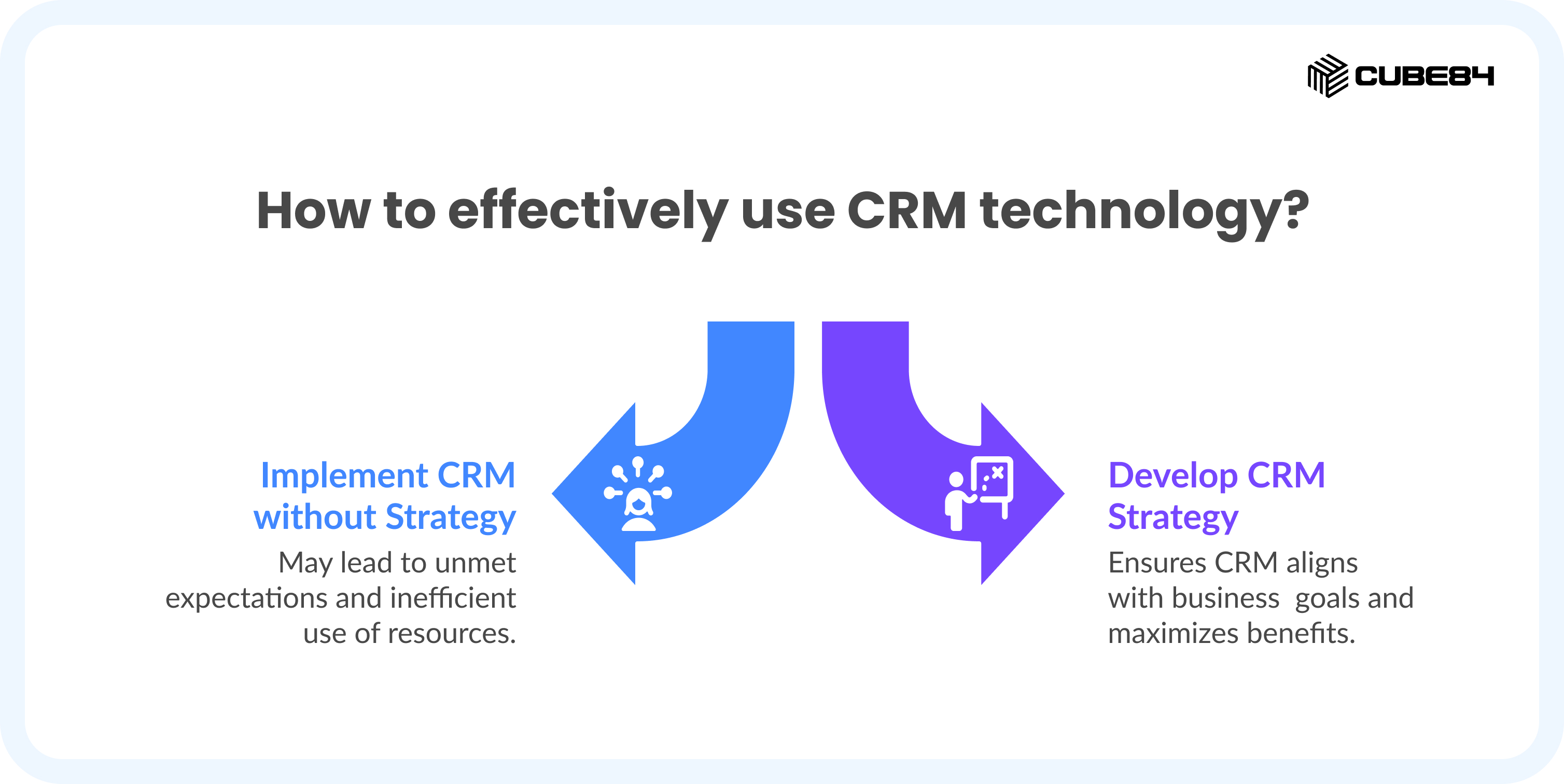
So no, we don’t judge you for buying a CRM, installing it, and then waiting for it to work the way it was promised. Most people were told it would. And from the outside, it probably looks like your job should be easier now, surrounded by all these tools that claim to automate, simplify, and scale everything you do. But you know that’s not the reality. Deep down, you know something is missing. Usually, that missing piece is strategy. When people ask us what we mean by CRM strategy, we usually say it’s planning. And almost immediately, they usually look at us and say that buying Salesforce and implementing it was the plan.
That’s the gap we want to talk about. And that’s exactly what this blog is here to answer.
Why Tool-First CRM Breaks at Scale
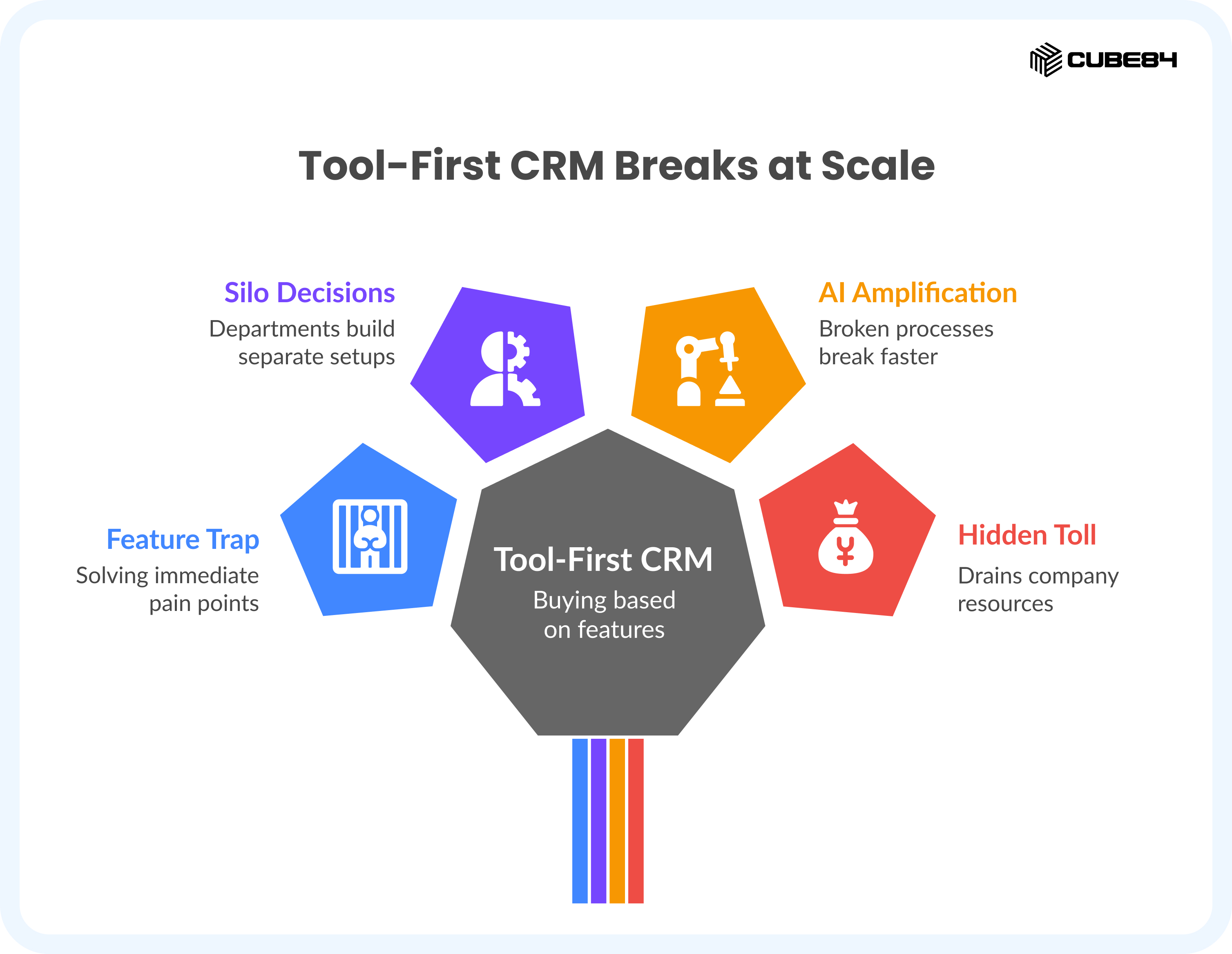
Looking at all the new releases and what these different tools offer, it is almost impossible to resist buying. That’s when organizations buy a CRM based on a feature list rather than an outcome and then fall into what we call the "Feature Trap." It is when you buy a tool to solve an immediate pain point without considering the whole ecosystem.
Even Salesforce itself highlights that a major cause of CRM failure over decades has been lack of a coherent CRM strategy, focusing on technology instead of people, weak executive support, and poor process alignment, not a lack of features.
We have seen this with platforms where the ecosystem is rich, the features are mature, and the promise is real. The orgs assume that capability equals readiness. If the feature exists, the org must be ready to use it, but why is CRM not effective, why isn't it working properly?
The feature trap
We politely disagree when someone just turns on Salesforce and tells us they implemented Salesforce. From what we've seen, what they really did was just configure it. Configuration is not intent. We see organizations buy the newest AI features, like Einstein, to score their donors. But because they never actually sat down to figure out the why behind it, nobody knows what to do with the system. If your team hasn't even agreed on what an active constituent looks like, the system is just guessing. It just sits there in pilot purgatory.
Silo-Driven Decisions
When different departments build their own little setups without talking to each other, things get messy fast. Your development team and your programs team might define the exact same constituent completely differently. Suddenly, you have ghost records and duplicates everywhere. What we usually see happen next is a total breakdown in trust. From what we have seen, the issue here is rarely a lack of effort. It is just a lack of alignment. If you never take the time to align those definitions at the strategy level, people will naturally stop trusting the data. They abandon the CRM, not because the software is wrong, but because the organization never actually decided what "right" was supposed to look like across the board.
The AI Amplification Effect
We always warn our clients that if your processes are broken, AI is just going to break them faster. We've seen so many teams automate workflows simply because the platform allows them to, not because it fits how their orgs work. Automations that were built on shaky assumptions now impact hundreds of records instead of a handful. When you automate bad logic, all you really do is make the mistake faster. What was once an occasional annoyance turns into a constant disruption, and the people closest to the work feel it immediately. Instead of helping, the system starts getting in the way. We will show you exactly how a blind automation rule can kill a relationship over a few dollars a bit later.
The Hidden Toll
The fallout from all this is quiet, but it is incredibly expensive. We always point out the hidden admin toll because it drains your entire company. On the front lines, Salesforce’s latest State of Sales report found that reps spend 60% of their week on administrative, non-selling tasks, leaving only 40% of their time to actually sell. Behind the scenes, your ops team ends up buried under data debt, fixing inconsistencies instead of doing actual strategic work.
And the absolute worst part we’ve seen? The executives eventually stop looking at the dashboards. When leadership stops using the CRM to actually drive their decisions and just treats it like a surveillance tracker, the whole project is dead. You simply cannot defend the ROI of a platform when the reports contradict reality and the leaders have checked out.
What CRM Strategy Actually Means, And Why It’s Commonly Misunderstood
The biggest mistake we see organizations make is confusing implementation with strategy.
When we talk about CRM strategy, we are not talking about configuration, feature lists, or how many clouds you turned on. That confusion comes up in almost every conversation we have. Someone will confidently say they have a CRM strategy because Salesforce is live, users are logging in, and dashboards exist. But that’s not strategy, that’s installation. In fact, more than 50% of companies say their CRM is underutilized because of this exact confusion.
So, what is this CRM strategy?
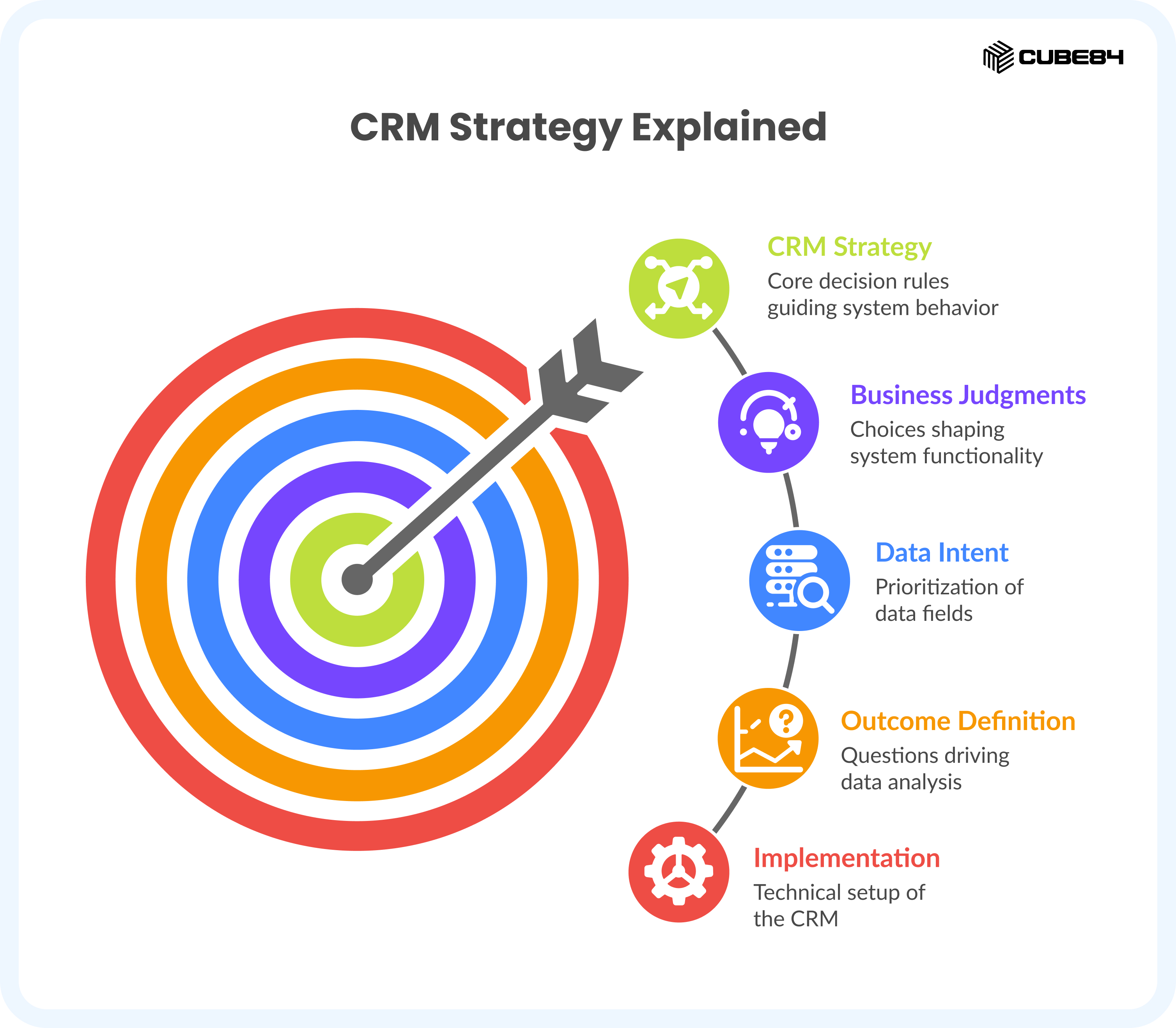
What we’ve seen repeatedly, and this came up very clearly in our internal discussions as well, is that implementation is about how something is set up, while strategy is about why it exists in the first place. Strategy is really a set of decision rules that defines how your organization thinks and translates that thinking into system behavior. It includes all of this information, like who gets prioritized and when, what gets automated and what absolutely should not, and where a human must step in even if the platform is capable of doing more. These are not technical choices, they are business judgments that just happen to show up inside a CRM.
One of the most practical ways we’ve learned to explain this is through data intent. Every CRM platform, including Salesforce, gives you the power to and suggests making almost anything mandatory, automated, or reportable. Strategy is what stops you from doing that blindly. At CUBE84, we use what we call the Data Intent Classification Model. Every field is assigned to one of three buckets: nice-to-have, good-to-have, and truly critical. Only the truly critical fields deserve any friction. Everything else should earn its place. When teams skip this step, CRMs will eventually turn into systems that demand effort without returning clarity, and users disengage long before leaders notice.
Another place strategy shows itself is in how outcomes are defined and interpreted. Out-of-the-box dashboards are generic by design. They show data, not meaning. Strategy begins when a business decides which questions actually matter and for whom. A sales leader, a mid-level manager, and an executive should never be looking at the same view and drawing the same conclusions. Without a defined reporting framework by audience, dashboards become noise, and teams stop trusting what they see, even when the data itself is accurate.
What surprised us early on, and continues to show up even now, is that many organizations assume strategy is something you document upfront and move on from. In reality, it often emerges during workshops, by getting to know your business and workflows better, requirements discussions, and early usage, etc. When real pain points surface and trade-offs become visible is when the intent becomes clear. That’s also when you start aligning sales, marketing, service, and operations around a shared operating model instead of disconnected workflows that technically work but fail together.
At its foundation, CRM strategy is simply this: a clear set of decision rules that tell the system how your business thinks. Without that, even the best tools behave like expensive databases.
With it, the same tools start acting like an engine.
The Problems Strategy Actually Solves
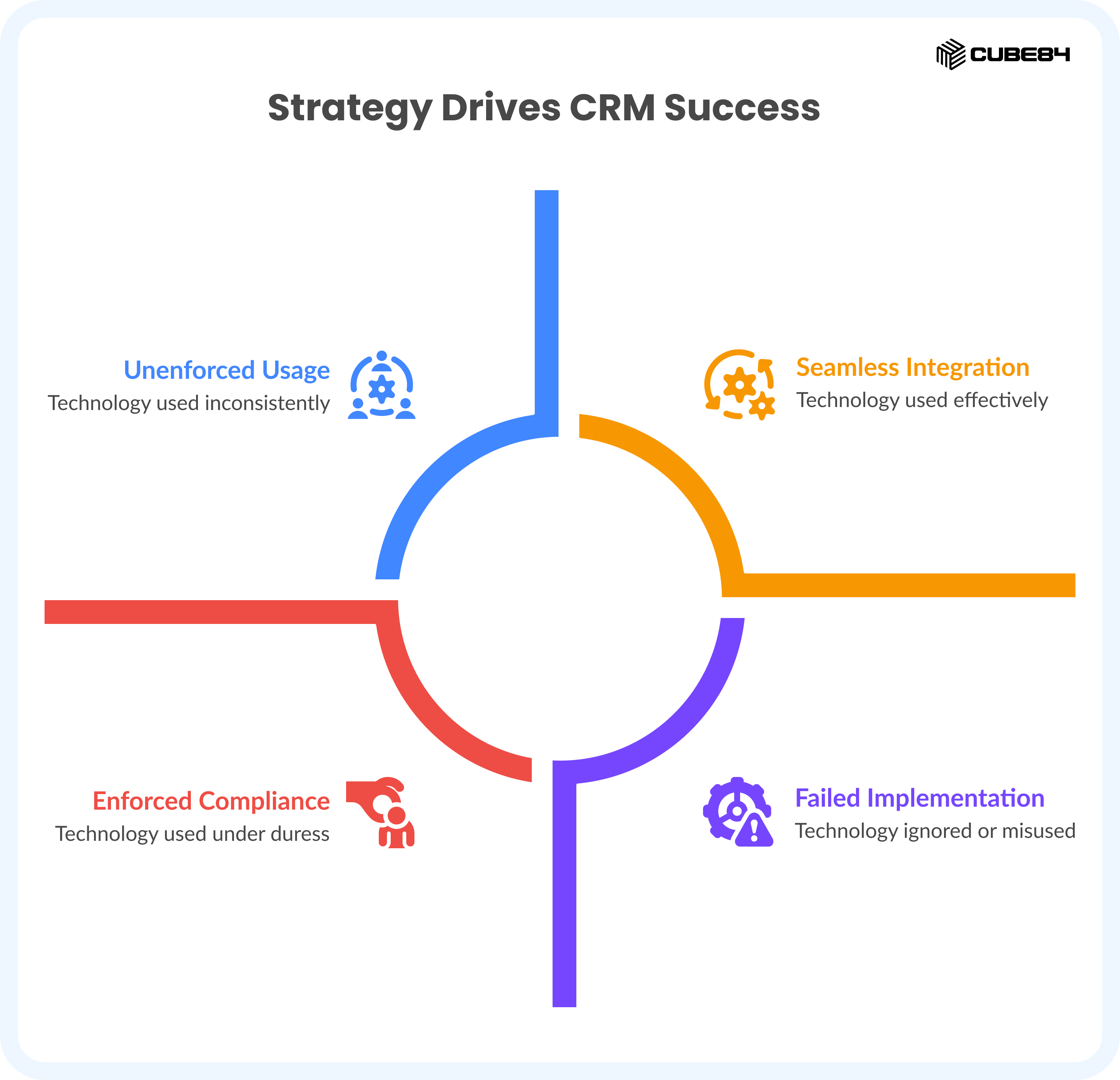
When people hear “CRM strategy,” they often expect something abstract, something that lives in slides or documents and feels far removed from the daily friction their teams deal with. Because of that, leaders usually skip the theory and just ask us: how do you make your CRM work better, or how do you get your team to actually use it? The answer is that strategy isn't theoretical at all. What we see instead is that strategy shows up very practically, usually in the exact places where frustration has become normalized. The value becomes clear in the day-to-day work and can be tracked and measured in actual results.
Trust Does Not Come From Data Volume
It is not like organizations are suffering because of a lack of data. They have all the necessary data, it is just that they don’t trust it enough to believe it. So what typically happens is, when the board meeting is around the corner you’ll see someone reconciling numbers the night before or exporting data to double check it elsewhere even though the CRM is full, dashboards are populated, and the reports exist. These are clear indications that your team has a trust deficit, not owing to bad software, but it comes from unclear ownership and inconsistent standards that were never resolved early on.
This can be easily solved with just one thing! A good strategy that defines field ownership and data standards. It creates a process your leaders will love so they can point to one set of numbers because the system reflects shared intent rather than layered assumptions.
Adoption Changes When Behavior Is Designed, Not Enforced
One of the most common complaints we hear is that teams do not use the CRM properly, which usually translates to incomplete records, delayed updates, or selective participation. In fact, recent statistics show that this exact problem of low user adoption is one of the leading causes of CRM failure. .The instinctive response is enforcement, more required fields, stricter validation rules, and heavier monitoring. That almost always backfires.
What strategy really does is change how adoption is even looked at. Most teams treat CRM usage like a compliance problem, as if people just need to be told to use the system more. In reality, people avoid the CRM when it slows them down or feels disconnected from how they actually work. When the system helps them close a task, answer a question, or avoid rework, they naturally go back to it. They update records because work feels easier, faster, and less frustrating, not because someone is checking on them.
Reporting Stops Being a Translation Exercise
In many mature orgs, reporting exists in name but not in spirit. The reports might be technically accurate, but they are practically not of use until someone manually translates the context.Leaders spend more time interpreting numbers than using them.
We've seen that if you just rely on out-of-the-box reports, you're essentially just staring at a pile of random numbers. If a CXO and a mid-level manager look at the exact same pipeline view, they are going to infer totally different things. That’s why we shifted to building specific reporting frameworks based on the audience.
When you have a strong strategy-led approach and design everyday workflows with intent, reporting happens naturally as people do their jobs. When the team knows exactly who owns what data and why they are entering it, reports essentially build themselves. This is when executive dashboards finally earn their place, because they answer real questions without requiring a follow-up meeting to explain what they mean.
AI Becomes Reliable Instead of Risky
AI tends to get blamed almost immediately when things go wrong, but most AI failures we see are simply reflections of slow misalignment that already existed.
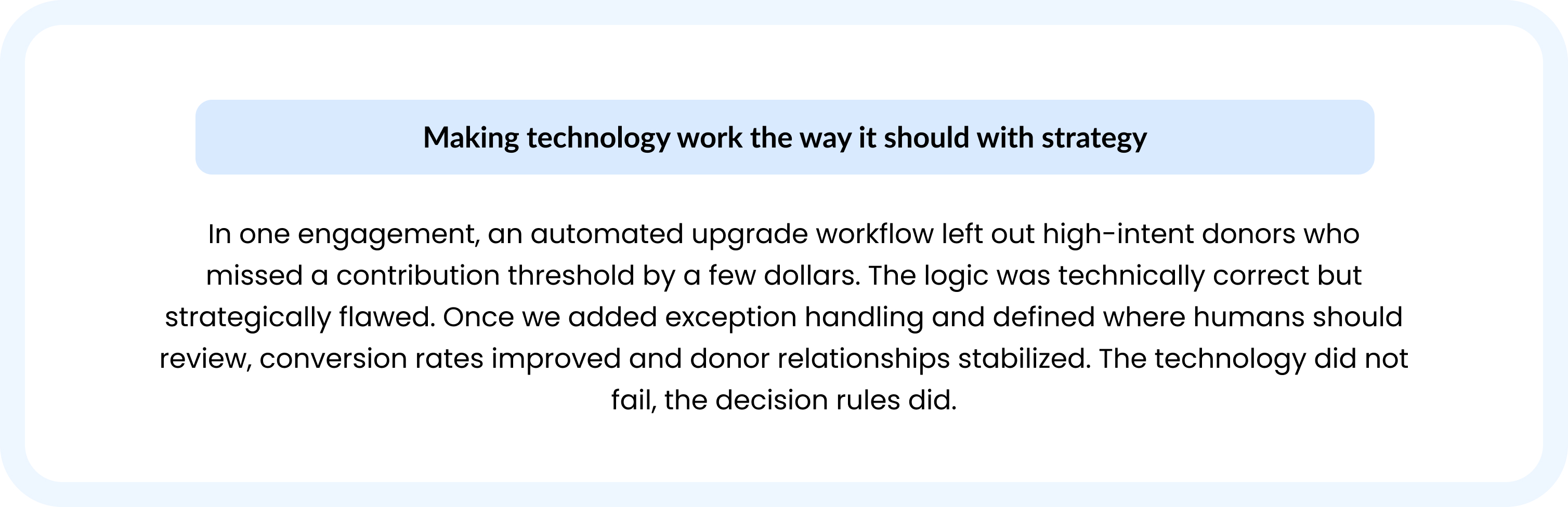
One scenario we see often is what we call the "human-in-the-loop" problem. Let’s say you have an automated rule to trigger a cross-sell based on an annual budget, and the constituent misses that threshold by exactly $10. Here the AI just sees a binary "no." It restricts itself and kills the opportunity. But a human would have known it's just ten dollars and would have made the call to save the relationship. When we put a strategy in place, we build in guardrails. We map out exactly where the machine stops and where human judgment takes over. Automation is applied only where outcomes are understood. Over time, this is what turns AI from something teams are nervous about into something they rely on, because it reinforces decisions rather than undermining them.
ROI Finally Becomes Defensible
The hardest conversations almost always happen around ROI. Boards want to know what all this investment is actually delivering, and activity metrics rarely satisfy that question.
We've seen that to actually see the ROI happen, you have to get past middle management productivity metrics and tie the system directly to the key decision-makers. If your organization is bringing in 100 new logos or donors, and 20 of them are falling through the gaps, closing that specific margin is your real ROI. It's about capturing what's being lost.
Strategy changes the conversation by tying CRM performance to the outcomes that matter, such as retention, velocity, and effectiveness, instead of just usage or volume.
When outcomes are defined upfront and mapped deliberately to processes and data, ROI stops being a story teams struggle to tell. If you don't define this early, we see organizations fall into a frustrating trap: you pay $10 for the initial implementation, but then you end up paying $5 every single week in admin effort just to keep it patched together. That completely kills your return on investment.
That is when technology leaders stop defending platforms and start standing behind them. The ultimate test of ROI we always look for is whether the CXOs are actually using the system for insights. If leadership stops using the CRM to drive decisions, the investment has failed. Strategy does not magically fix everything, but it consistently fixes these core pains that tools alone never do.
The Strategy-First Framework for 2026
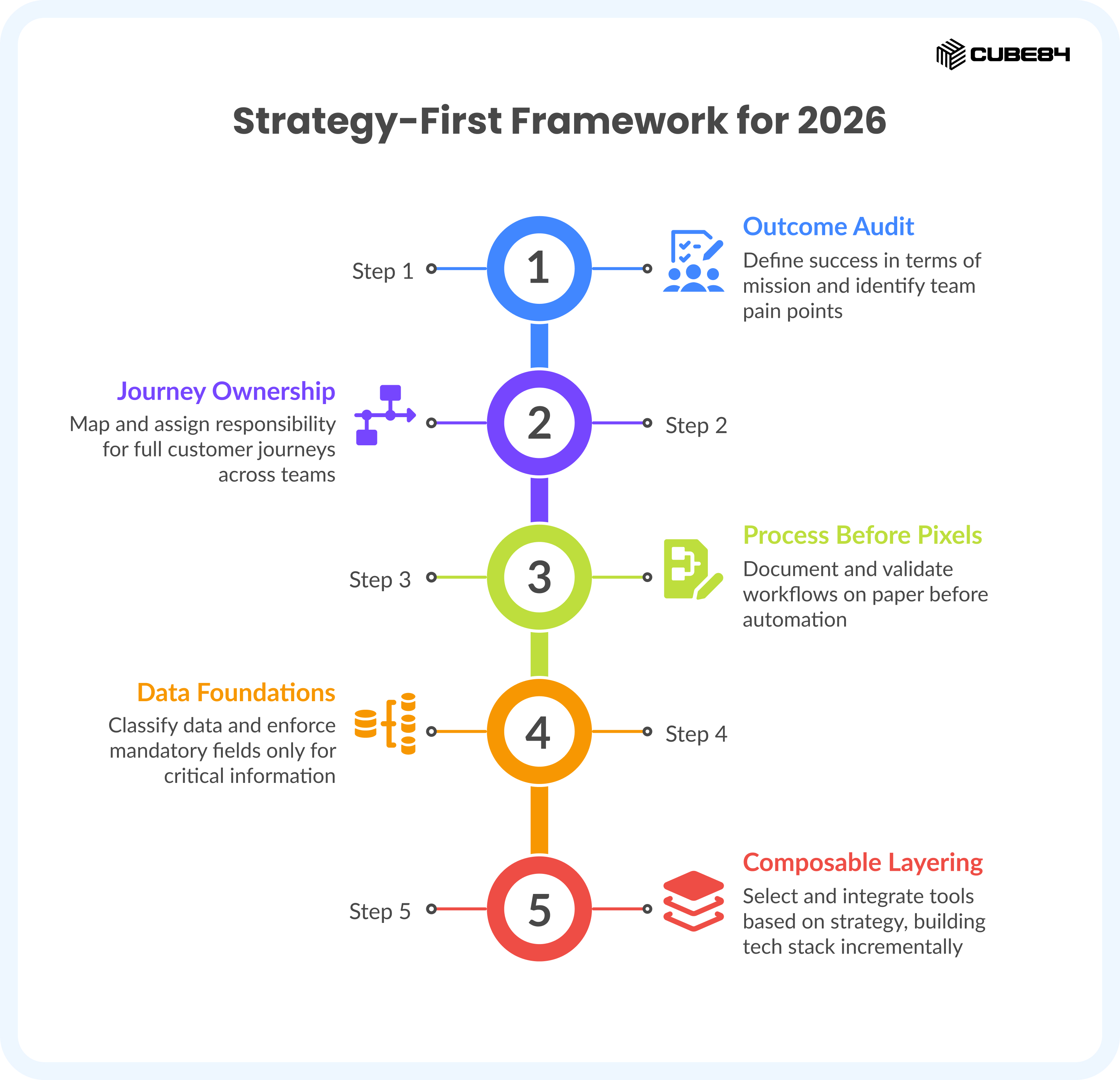
This is the part where people usually expect a fancy model or a brand-new idea. It is not that. In fact, if you have been reading carefully, you will notice that most of what follows is simply us slowing down and doing, on purpose, the things teams usually rush past. We are talking about this again because these are the same gaps we keep seeing show up later as AI failures, reporting confusion, or ROI questions that no one enjoys answering.
Step 1: Outcome Audit
Before touching the CRM, before configuring anything, the first step is getting painfully clear on what success actually means. We run outcome audits, or what we usually just call workshops. We sit down with the team and ask, "Tell us a story about your day. Why isn't this working for you?" We focus entirely on defining success in terms of your mission. Like we have mentioned earlier, most problems start because this step rarely happens. Teams assume buying and implementing Salesforce was the plan, when in reality that was only a decision about tooling. When outcomes are not defined upfront, everything that follows becomes guesswork.
Step 2: Journey Ownership
We keep coming back to this because it matters more than people think. If your teams are confused, your CRM is going to be confused. You have to map out exactly who owns what.
Most organizations do not actually own a full journey end to end. Marketing owns their part, Development owns theirs, Programs own theirs, and the gaps in between are where things fall apart. This is exactly where automation and AI struggle the most. When no one owns the full handoff, the system cannot make the right decision either. We always suggest Mapping journey ownership clearly, especially across teams, look at the operational model alignment to ensure marketing, development, and service teams aren't stepping on each other's toes.
Step 3: Process Before Pixels
This one feels obvious, yet it is skipped all the time. If a process cannot be explained clearly on paper, please do not get into automation. You have to map and validate your workflows on paper before you ever build them in Salesforce. We make it a point to simplify the data model from the start. Just because the platform suggests certain objects, fields, or automations does not mean they need to be enabled immediately. Do not confuse your teams with everything that's possible right out of the gate, because it's just too overwhelming. Only focus only on what's required for the org. This is exactly how you prevent that over-automation trap we talked about earlier.
Step 4: Data Foundations
Data hygiene makes or breaks your system. We use a method we call "Data Intent Classification." We literally sit down and put every single piece of data into three buckets: nice-to-have, good-to-have, and truly critical. And here is the golden rule we always stick to: just because Salesforce lets you make a field mandatory, doesn't mean you should. Only the truly critical stuff gets to be mandatory. If you force your team to fill out nice-to-have fields, they will just enter junk data to bypass the screen. If you want one unified constituent record across donor, alumni, and volunteer roles, you have to keep the data entry simple and intentional.
Step 5: Composable Layering
Finally, you pick your tools after your strategy is completely locked in. Salesforce becomes the platform you build on, not the magic solution that fixes everything on its own. We have seen what happens when this order is reversed. More features get added, more complexity builds up, and clarity gets pushed further away. We always adopt a layered approach. You match the specific features to the actual strategy built, keeping things simple and scaling up your tech stack only when your team is actually ready for it.
Tool-First vs Strategy-First (Comparative Lens)
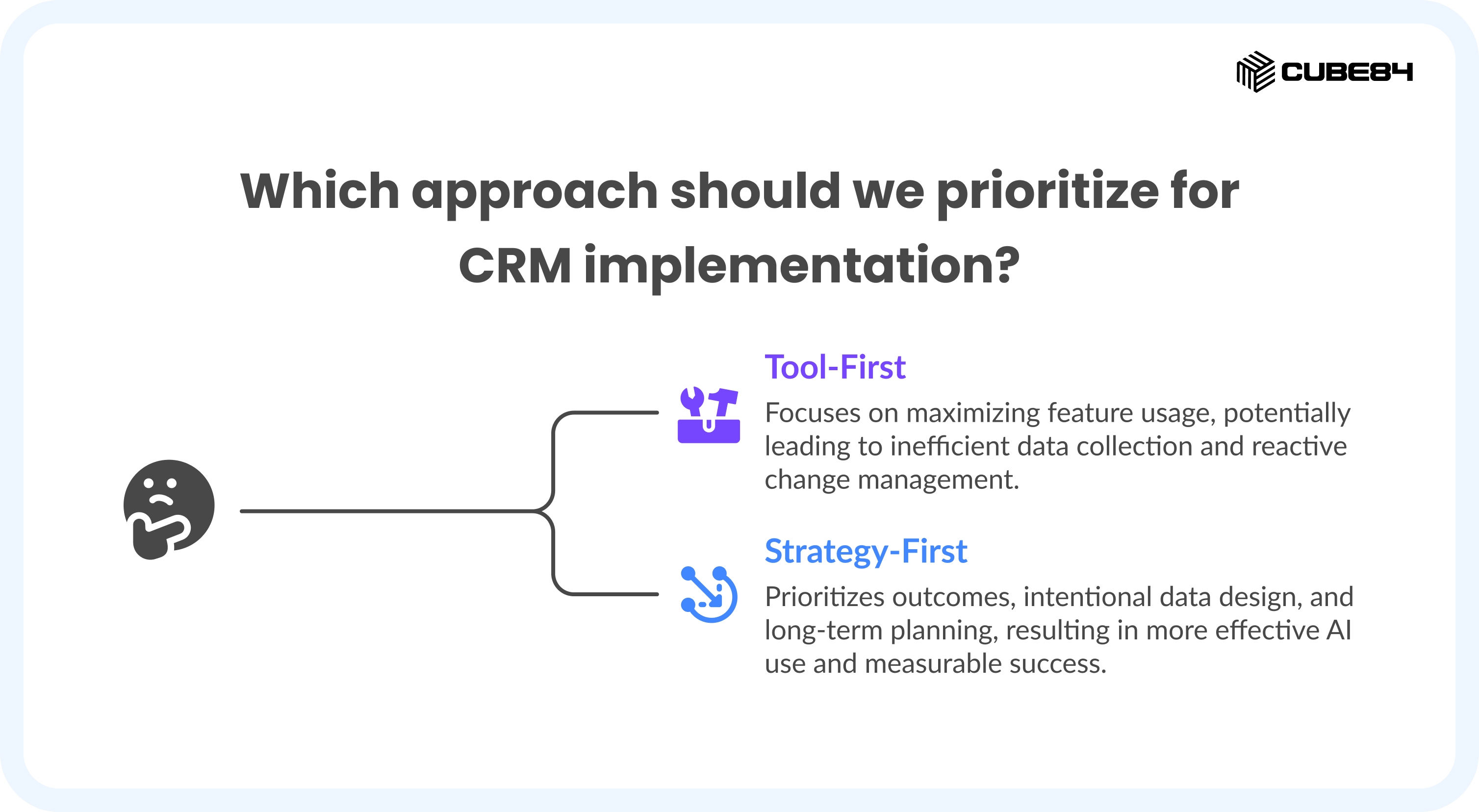
When you look at a tool-first approach next to a strategy-first one, the gap becomes clear. From what we have seen, this is how the shift actually shows up inside organizations:
Goal: The focus moves away from pushing feature usage and toward driving outcomes that matter to the mission.
Data: Data is no longer collected just because the system allows it. It is intentionally designed around the decisions leaders and teams need to make.
AI: Instead of being added for efficiency alone, AI is used to support judgment and decision-making where it actually adds value.
Change: Teams stop reacting to one-off requests and start making changes within a clear, long-term structure.
Success Metric: Success is no longer measured by logins or activity. It is measured by donor value, operational flow, and how effectively work moves forward.
Proof, Future-Readiness, and the C84 Lens
What Good Looks Like
From our experience, you know you have won when two things happen. First, your leaders are making decisions directly from the CRM, not despite it. Second, your teams actually trust the data because they helped define what it means in the first place.
2027 Readiness
Looking ahead to 2027, this becomes non-negotiable. Capabilities like hyper-personalization and autonomous agents will only work when there is a clear strategy underneath them. Like we keep saying, without that foundation in place, AI turns into a costly layer of activity that creates more confusion than clarity.
The C84 Position
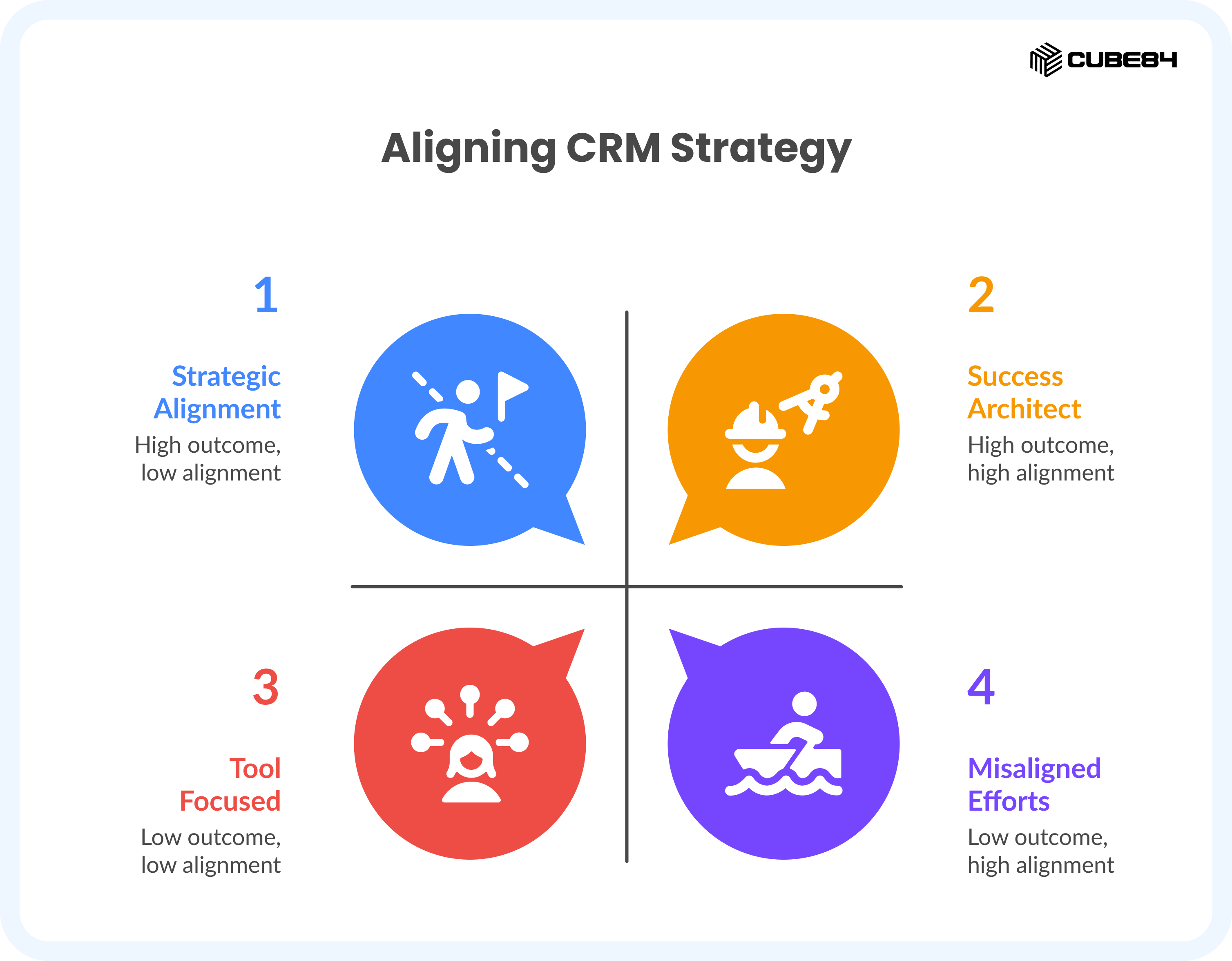
This is exactly where we come in. At CUBE84, we work upstream of the tools. We use what we call a Success Architect model. Traditional CRM consulting focuses on configuration efficiency. The Success Architect model focuses on aligning outcomes. We start with business intent, define operating rules, make sure ownership is clear across teams, and only then configure the technology to reflect those decisions. We help teams bring clarity to ownership, decisions, and data so the CRM supports the work instead of slowing it down.
Conclusion
At the end of the day, tools though very helpful are something anyone can buy. Anyone can buy the exact same licenses you have. Anyone can turn on the exact same AI features. But they cannot copy a deeply ingrained, thoughtfully designed strategy.
Your competitive edge is not the software you buy. It is how you align your people, your processes, and your data to run your mission.
So let's get talking about strategy. Reach out and tell us a little more about your current workflow. Once we understand what your day to day actually looks like, we can help you get started on building a system that suits your organization.