

If you're reading this, you've likely felt that familiar concern when news broke about a federal funding freeze for nonprofits or budget reductions. That uncertainty about whether your organization will be affected is a reality many nonprofit teams face regularly.
Funding disruptions remain a constant concern for nonprofits worldwide. Many organizations understand that funding stability cannot be guaranteed, and sudden changes are common. These challenges often stem from factors beyond your direct control: shifting policies, legal actions, economic downturns, or regulatory changes that create compliance requirements. The 2025 federal funding freeze for nonprofits affected organizations serving diverse communities, with many nonprofits experiencing grant pauses or cancellations with minimal notice.
Some nonprofits navigate these crises more successfully than others, and one key difference lies in their ability to demonstrate impact through strategic reporting. While outcome reporting cannot prevent nonprofit funding cuts, it helps organizations adapt more quickly, secure alternative funding, and build the capacity to withstand future disruptions. Learning how to report nonprofit outcomes effectively becomes essential for organizational sustainability.
What Causes Funding Cuts? A Quick Breakdown

Recognizing what drives funding changes helps you prepare more effectively, even when external factors feel beyond your influence.
Policy Shifts and Administrative Changes: Priorities evolve with new administrations and legislative sessions. The 2025 federal funding freeze for nonprofits demonstrated this reality, with executive orders affecting specific program areas based on updated policy directions. The ground reality is that your organization's work quality remained consistent, but the funding landscape shifted.
Legal Actions and Regulatory Updates: Government agencies employ various mechanisms to redirect or pause funding: rescission processes, temporary deferrals, and regulatory modifications that change eligibility requirements or compliance standards.
Economic and Systemic Pressures: Economic downturns create ripple effects throughout the funding ecosystem. Budget reductions at federal and state levels directly impact grant availability. Administrative delays can affect disbursements even when funding remains officially intact, creating cash flow challenges.
Compliance and Administrative Challenges: Organizations may face funding holds due to missed reporting deadlines, documentation issues, audit findings, or administrative capacity limitations.
Improper Donor Engagement and Funding Strategies: Poor communication, unclear reporting, or lack of a fundraising plan can erode funder confidence, leading to reduced renewals or lost support over time.
How Funding Disruptions Affect Nonprofit Orgs
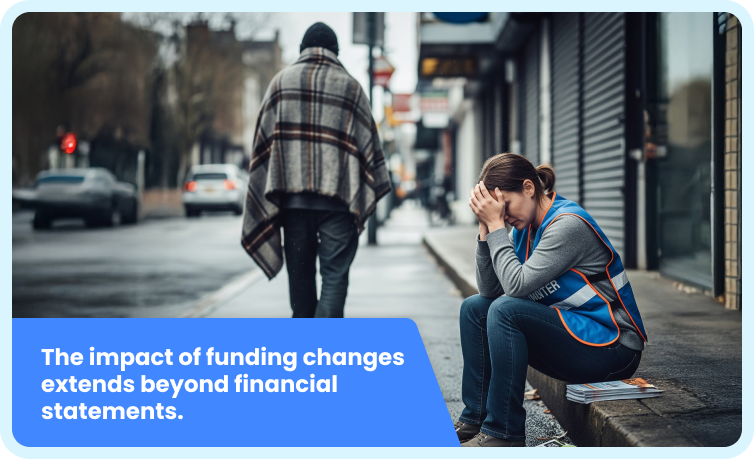
The impact of funding changes extends beyond financial statements. When funding stops, difficult decisions arise quickly: staff reductions, program suspensions, and asking remaining team members to manage increased responsibilities with fewer resources. Community members lose access to essential services, and partner organizations must handle additional demand they may not be equipped to manage.
Trust takes years to build and seconds to fracture. Program participants may lose confidence in your organization's reliability, supporters question your long-term viability, and collaborative relationships weaken due to uncertainty.
As a leader, you find yourself managing crisis situations while pursuing emergency funding. The competitive environment intensifies as more organizations compete for diminishing funding opportunities.
Action tip: Proactively communicate with stakeholders when a disruption hits. Regular updates, even when the news is uncertain, can help maintain trust and manage expectations.
Learning from the 2025 Federal Funding Freeze
The 2025 freeze arrived with unusual speed and breadth of impact. This freeze affected various types of nonprofit organizations, including those with strong management practices. Without advance warning, nonprofit organizations with active programs and communities depending on their services faced immediate operational gaps.
Despite the surprise move, organizations with comprehensive outcome tracking systems were able to take the lead in managing their response and planning their survival strategy:
- Faster Response Times: Organizations with established reporting systems could immediately access program data while others spent valuable crisis time gathering basic impact information.
- Stronger Advocacy Position: They had readily available data to support policy discussions and demonstrate program value during appeals processes.
- More Compelling Appeals: They could quickly communicate their effectiveness to alternative funders with concrete evidence, creating persuasive cases for emergency support.
- Enhanced Credibility: They attracted emergency grants and donor support more successfully by demonstrating accountability and transparency during critical moments.
Key Insight: Organizations with strong reporting systems still experienced uncertainty, but they could channel that energy into productive action rather than reactive responses.
How Outcome Reporting Builds Organizational Resilience
Outcome-driven reporting serves as one of the most practical tools your organization can develop as part of your sustainability strategy. When your team understands how to report nonprofit outcomes effectively, you create multiple support systems that can help your organization during funding crises.
1. Build Real Trust with Funders
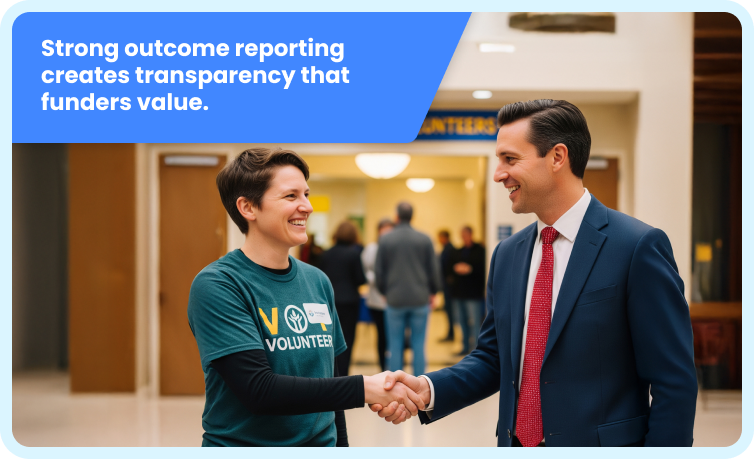
Trust develops over time, but outcome reporting accelerates the process. Consider your funders' perspective: they want assurance their investment creates meaningful change. When your organization can demonstrate clear, measurable results, you address their primary concern. Individual donors, corporate sponsors, and foundations share this common need: confidence that your organization delivers on its commitments.
Strong outcome reporting creates transparency that funders value. They see not just what you plan to do, but what you have accomplished. This transparency builds the foundation for lasting relationships that can withstand funding challenges.
Try this: Schedule a quarterly outcomes report for major funders, even outside formal grant requirements. This keeps them engaged and shows your commitment to ongoing transparency.
2. Prepare for Crisis Response
Organizations that already track outcomes can pivot to emergency grant applications or donor appeals without losing momentum. You have the stories, data, and proof of impact ready for immediate use. This preparation allows your team to focus on relationship building and strategic communication rather than scrambling to gather basic information.
Crisis preparation through outcome reporting means having your impact narrative ready before you need it. When funding emergencies occur, you can respond with confidence and clarity.
Quick step: Conduct a 30-minute team drill each quarter, simulating a sudden funding cut. Ask: What data would we need? Who would we contact? Practice now to respond better later.
3. Adapt While Maintaining Focus
Funding landscapes change constantly. New opportunities emerge, existing ones disappear, and requirements evolve. When your organization's reporting centers on solid outcome data, your team can adjust approaches for different funders without rebuilding your entire story.
Whether you're communicating with a foundation focused on education outcomes or a corporate sponsor interested in community development, your organization's core narrative remains strong because it builds on documented results.
4. Make Informed Decisions Under Pressure
Nonprofit leaders face challenging choices regularly, and funding cuts intensify these decisions. Which programs should continue? Where can you reduce costs without losing impact? Outcome data provides clarity for these difficult choices.
Your leadership team can identify which programs achieve their targets, understand how community needs are changing, and determine how to use limited resources most effectively. Data-driven decision-making becomes especially valuable during crisis periods.
Action tip: Use your outcome data to create a “core programs matrix” that helps identify which services are essential, which can be reduced, and which can be paused during funding shortfalls.
5. Connect Data to Human Impact

The most powerful outcome reporting combines statistics with the stories behind those numbers. Every data point represents someone whose life improved through your organization's work. When your team can integrate metrics with human experiences, you create something compelling: a narrative that donors don't just understand, but feel motivated to support.
This human-centred approach to data helps donors see the real-world impact of their investment and builds emotional connection alongside rational justification for continued support.
Try this: Pair each major outcome metric in your reports with a brief case story or testimonial. This combination of numbers and real lives helps funders connect more deeply with your work.
Important Note: Nonprofit funding cuts cannot be prevented by a nonprofit. But outcome reporting can help orgs adapt faster and mitigate risks associated with funding cuts.
What more can you do to weather the storm?
While outcome reporting provides a powerful foundation, building true resilience requires a comprehensive approach that balances preparation, flexibility, and strong relationships.
Diversify your funding base: Relying too heavily on a single source, especially government grants, can leave you vulnerable. A healthy mix of revenue streams builds stability.
Build unrestricted reserves: Emergency funds give you breathing room during crises, helping you adapt without immediately cutting programs or staff.
Stay ahead on compliance: Meeting deadlines for reporting, audits, and filings ensures you remain in good standing and funder-ready at all times.
Track policy and budget trends: Keep an eye on shifts in government priorities that may affect your funding landscape.
Invest in leadership readiness: Prepare your board and senior team to lead confidently during uncertainty, not just when things are smooth.
Nurture donor relationships year-round: Don't wait for a crisis to reach out. Keep your supporters engaged and invested in your journey.
Start small: If this list feels overwhelming, choose one action to focus on each quarter. Even steady, small steps build long-term resilience.
Ready to Strengthen Your Funding Resilience? Get Your Free Guide
Through our extensive work with nonprofits of all sizes, one thing is apparent: outcome reporting is a common challenge. You are not alone if your team finds it difficult to track and communicate impact consistently. In fact, even well-established organizations often struggle to turn their efforts into clear, donor-ready reports.
We’ve built you a practical resource from all our learnings on the reports that matter and the metrics that strengthen your narrative. No matter where you're starting from, this guide offers actionable steps on how to report nonprofit outcomes in a way that builds trust, strengthens funding, and supports long-term stability.
What's Included:
- Must-Have Reports: Essential metrics every nonprofit should track
- Good-to-Have Features: Additional metrics that strengthen reporting without overwhelming your team
- Advanced Strategies: Sophisticated approaches for organizations ready to expand their systems
Take Action Today: Download The Nonprofit Executive's Guide to Outcome-Driven Reports and take a proactive step toward greater funding resilience, regardless of what the political or economic climate brings next.
Moving Forward: Small Steps, Big Impact
Funding cuts and freezes are a reality that nonprofits can't fully control. The 2025 federal funding freeze for nonprofits demonstrated how quickly the landscape can shift, regardless of your organization's performance or preparation.
While outcome-driven reporting won't stop funding cuts, it will help organizations:
- Respond faster when disruptions occur
- Build stronger relationships with funders through transparency
- Make informed decisions under pressure
- Secure alternative funding more effectively
- Maintain stakeholder trust during uncertain times
When nonprofit funding cuts hit suddenly and unpredictably, clarity and preparedness are your greatest assets. Strengthening your ability to track and communicate outcomes can make a huge difference to how your nonprofit copes in times of uncertainty. Strong reporting signals to donors, partners, and your own team that you are focused, responsive, and committed to long-term impact.
Wherever you are in your journey, improving how to report nonprofit outcomes is a step toward greater stability, one that builds trust today and safeguards your mission for tomorrow.