


Housing nonprofits are working in an environment where demand continues to grow while resources remain limited. Teams are managing applications, waitlists, case work, and funding, often across disconnected systems.
The Spring ’26 Salesforce updates do not introduce a single major change. Instead, they improve how everyday work happens. Intake becomes easier to manage, case work becomes more structured, and staff spend less time tracking information across systems.
For housing organizations, this matters because most challenges are not about a lack of effort. They are about coordination. When applications, waitlists, and case work sit in different places, even simple processes take longer than they should.
Spring ’26 begins to bring these pieces closer together.
Intake and Applications: Making It Easier to Start and Track
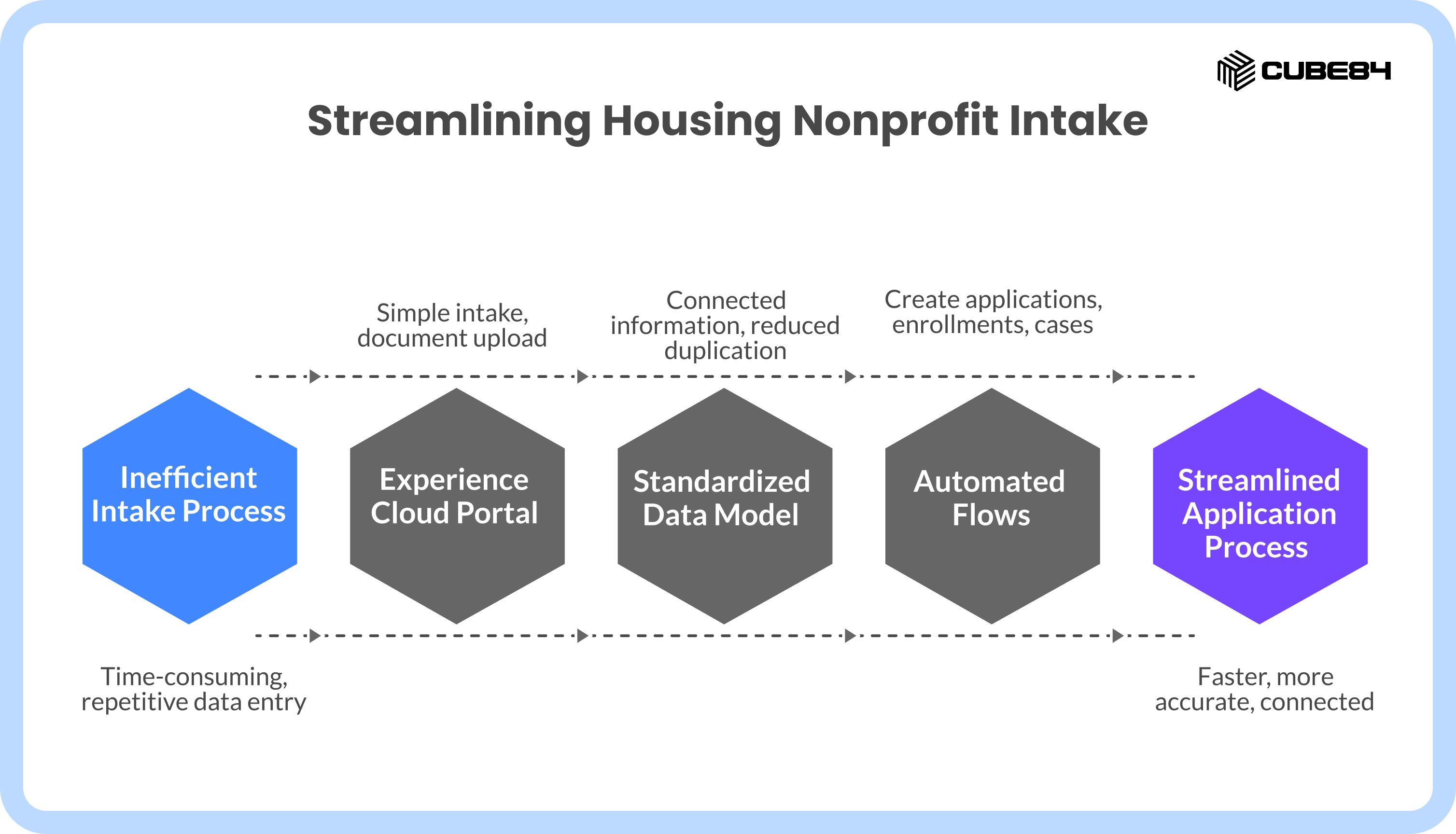
For many housing nonprofits, intake is still one of the most time-consuming parts of the process. Applications may arrive through forms, emails, or spreadsheets, and staff often need to re-enter the same information multiple times.
Salesforce’s current Nonprofit Cloud setup, supported by Experience Cloud and Flow, helps standardize the collection and processing of applications.
What This Looks Like in Practice
Organizations can use Experience Cloud to create a simple intake portal where applicants can:
Browse available housing programs
Start an application or referral
Upload documents
Track application status
Applicants who log in can see their history and updates, while guest users can still begin the process with limited information.
The Data Model Behind It
This structure helps reduce repeated data entry and keeps information connected.
How Applications Move Forward
Two key flows support this process:
Create Application collects initial details and creates the application record\
Complete Application runs after approval and creates related records like enrollments and cases
These flows can be adjusted to include housing-specific fields such as unit type, subsidy type, or priority category.
Waitlists and Eligibility: Bringing Structure to High Demand
Managing waitlists is one of the most challenging parts of housing programs. Many teams still rely on spreadsheets or manual tracking.
Salesforce provides a more structured way to manage eligibility and waitlists using standard objects and configurable logic.
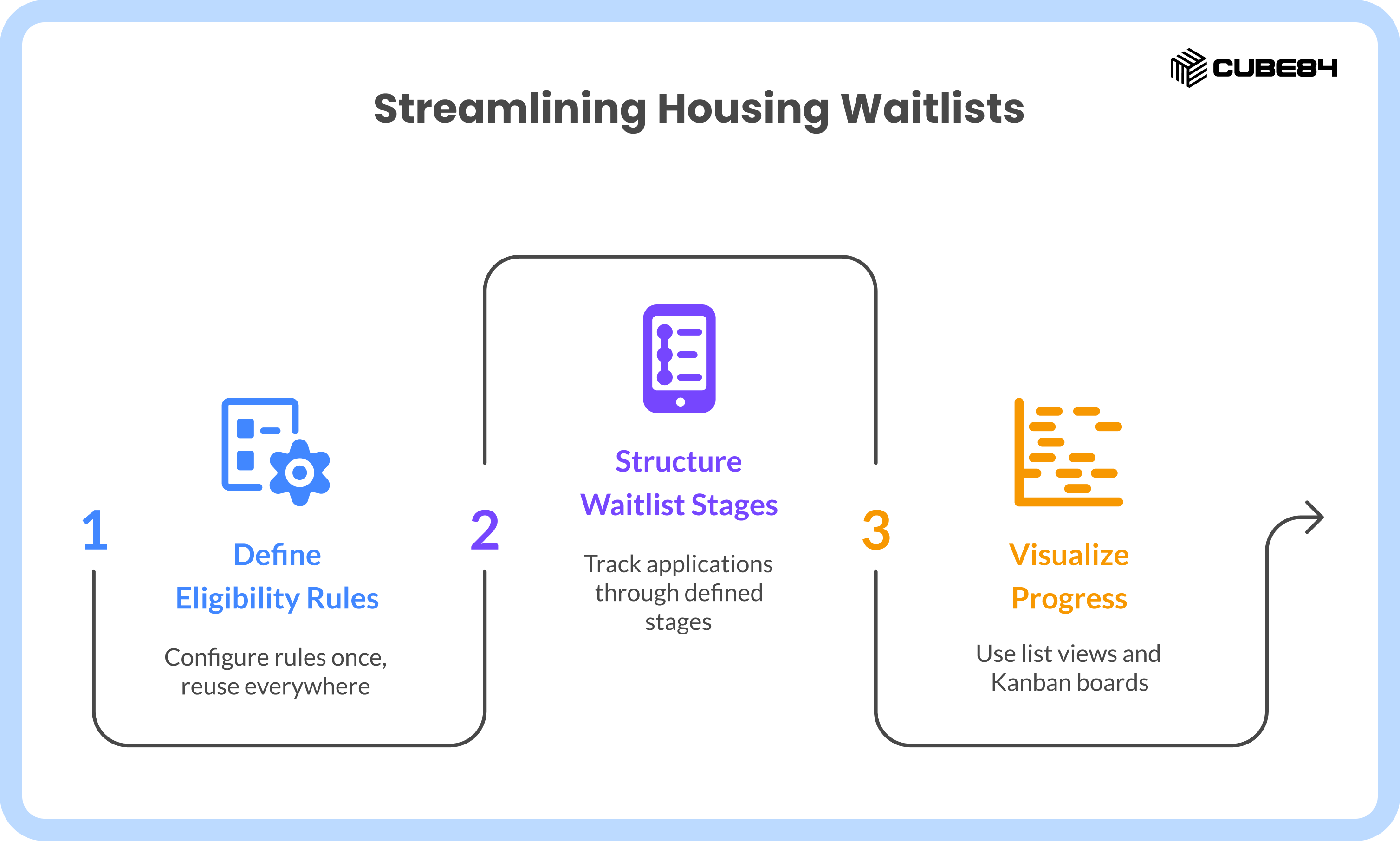
Defining Eligibility Clearly
Eligibility rules can be configured using tools like Business Rules Engine or Flow logic.
Instead of embedding these rules in multiple places, organizations can define them once and reuse them.
Structuring the Waitlist
Applications can move through clearly defined stages.
List views and Kanban boards allow staff to quickly see where applicants are in the process.
Case and Program Management: Connecting Work Across Teams
Once a household is accepted into a program, the work does not end. Case managers continue supporting residents through multiple interactions.
Spring ’26 improvements continue to support this by making it easier to connect applications, enrollments, and case work.
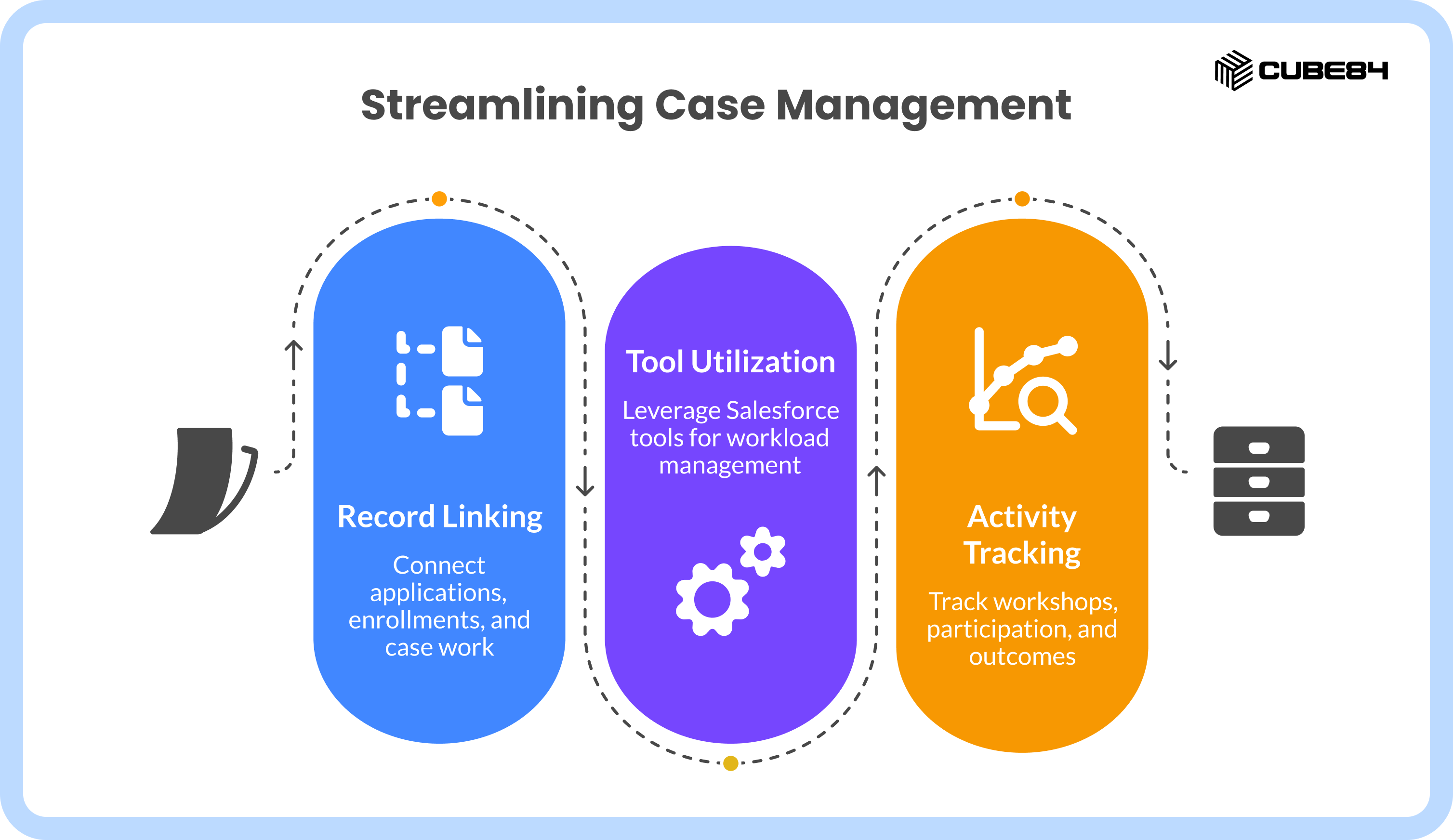
How Records Are Created and Linked
When an application is approved:
A Program Enrollment record tracks participation
A Case record tracks ongoing support
This creates a clear connection between intake and long-term engagement.
Supporting Case Managers
Salesforce provides several tools that help teams manage their workload.
These tools help reduce the need for separate tracking systems.
Tracking Services and Engagement
Housing programs often include workshops, inspections, or support sessions.
Mobile access allows staff to update records during field visits.
AI and Agentforce: Supporting Staff, Not Replacing Them
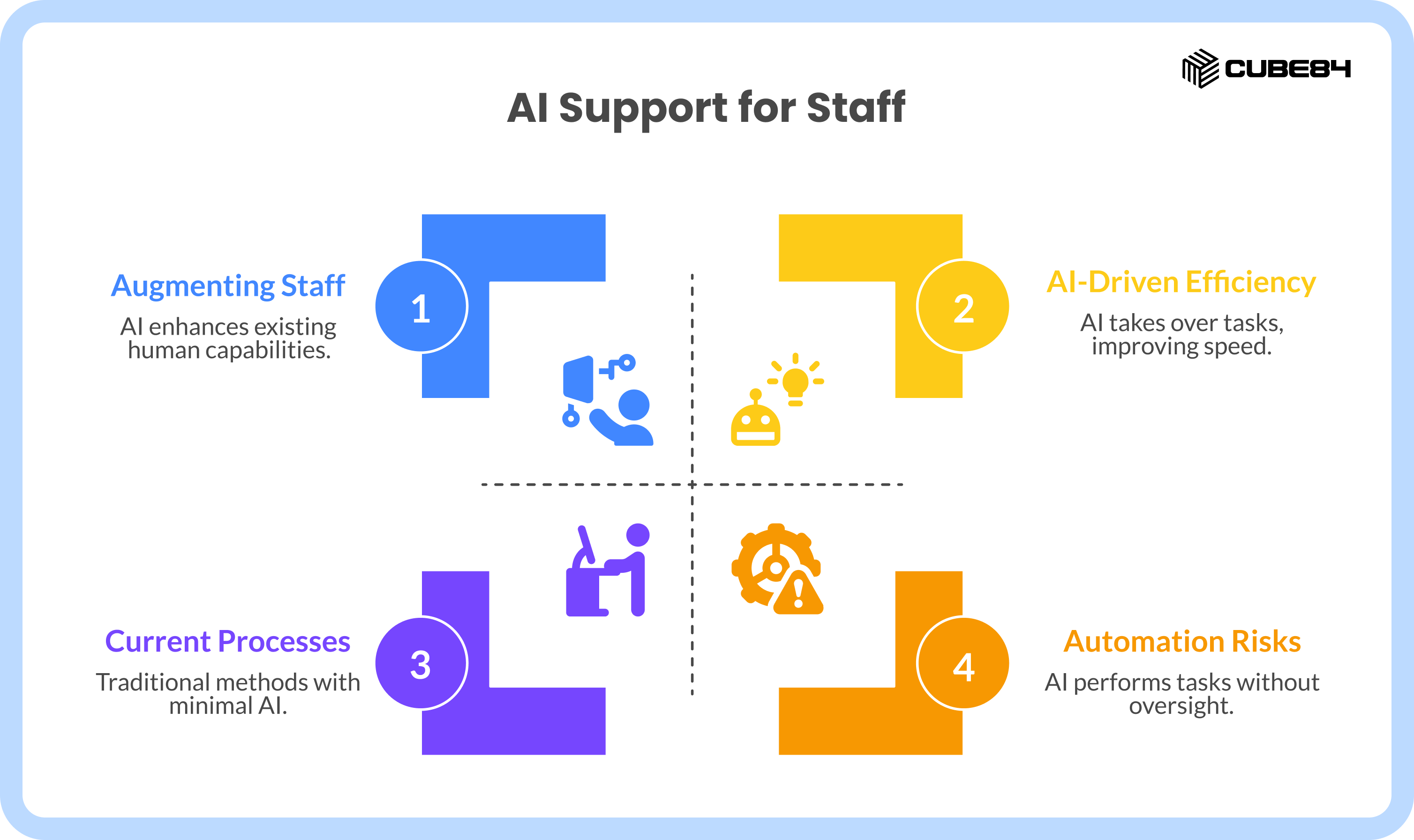
Spring ’26 introduces continued improvements in Agentforce, which focuses on helping staff complete tasks faster with better context.
Across industries, including education, these updates reduce time spent on coordination and repeated follow-ups.
For housing nonprofits, similar patterns apply.
What AI Can Help With
AI agents can assist with everyday tasks such as:
Summarizing recent case activity
Listing households that need follow-up
Drafting communication for residents
Highlighting upcoming deadlines
How to Think About It
AI is most useful when it supports existing workflows rather than replacing them.
Staff still make decisions. The system helps bring the right information forward so they can act more quickly.
Data access and permissions remain important. Organizations decide what information an agent can see and what actions it can take.
Funding and Grants: Keeping Financial Work Organized
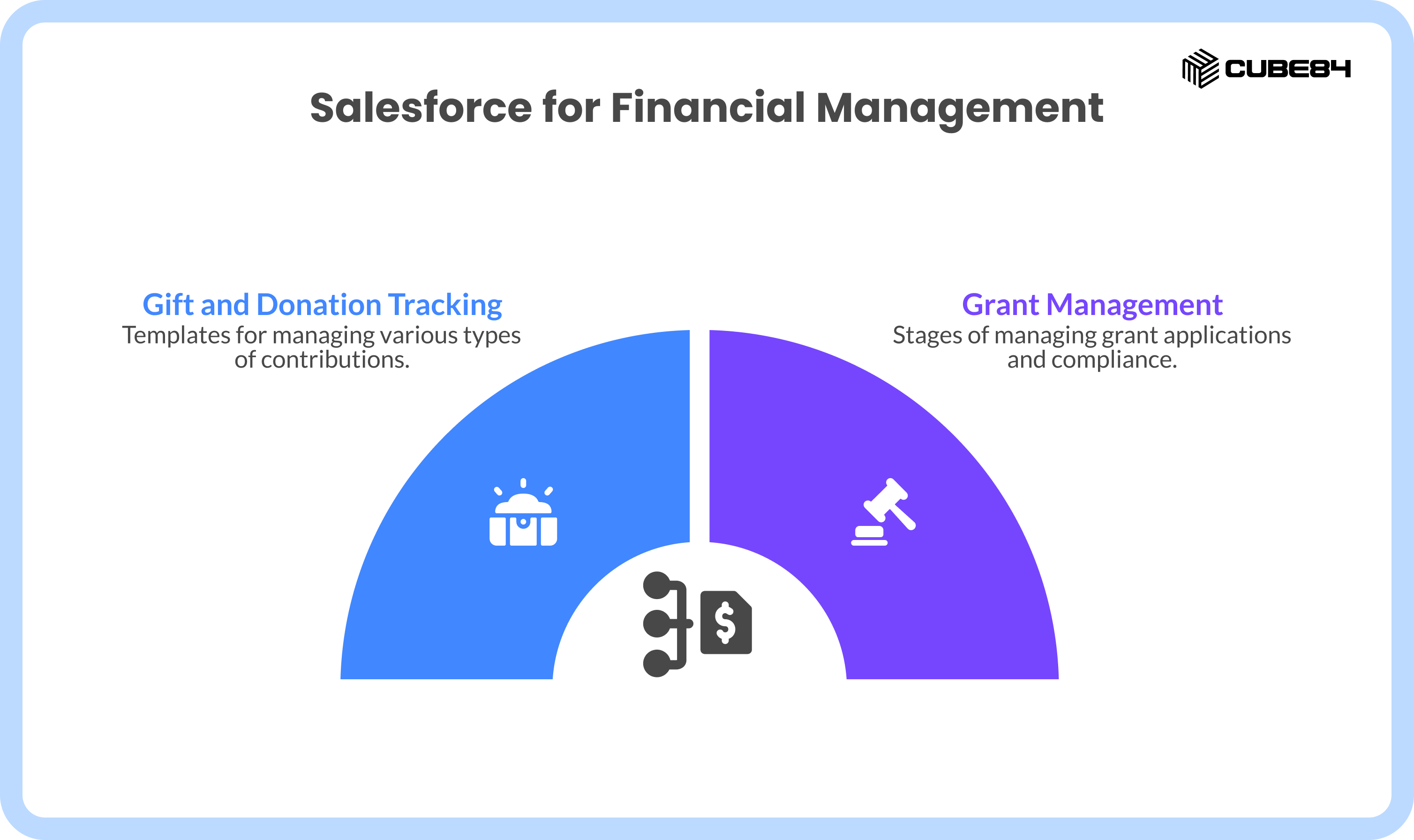
Housing nonprofits often manage multiple funding sources, including grants, donations, and government programs.
Salesforce provides structured ways to manage this work.
Gift and Donation Tracking
Templates can be used to track different types of contributions.
Grant Management
Automations can create reminders for reporting deadlines and follow-ups.
Where to Start
For many organizations, the question is not what Salesforce can do. It is where to begin.
A practical starting point depends on your current setup.
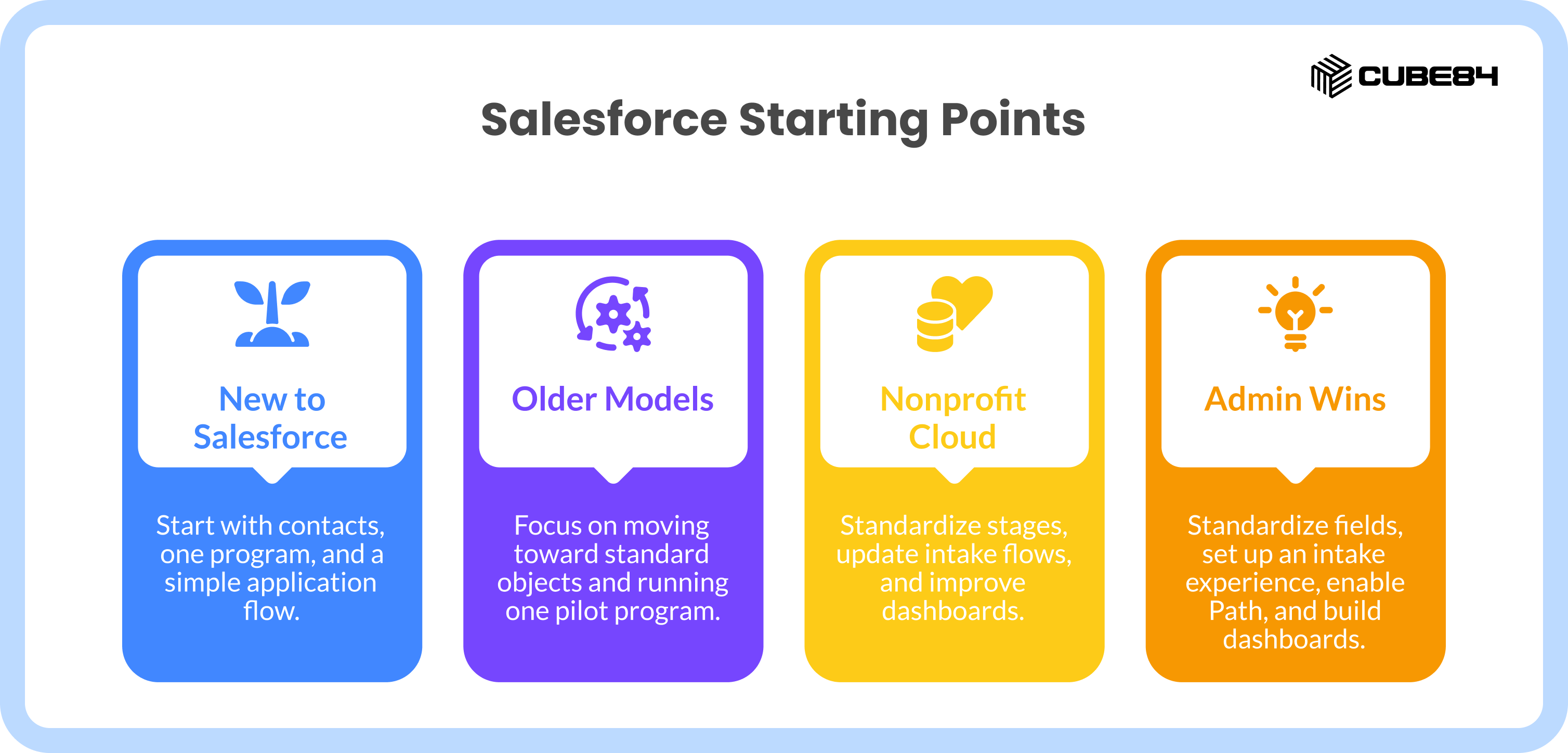
If You Are New to Salesforce
Start with:
Contacts and households
One program
A simple application flow
If You Are Using Older Models
Focus on:
Moving toward the standard Application Form and Program objects
Running one pilot program before expanding
If You Are Already on Nonprofit Cloud
Consider:
Standardizing application stages
Updating intake flows
Improving dashboards for waitlists and cases
Quick Wins for Admins
Standardize stage fields across applications and cases
Set up one intake experience using Experience Cloud
Enable Path on at least one key object
Build dashboards for intake and active cases
Conclusion
The Spring ’26 updates are not about introducing entirely new systems. They focus on improving how work already happens across intake, waitlists, case management, and funding.
For housing nonprofits, the impact comes from better coordination. Applications connect more clearly to programs. Cases connect more clearly to households. Staff spend less time searching for information and more time supporting people.
The best results often come from starting small. Choose one part of your process that feels slow or difficult, improve it, and build from there.
If your organization is exploring how Salesforce can support housing programs, we would be happy to walk through what this could look like in your environment. Every organization works differently, and the right setup depends on your programs, your team, and your community. Book a demo with us to explore what could work best for you.
.png&w=3840&q=75)