

When organizations begin evaluating enterprise platforms, two names tend to surface very quickly: Salesforce and ServiceNow. They are both widely adopted, both powerful in their own right, and both often placed side by side in conversations.
That comparison, however, can be misleading if it is not grounded in context. These platforms were not built to solve the same problem, and trying to evaluate them as direct substitutes often leads to confusion. A clearer approach is to understand what each one is designed to do, how it behaves in real-world scenarios, and where it naturally fits within an organization.
This guide takes that approach. Instead of listing features in isolation, it walks through how these platforms actually function, where they differ, and how to think about choosing between them in 2026.
Understanding the Core Difference
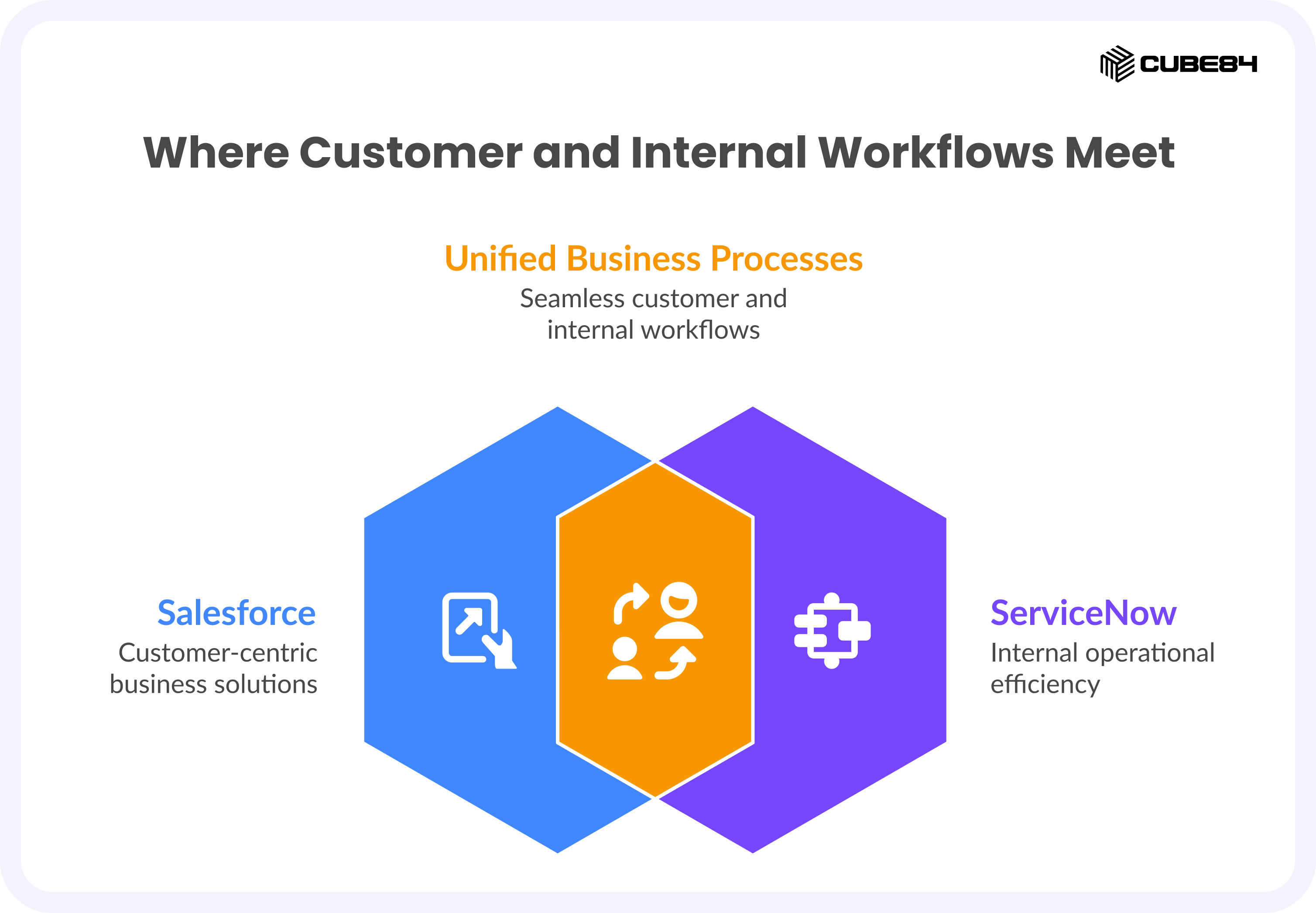
At the heart of this comparison is a very simple but important distinction. Salesforce is built around customers, while ServiceNow is built around work inside the organization.
Salesforce is concerned with how a business attracts, engages, and supports its customers. It keeps track of relationships, conversations, opportunities, and outcomes that are directly tied to revenue and customer experience. Everything in the platform is structured around that external lens.
ServiceNow, on the other hand, focuses on how work moves within the organization. It is less concerned with customers and more focused on how teams handle requests, resolve issues, and follow processes. It brings structure to internal operations, especially in environments where consistency and traceability matter.
This distinction shapes not just what each platform does, but how it feels to use and how it fits into a business.
What Working on Each Platform Feels Like
To understand these platforms properly, it helps to move beyond definitions and think about how they are actually used day to day.
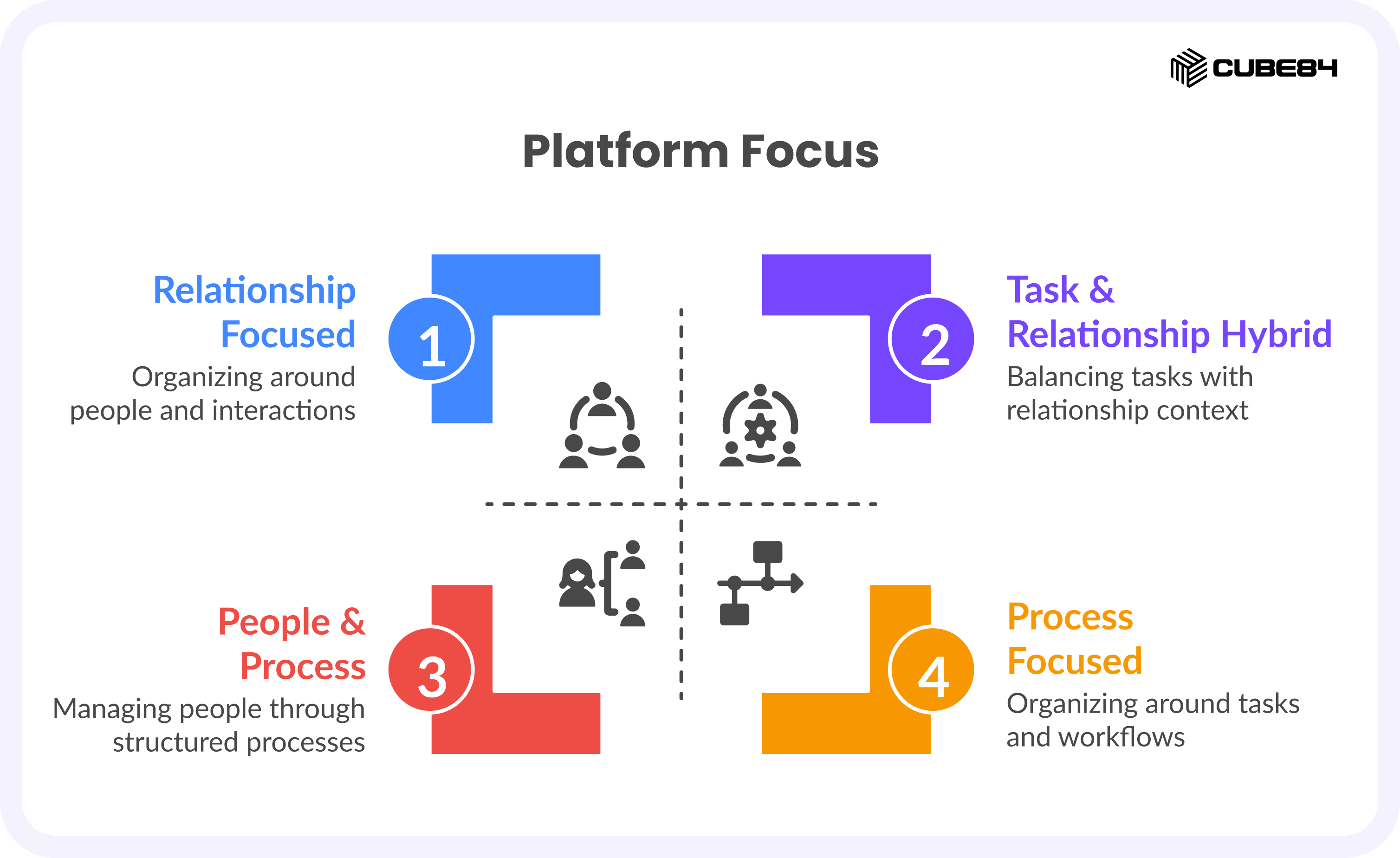
When you work in Salesforce, most of your activity revolves around people and interactions. You are tracking leads, following up on opportunities, managing conversations, and building a clear picture of each customer. The system grows richer over time as more interactions are captured, making it easier to understand patterns and make informed decisions.
For example, a sales team might use Salesforce to follow a deal from the very first touchpoint all the way to closure, capturing every call, email, and meeting along the way. A marketing team might use it to track how campaigns are performing and how leads are progressing through the funnel. A support team might rely on it to manage customer cases and ensure timely responses.
ServiceNow presents a very different experience. Instead of focusing on relationships, it focuses on tasks and processes. Work is typically captured in the form of requests, incidents, or workflows, each with a clear path from initiation to resolution.
In a ServiceNow environment, an IT issue is logged, assigned, tracked, and resolved within a structured flow. An employee onboarding request moves through predefined steps involving multiple teams. Approvals, escalations, and updates are all handled within the system, reducing the need for manual follow-ups.
The contrast here is subtle but important. Salesforce organizes information around people and relationships, while ServiceNow organizes it around tasks and workflows.
Platform Design and Why It Matters
The differences in experience come directly from how each platform is designed.
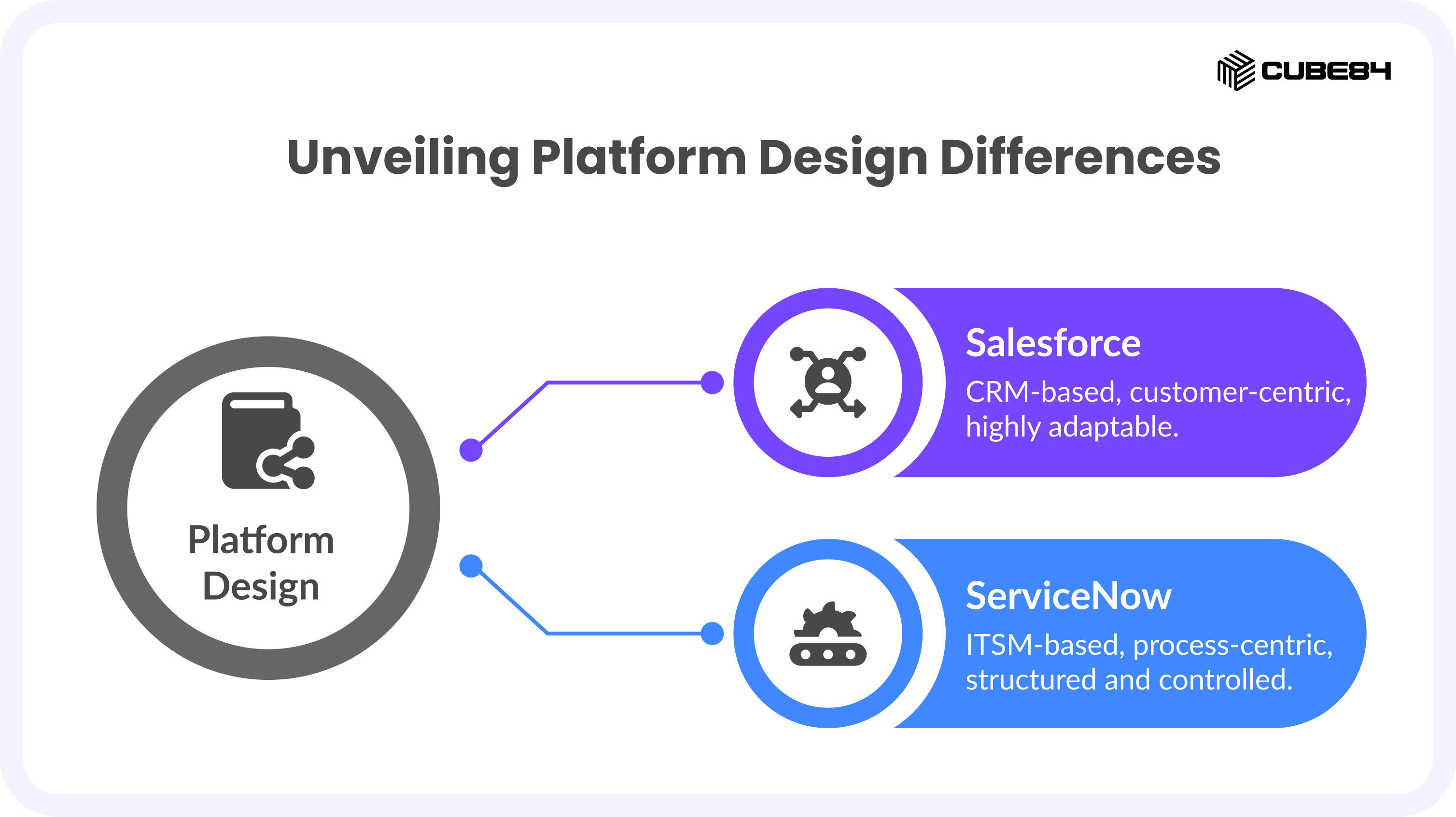
Salesforce was built as a CRM system, and that foundation still shapes how it operates today. Its data model is centered on accounts, contacts, and opportunities, and everything connects back to those core elements. This makes it highly adaptable for businesses that need to reflect unique customer journeys or sales processes.
ServiceNow, in contrast, was built as an IT service management platform. Its structure is based on tickets, requests, and workflows. Over time, it has expanded far beyond IT, but that process-driven foundation remains central to how it functions.
This is why Salesforce often feels more flexible, while ServiceNow feels more structured. One is designed to adapt to different business models, while the other is designed to enforce consistency in how work is handled.
AI and Automation in 2026
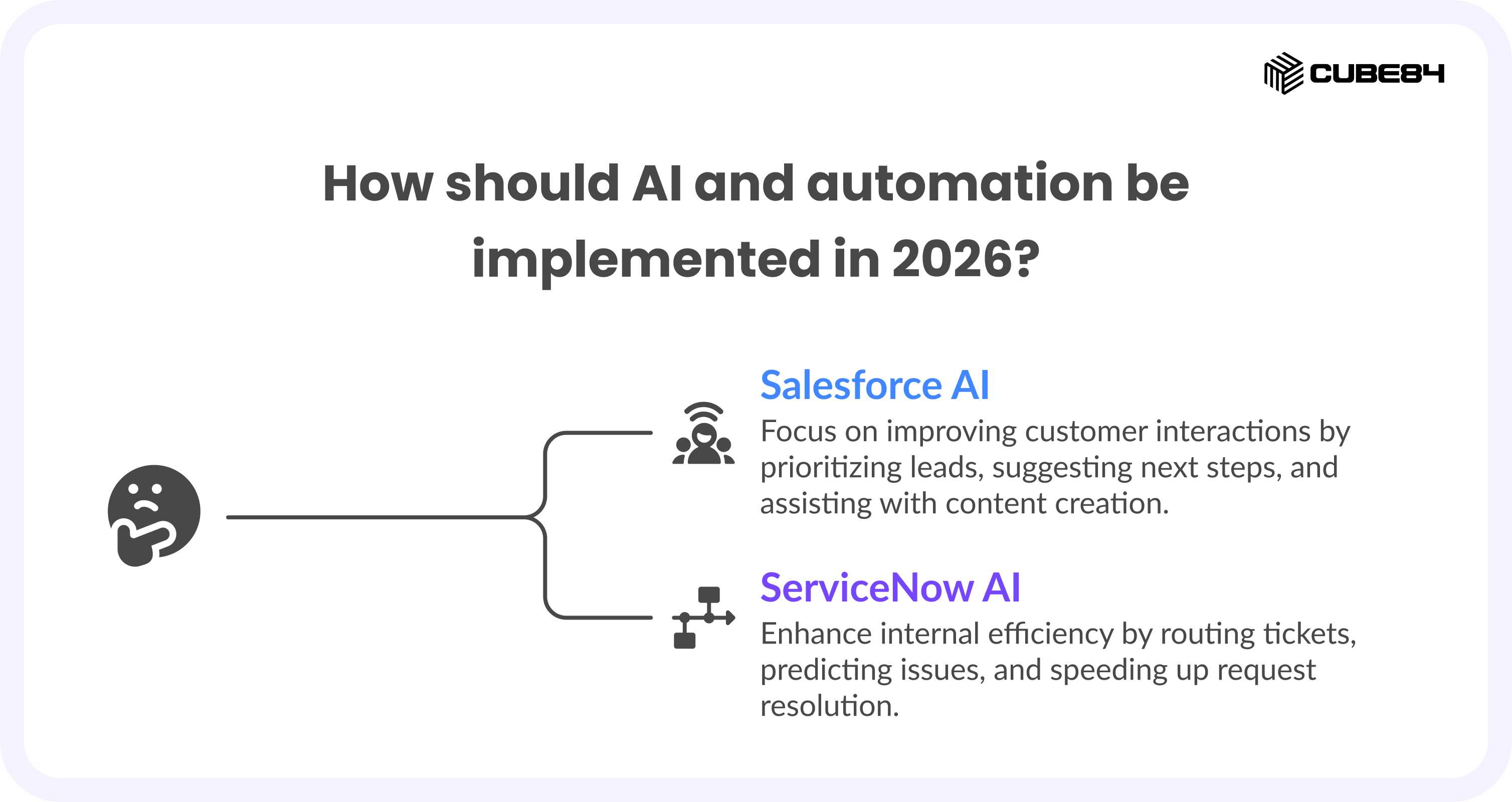
Both platforms are investing heavily in AI, but the way they apply it reflects their core focus.
In Salesforce, AI is used to improve how teams interact with customers. It helps sales teams prioritize leads, suggests next steps in a deal, and assists with drafting emails or content. The goal is to make customer-facing teams more effective and informed.
In ServiceNow, AI is used to improve how work is handled internally. It helps route tickets to the right teams, predicts potential issues before they escalate, and assists in resolving requests more quickly. The goal here is to reduce manual effort and improve efficiency across operations.
While both platforms are moving in a similar direction technologically, the outcomes they aim for remain distinct.
Ecosystem and Integration
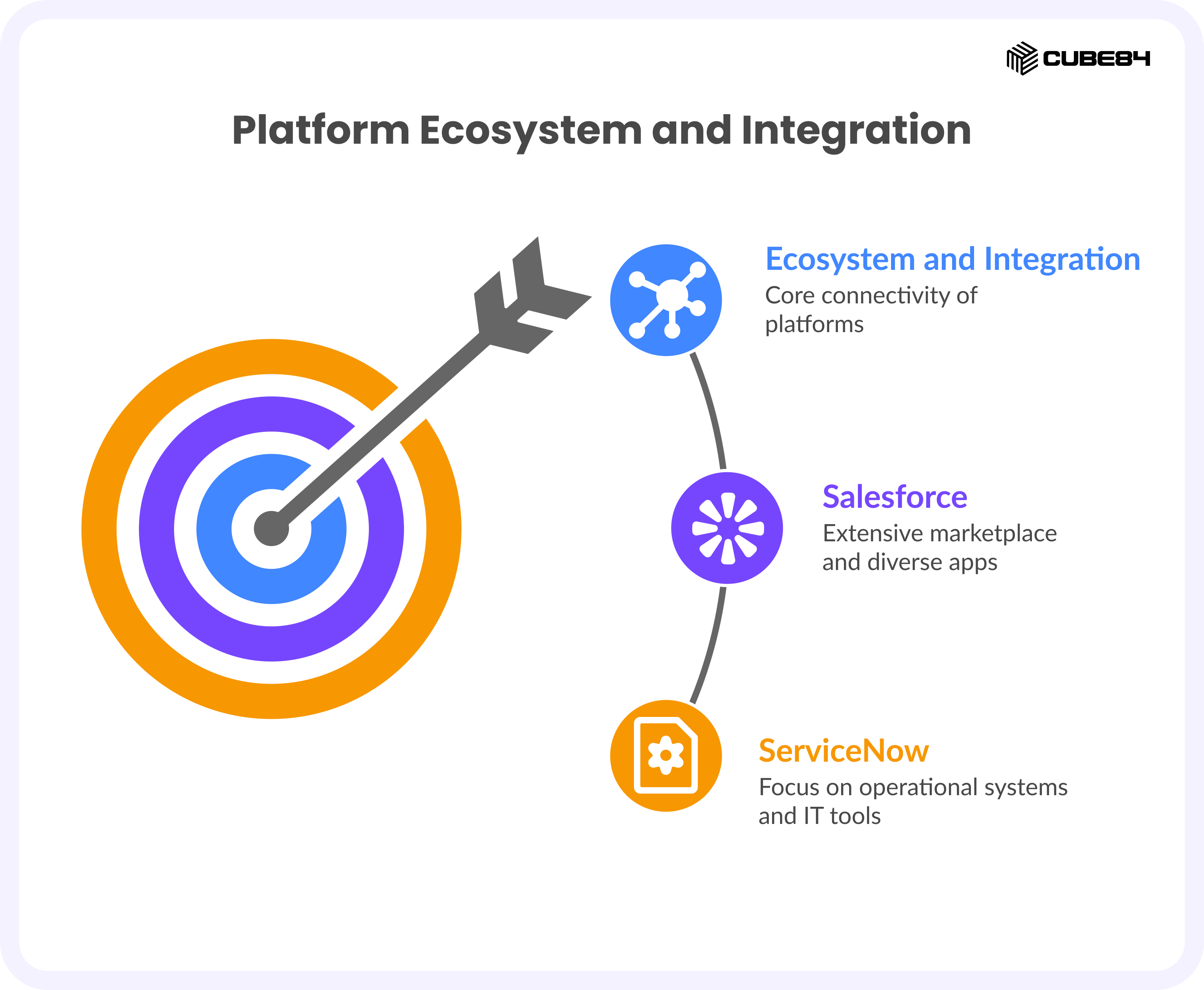
Another important factor to consider is how each platform connects with the rest of your technology stack.
Salesforce has built a large ecosystem over the years, with a wide range of applications available through its marketplace. These extensions cover everything from marketing tools to analytics and industry-specific solutions. This makes it easier for organizations to expand their capabilities without building everything from scratch.
ServiceNow also offers integrations, but its focus is more aligned with operational systems. It connects well with infrastructure tools, monitoring systems, and other enterprise applications that support internal processes.
The choice here often depends on what kind of ecosystem your organization needs to support.
Cost and Implementation Reality
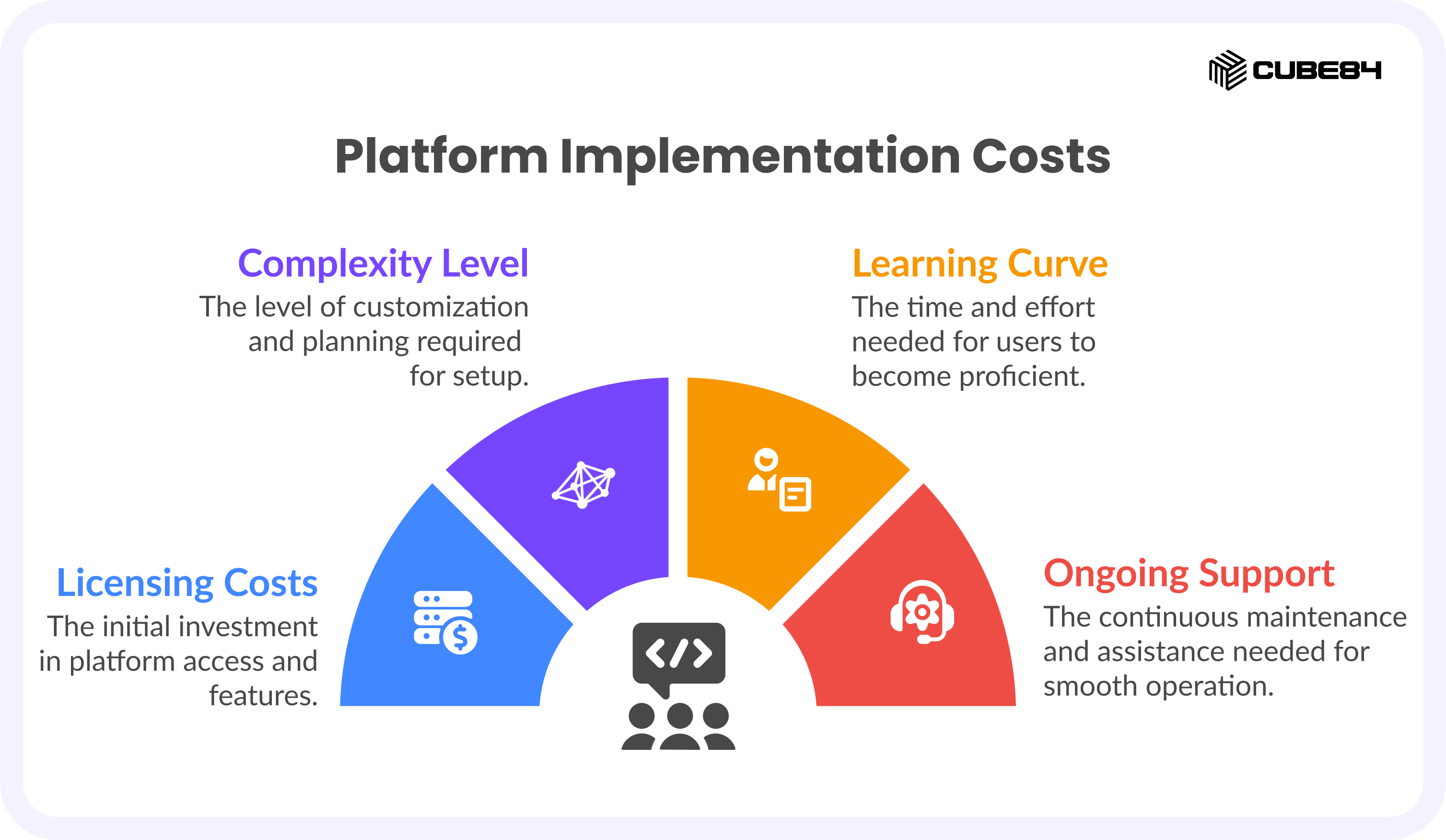
Both platforms require a meaningful investment, and it is important to look beyond licensing costs.
Salesforce implementations can vary widely depending on how customized the system needs to be. Some organizations start with a relatively simple setup and expand over time, while others build complex systems from the beginning. In most cases, ongoing support from administrators or developers is necessary to keep things running smoothly.
ServiceNow implementations tend to be more structured, often involving detailed planning and configuration. Because of its process-driven nature, it requires a clear understanding of how work should flow within the organization. This can make the initial setup more involved, but it also leads to more consistency once the system is in place.
In both cases, the success of the platform depends as much on how it is implemented as on the platform itself.
Where Each Platform May Fall Short
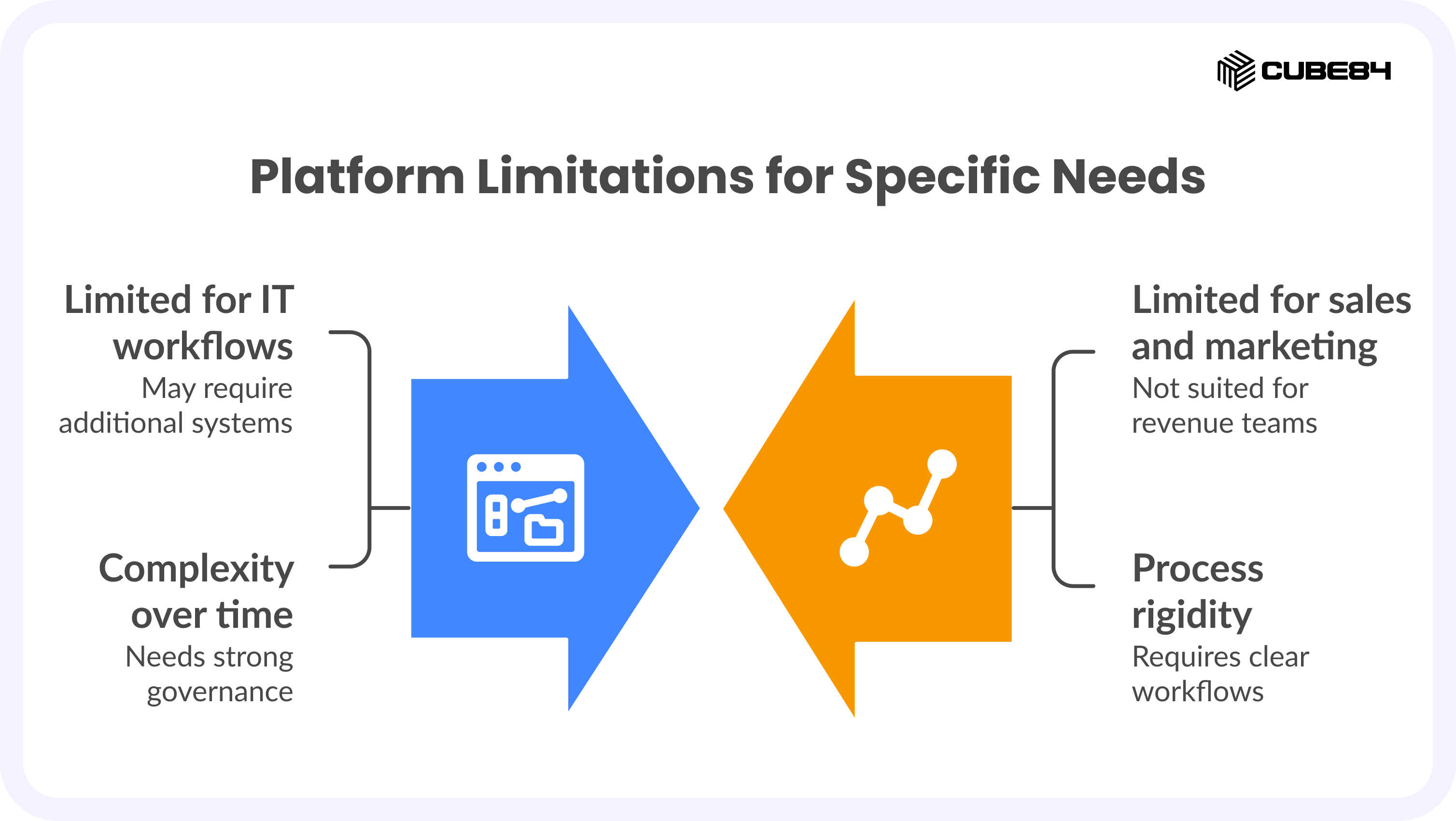
Understanding limitations is just as important as understanding strengths.
Salesforce is not designed for deep IT operations, so organizations that need strong internal workflow management may find gaps. It can also become complex over time if there is no clear governance in place, especially as more customizations are added.
ServiceNow, while strong in operations, is not designed for managing sales or marketing activities. It can also feel rigid in environments where processes are not well defined, since it relies heavily on structured workflows.
Recognizing these limitations early can help avoid misalignment later.
Choosing the Right Platform
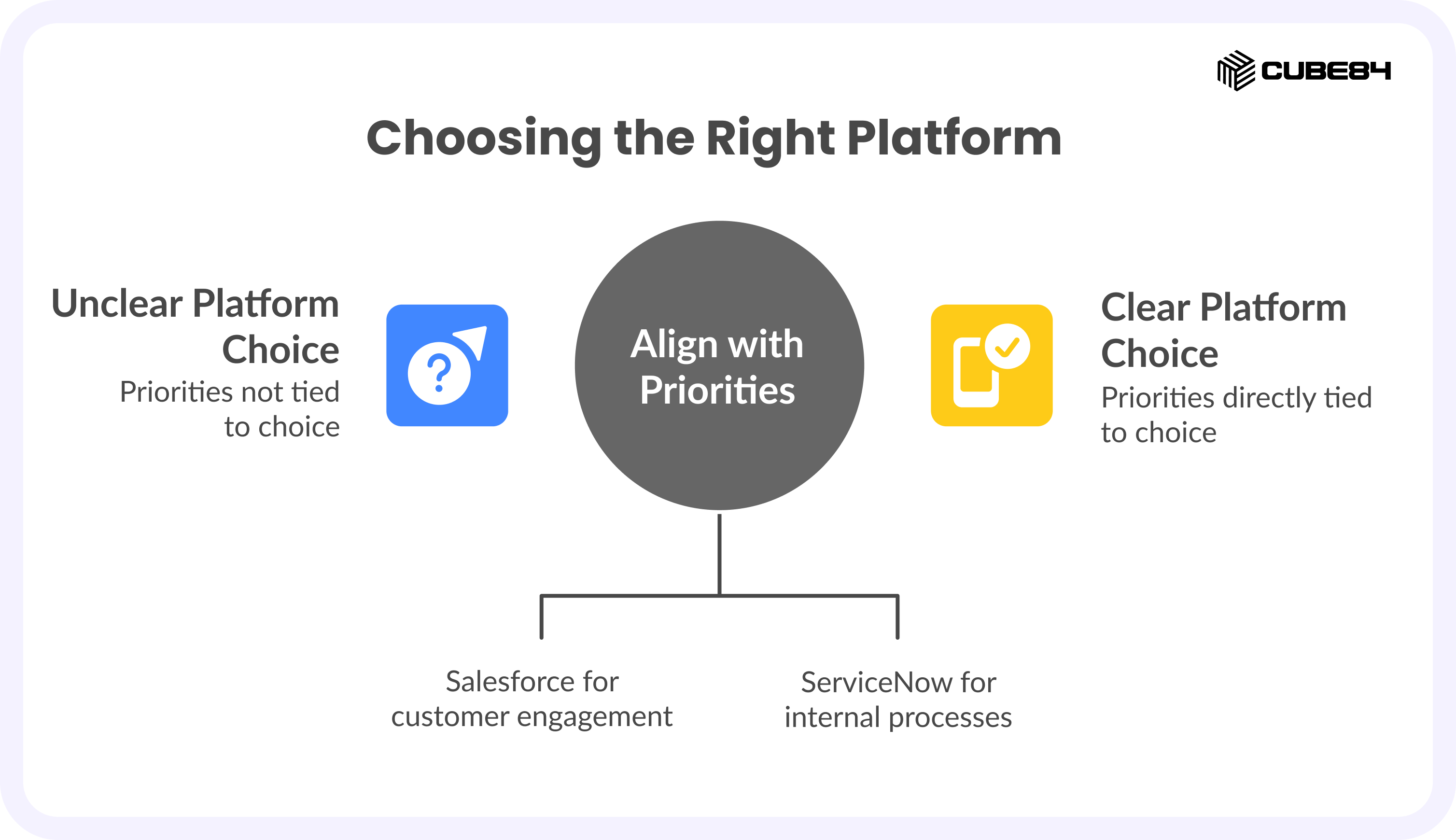
The decision between Salesforce and ServiceNow becomes clearer when it is tied directly to your organization’s priorities.
If your focus is on growth, customer engagement, and revenue visibility, Salesforce is likely to be the better fit. It is designed to support teams that interact directly with customers and need a clear view of relationships and opportunities.
If your focus is on improving internal efficiency, handling requests more effectively, and creating consistency across teams, ServiceNow is likely the better choice. It brings structure to environments where processes need to be reliable and traceable.
When Using Both Makes Sense
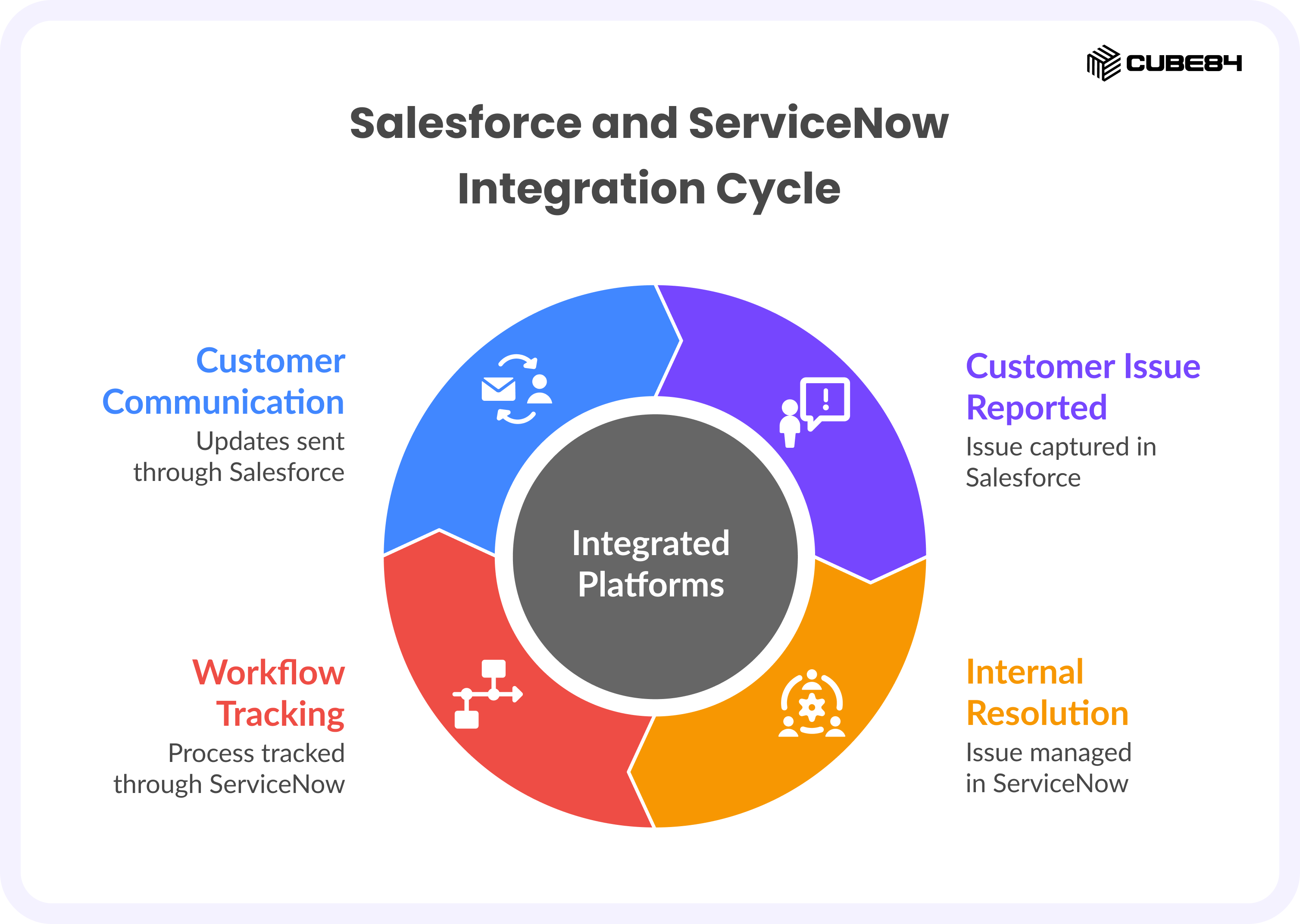
In many organizations, the choice is not either or. Both platforms can play complementary roles.
A common approach is to use Salesforce for customer-facing activities and ServiceNow for internal workflows that support those activities. For example, a customer issue might be logged in Salesforce, while the internal resolution process is managed in ServiceNow. Updates can then be communicated back to the customer through Salesforce.
This setup works well when responsibilities are clearly defined, and integration between the systems is handled carefully.
Final Thoughts
Salesforce and ServiceNow are both strong platforms, but they are built with different intentions. One is centered around customers and growth, while the other is centered around processes and internal operations.
Choosing between them is not about comparing feature lists. It is about understanding what your organization needs most right now and selecting the platform that aligns with that need.
And if your focus is on Salesforce, the platform itself is only one part of the equation. How it is set up, how it evolves over time, and how well it fits your way of working will shape the results you see.
If you are exploring Salesforce or feel like your current setup could be working better, you are always welcome to reach out to us. We would be happy to talk through your situation and help you figure out what makes the most sense.