
Should You Move From EDA to the Salesforce Education Cloud?
Since the reimagined Education Cloud launched in 2023, most new capabilities, especially around data, automation, and AI, have been built there rather than on EDA.
EDA is still supported and widely used. But it now plays a different role. It is stable and familiar, but no longer where new innovation is happening.
For most universities in 2026, Education Cloud is a serious option. As you read this, use our EDA to Education Cloud migration checklist to assess where your institution stands today.
The focus now is on timing and readiness, given everything that has been built on top of EDA over the past decade.
You are working through how to unwind years of:
Custom objects and automations layered onto EDA
Integration patterns that have grown over time
Data models shaped by local needs rather than a consistent lifecycle view
The complexity sits in execution:
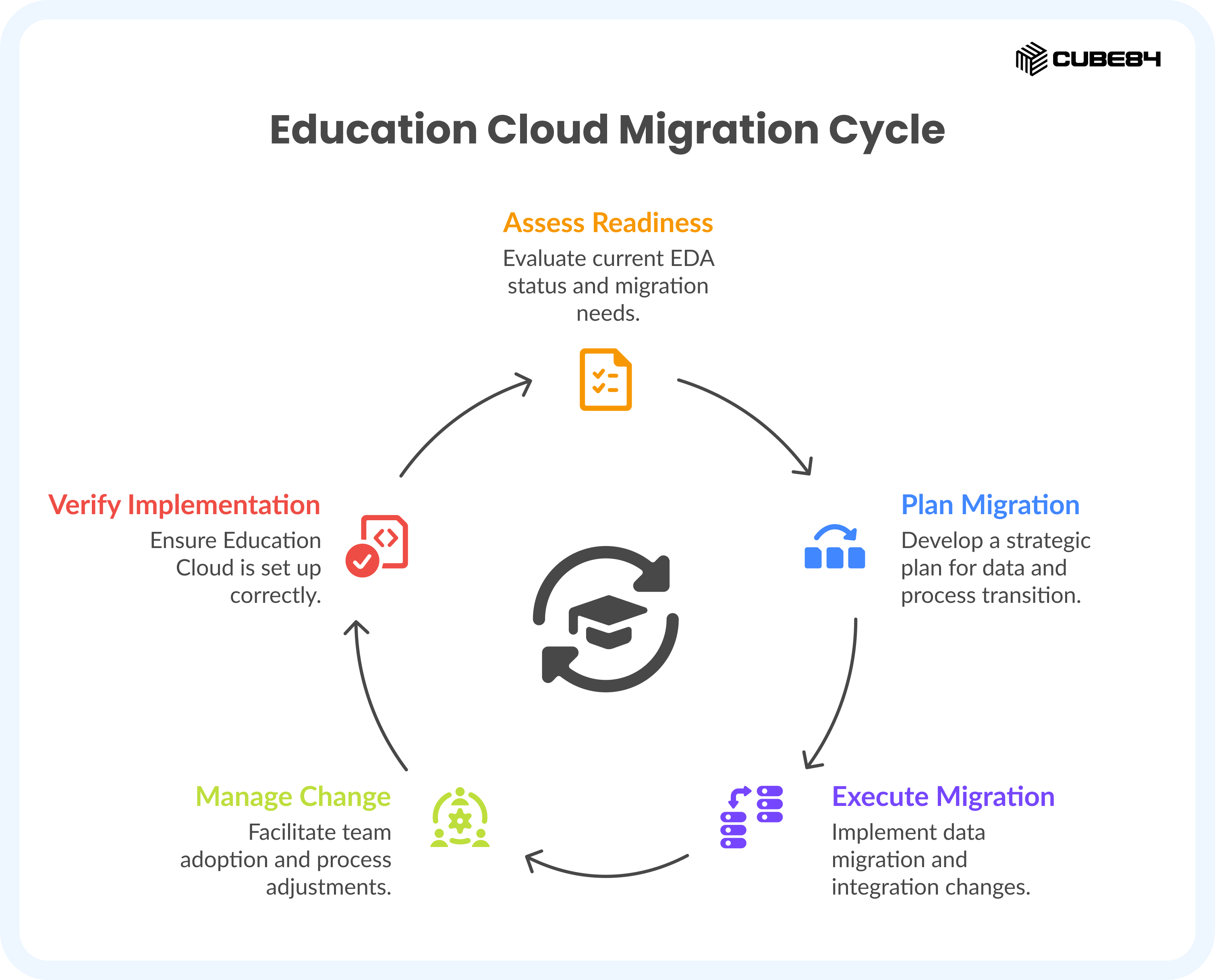
Data migration and reshaping
Integration stability during transition
Change management across teams that rely on current processes
As you go through the process, make sure you cross-check that you've implemented Salesforce Education Cloud the right way.
Cost vs Long-Term Value
Migrating to Education Cloud is a portfolio decision, not a feature decision.
EDA is a free managed package. Education Cloud is a paid SKU.
Focus on the total cost across the stack. What can you retire or consolidate if you move to Education Cloud?
Migration introduces one-time costs across data, integrations, and operating model changes. These should be justified by long-term simplification and better student lifecycle outcomes.
If your current budget only supports incremental improvements, moving too early increases risk without delivering full value.
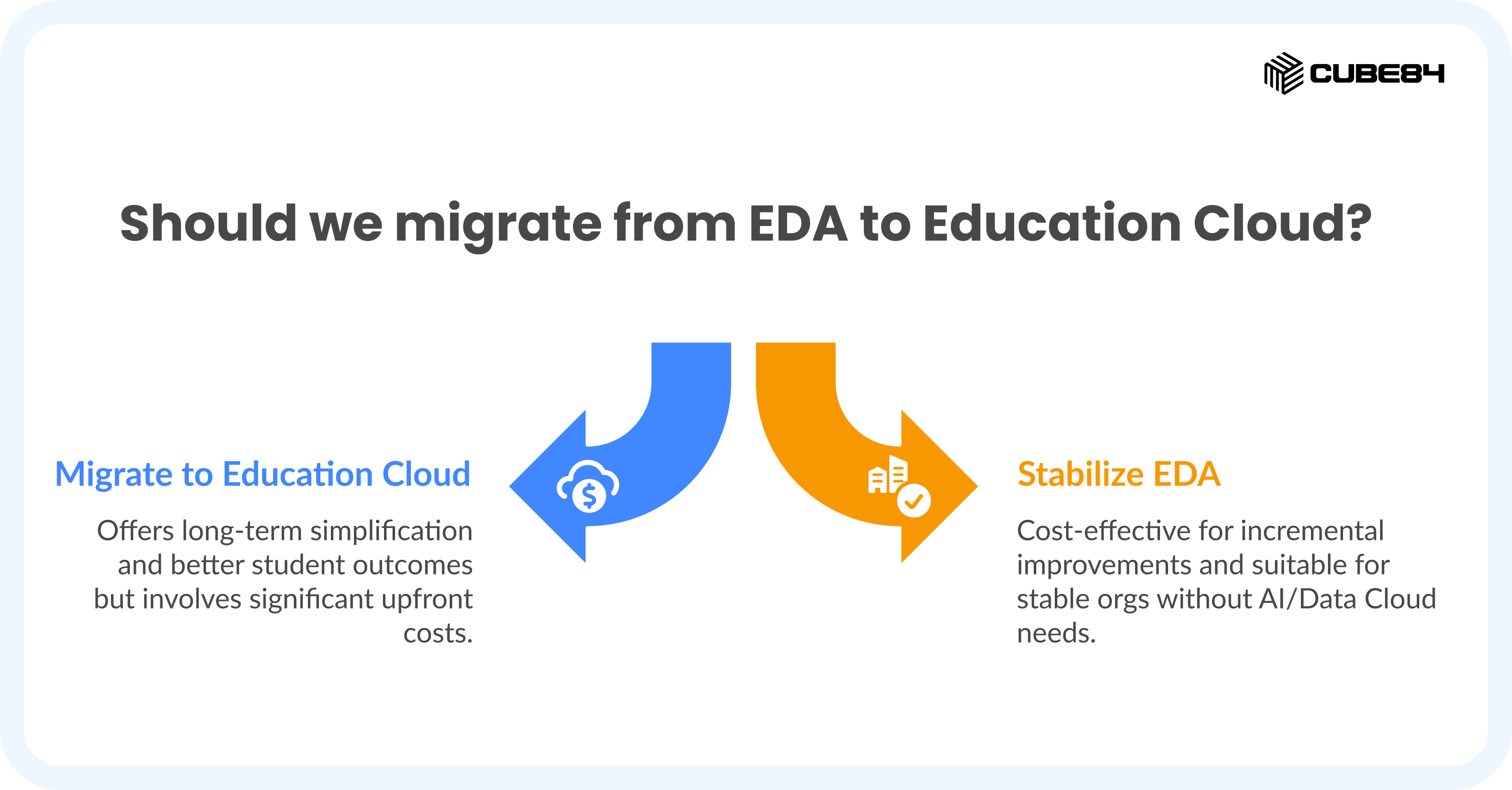
If your EDA org is relatively clean and stable, and you are not moving toward AI, Data Cloud, or cross-lifecycle journeys in the next two to three years, stabilizing EDA and investing in readiness is often the better call.
Fit With Your Architecture
Education Cloud needs to fit into your broader architecture, not sit alongside it.
You need alignment across:
SIS and LMS as systems of record
Data warehouse or lake strategy
Analytics and reporting model
AI roadmap and data readiness
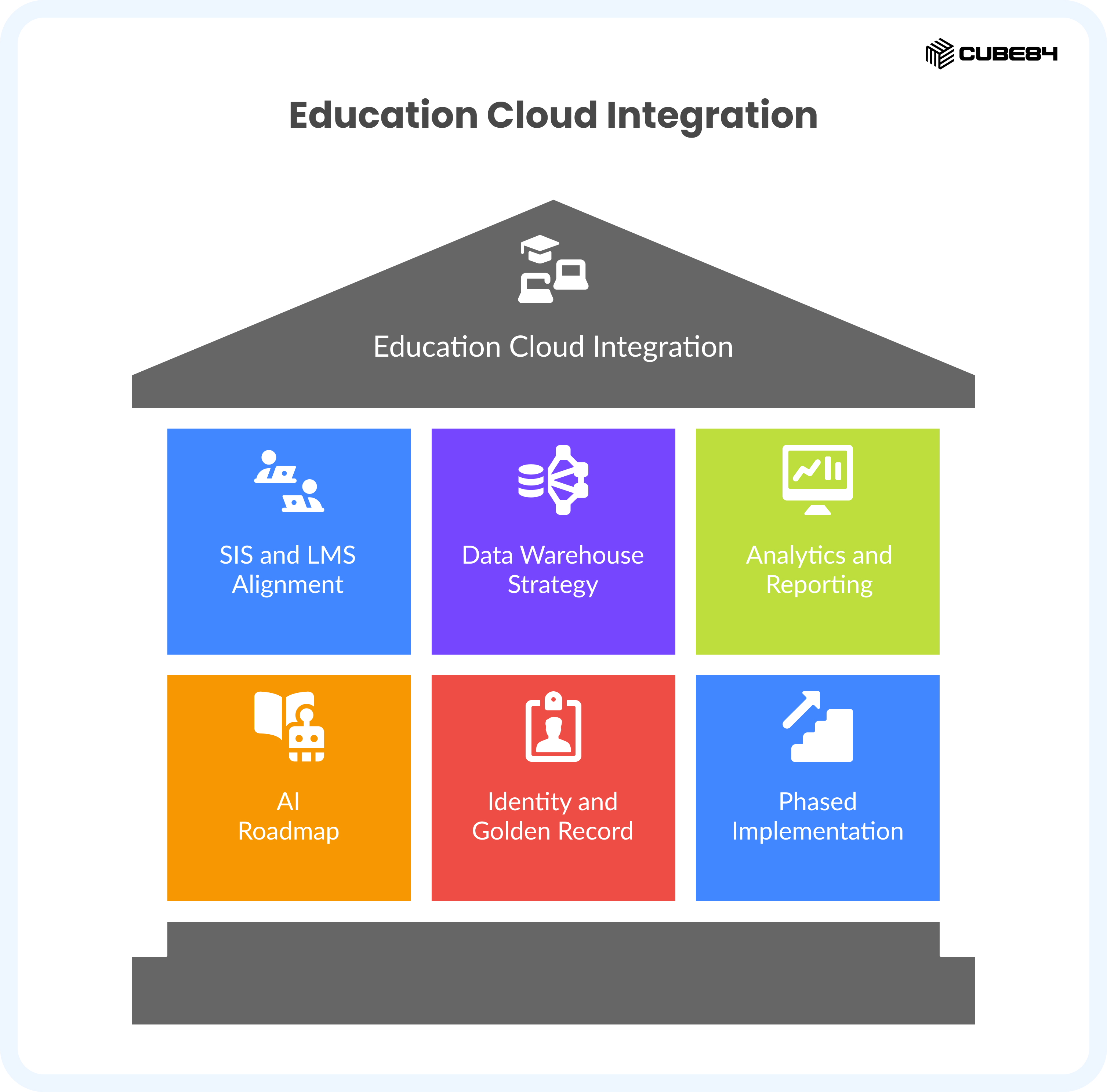
A clear definition of identity and a golden learner record are non-negotiable. Without these, you carry the same fragmentation into a new system.
In most cases, this is done in phases. Recruitment is usually the starting point, followed by student success and then advancement, while continuing to run alongside SIS and LMS rather than replacing everything at once.
Governance Will Make or Break This
Migration is one of the few points where you can clean up how data is managed.
Done well, it improves:
Consent management and compliance
Data retention and lifecycle policies
Visibility into how student data flows across systems
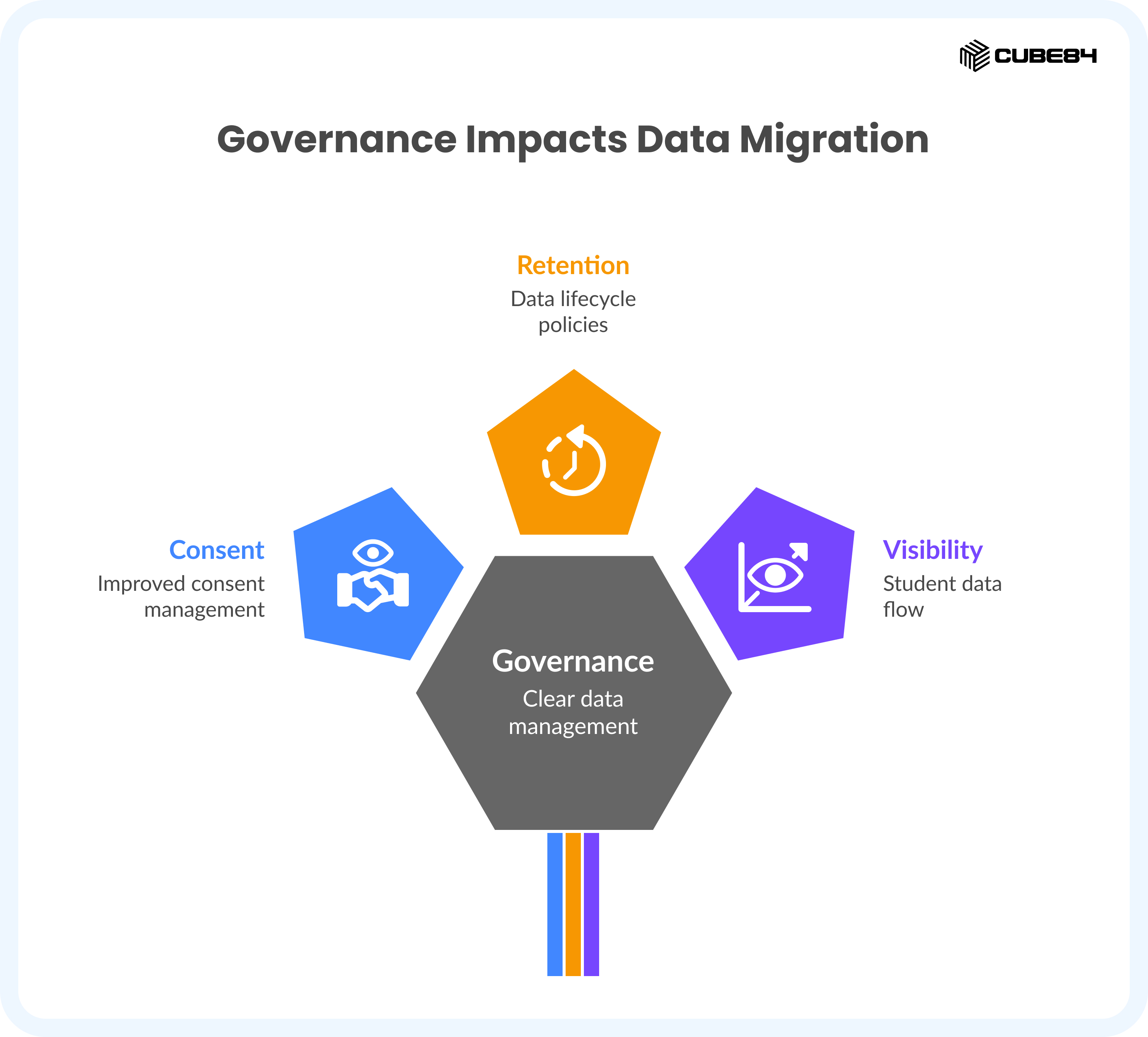
This only works if governance is already in place.
CIOs should expect:
Clear ownership of core data domains
A plan to reduce integration sprawl and shadow databases
Stabilisation of critical feeds from SIS, finance, and analytics systems
If governance is weak today, migration will carry those issues forward.
In many institutions, the same learner exists multiple times across SIS, CRM, and finance systems, often with conflicting data. These are not just data quality issues. They become migration risks that need to be addressed before moving.
Changes In Your Operating Model
Education Cloud, more than being another platform, changes how your teams work.
In practice, this comes down to a few areas:
More consistent, shared processes across departments
Reduced local customisation and admin sprawl over time
A clear choice between building internal capability and relying on partners
Skill uplift, governance, and partner strategy all contribute to the overall cost and risk.
How to Migrate and When Not To
There are a few migration patterns that consistently work.
A greenfield Education Cloud org with a phased rollout is often lower risk than modifying a heavily customised EDA org in place
Domain-by-domain migration, starting with recruitment, helps deliver value without disrupting everything at once
Coexistence with legacy systems is expected. You do not move everything in one go
Migration is not just a lift and shift. It is a chance to reshape the data model. In practice, ETL is used to clean data, remove unused fields, and enforce lifecycle rules as data moves into Education Cloud.
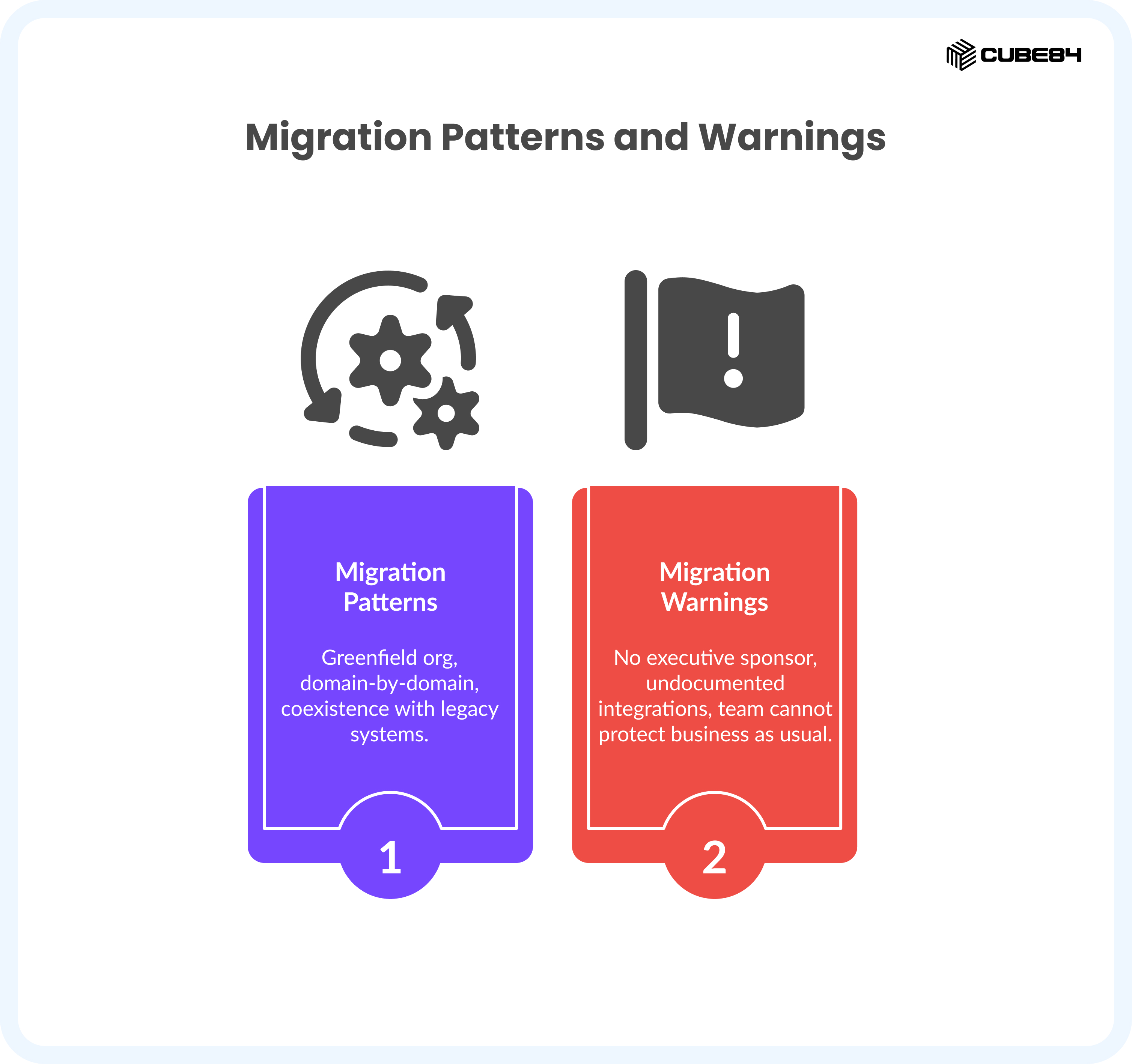
Equally important are the conditions where it makes sense to wait.
Do not begin a migration if:
There is no executive sponsor willing to commit to an EDA sunset timeline
Core integrations are undocumented, fragile, or unowned
Your team cannot protect business as usual while delivering the migration
Decide Now Move Later
For most institutions, Education Cloud is the long-term direction. If you have worked through these areas and the case is clear, moving to Education Cloud is a strong step forward. It sets up a more connected, lifecycle-driven approach to student engagement and operations.
That does not mean migration should start immediately. If you think a few red flags still exist, the next step is a readiness program, not a migration project.
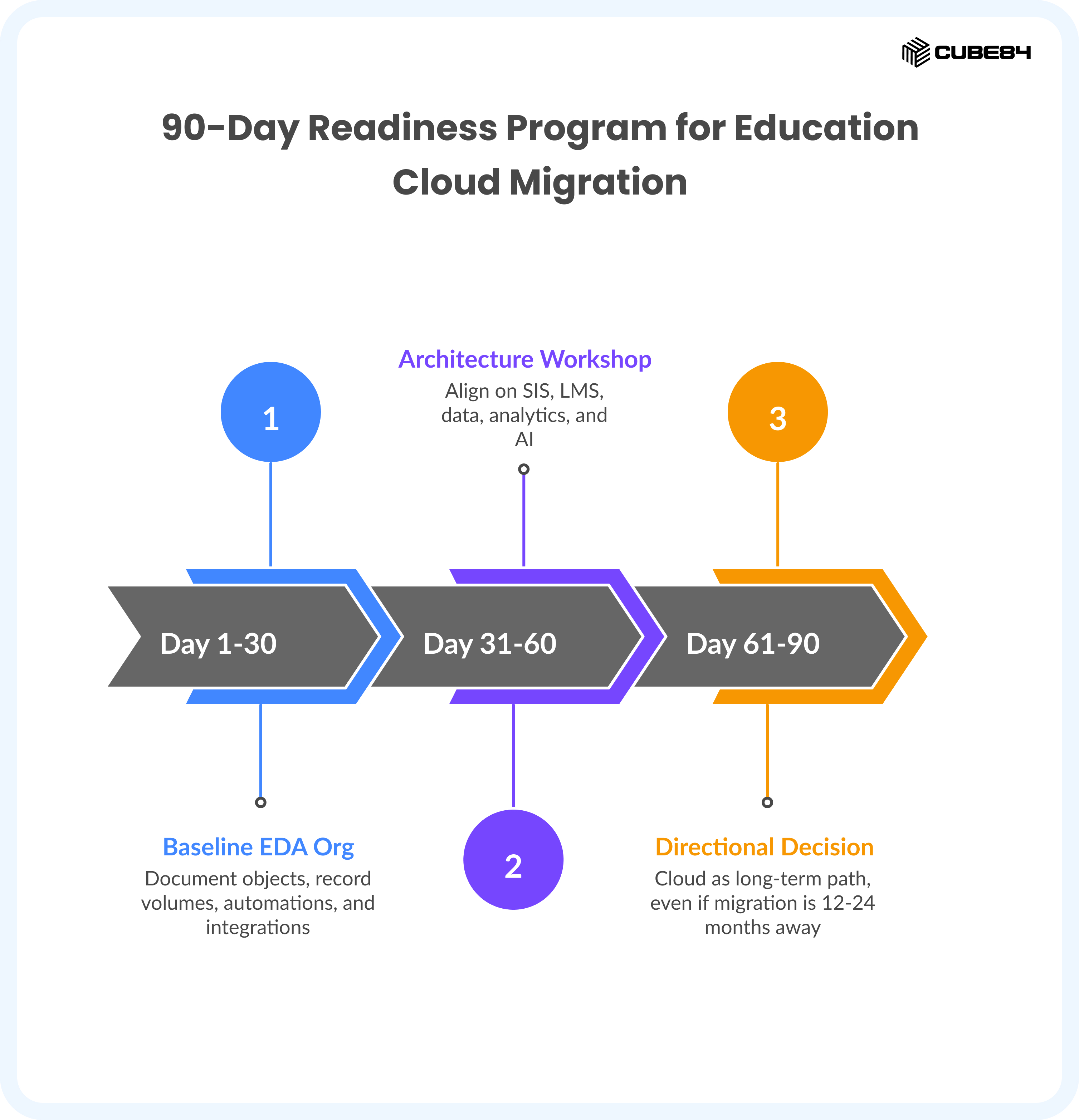
Over the next 90 days, three areas typically matter most:
Baseline your EDA org
Document objects, record volumes, automations, and integrationsRun an architecture workshop
Align on SIS, LMS, data, analytics, and AIMake a directional decision
Confirm whether Education Cloud is your long-term path, even if migration is 12 to 24 months away
Institutions that get this right not only move the fastest, but they also move with a clear understanding of cost, risk, and long-term value.