


The Reporting Challenge in Higher Education
Universities and colleges generate massive amounts of data every day, from admissions forms and class attendance to alumni donations and funding reports. Yet most of this information remains scattered across different systems like Student Information Systems (SIS), Learning Management Systems (LMS), and fundraising databases. The result is fragmented visibility, delayed reports, and duplicated manual work.
For many institutions, even something as routine as tracking enrollment trends or retention rates can take weeks of spreadsheet consolidation and manual verification. By the time those numbers reach leadership, they are already outdated.
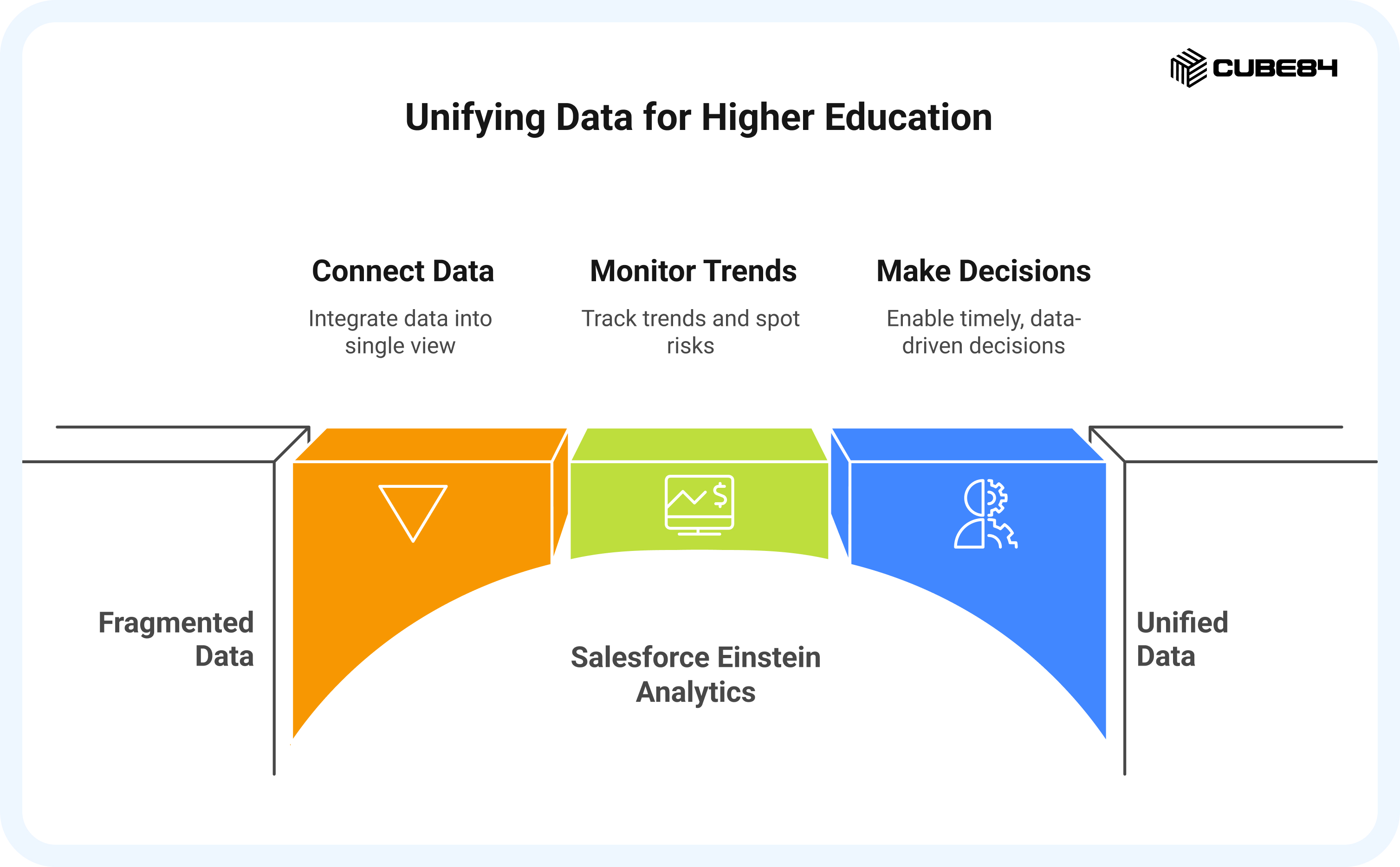
Salesforce Einstein Analytics changes this. It connects data from admissions, academics, and advancement systems into a single view within Salesforce Einstein Analytics, allowing universities to monitor trends, spot risks, and make timely decisions. From understanding which programs attract the most applicants to identifying at-risk students early, the platform turns static reports into actionable insights.
In short, Einstein Analytics helps higher education institutions unify data, reduce manual reporting, and make faster, well-informed decisions.
What Salesforce Einstein Analytics Is (and How It Works)
Most universities already collect large volumes of information, but making sense of it is a challenge. Salesforce Einstein Analytics helps close that gap by turning fragmented education data into visual dashboards, trends, and predictive insights that anyone on campus can understand.
Core capabilities
At its core, the platform helps institutions see what is happening and why. It connects data from systems like SIS, LMS, and CRM into a single workspace where users can explore and interpret information with live updates.
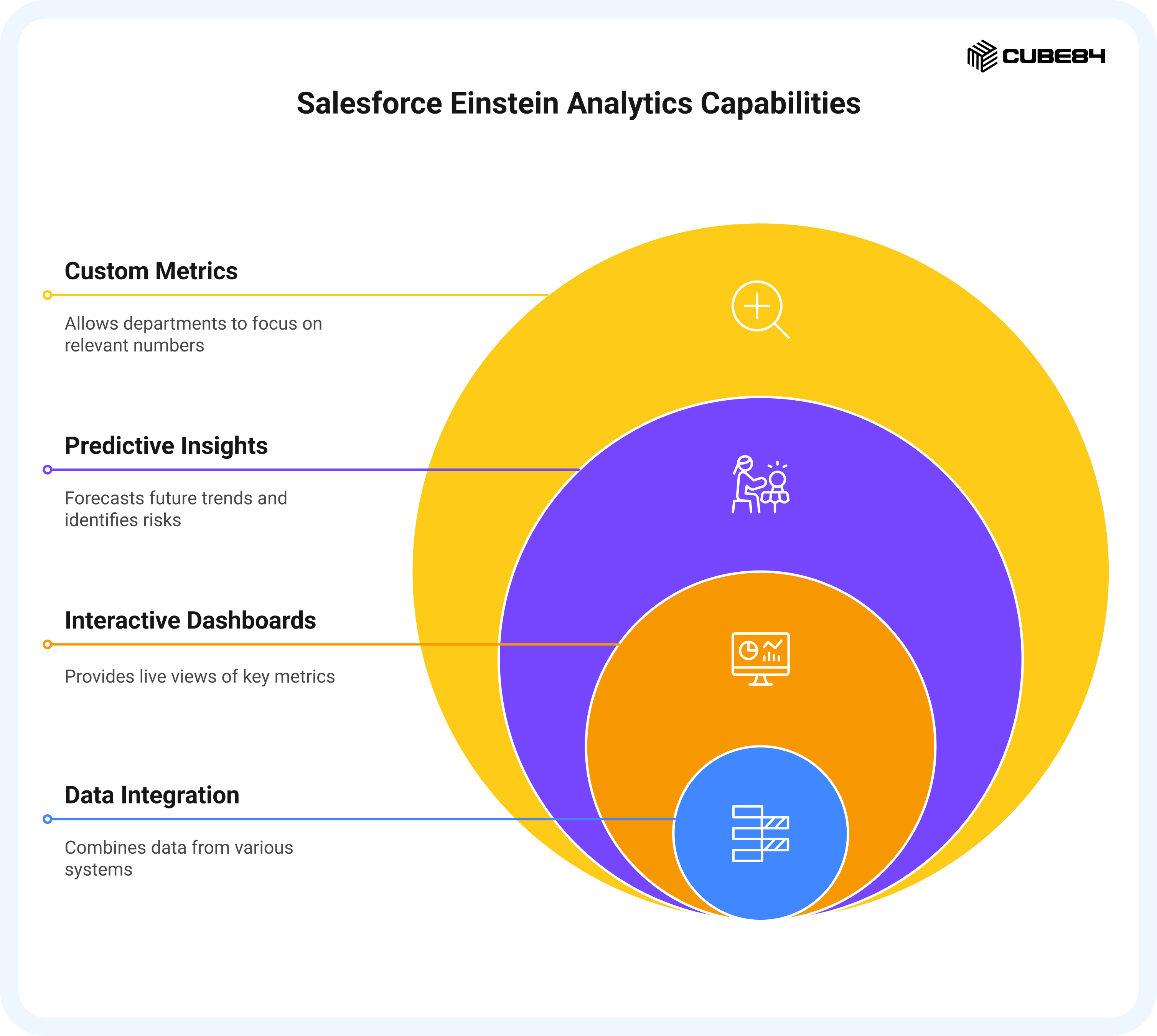
1. Data integration: Combines information from admissions, academics, and fundraising into one structured view.
2. Interactive dashboards: Provides live views of enrollment trends, program outcomes, and donor engagement.
3. Predictive insights: Uses historical data to identify at-risk students or forecast future enrollment.
4. Custom metrics: Allows each department to focus on the numbers that matter most, whether it is admissions yield, retention, or campaign participation.
For example, an admissions office can use Einstein Analytics to identify which applicants are most likely to enroll, based on past conversion patterns. A development team can track donor behavior and uncover new opportunities for alumni engagement.
Salesforce Einstein Analytics turns education data into clear, visual insights that help teams move from collecting information to using it effectively.
Integration with Education Cloud
Salesforce for Higher Education becomes more powerful when Einstein Analytics is layered on top of it. Education Cloud uses the Education Data Architecture (EDA) to organize student, program, and relationship data within a unified model. Einstein Analytics then analyzes that connected data to uncover trends and correlations.
If EDA tracks how students interact with faculty, programs, and activities, Einstein Analytics turns those relationships into dashboards that highlight which programs have the highest engagement or where students may need additional support.
This integration allows universities to connect strategy with evidence, giving every decision from admissions planning to alumni outreach a data-driven foundation.
Einstein Analytics integrates with Education Cloud through the Education Data Architecture, using connected data to visualize student performance, program outcomes, and engagement trends.
Why Higher Education Needs Einstein Analytics
Universities today don’t want simple reports. They need a clear view that helps them act with confidence. As student expectations grow and funding sources shift, decision-making depends on timely, accurate, and connected data. Yet, many institutions still face familiar roadblocks.
Salesforce Einstein Analytics helps address these challenges in practical, outcome-focused ways:
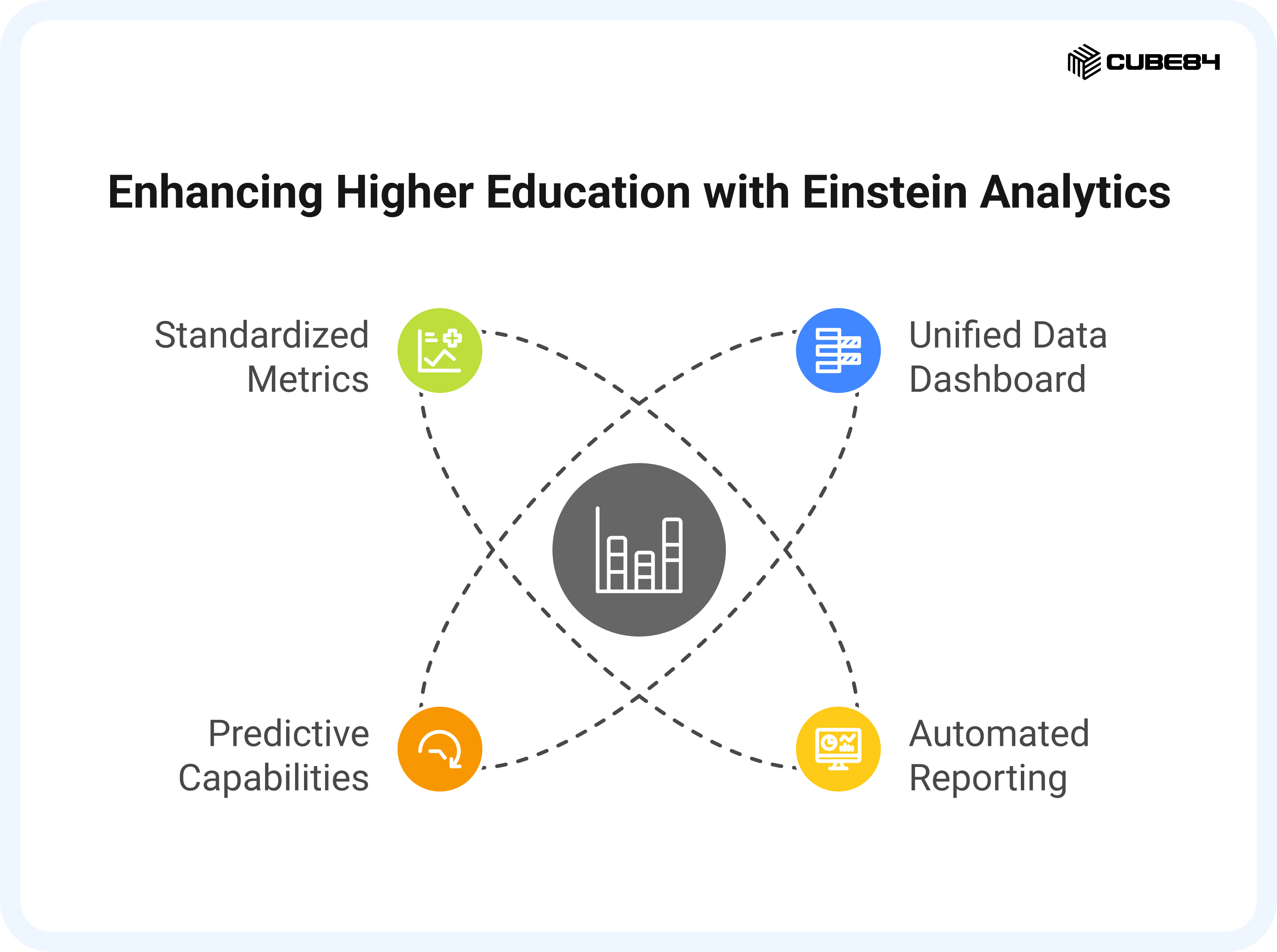
1. Disconnected data between departments: Brings together information from admissions, academics, and advancement into one unified dashboard.
2. Manual reporting that slows progress: Automates data refresh and visualization so leaders always have current insights.
3. Limited visibility into future outcomes: Adds predictive capabilities that help identify potential enrollment or retention shifts before they occur.
4. Inconsistent data across teams: Standardizes metrics and definitions to create a single source of truth for leadership.
For instance, before implementing Einstein Analytics, many universities spent days combining reports from separate systems to understand enrollment patterns. Now, those insights refresh automatically, helping teams focus on strategy rather than data cleanup.
Salesforce Einstein Analytics gives higher education institutions a connected foundation for decision-making, reducing manual effort while improving foresight and accountability.
These needs translate into simple, practical ways universities are already using Einstein Analytics to manage their daily work.
The Five Ways Einstein Analytics Is Transforming Higher Education
In most universities, the challenge is not collecting data but coordinating it. Einstein Analytics works best when it reflects how teams actually collaborate.
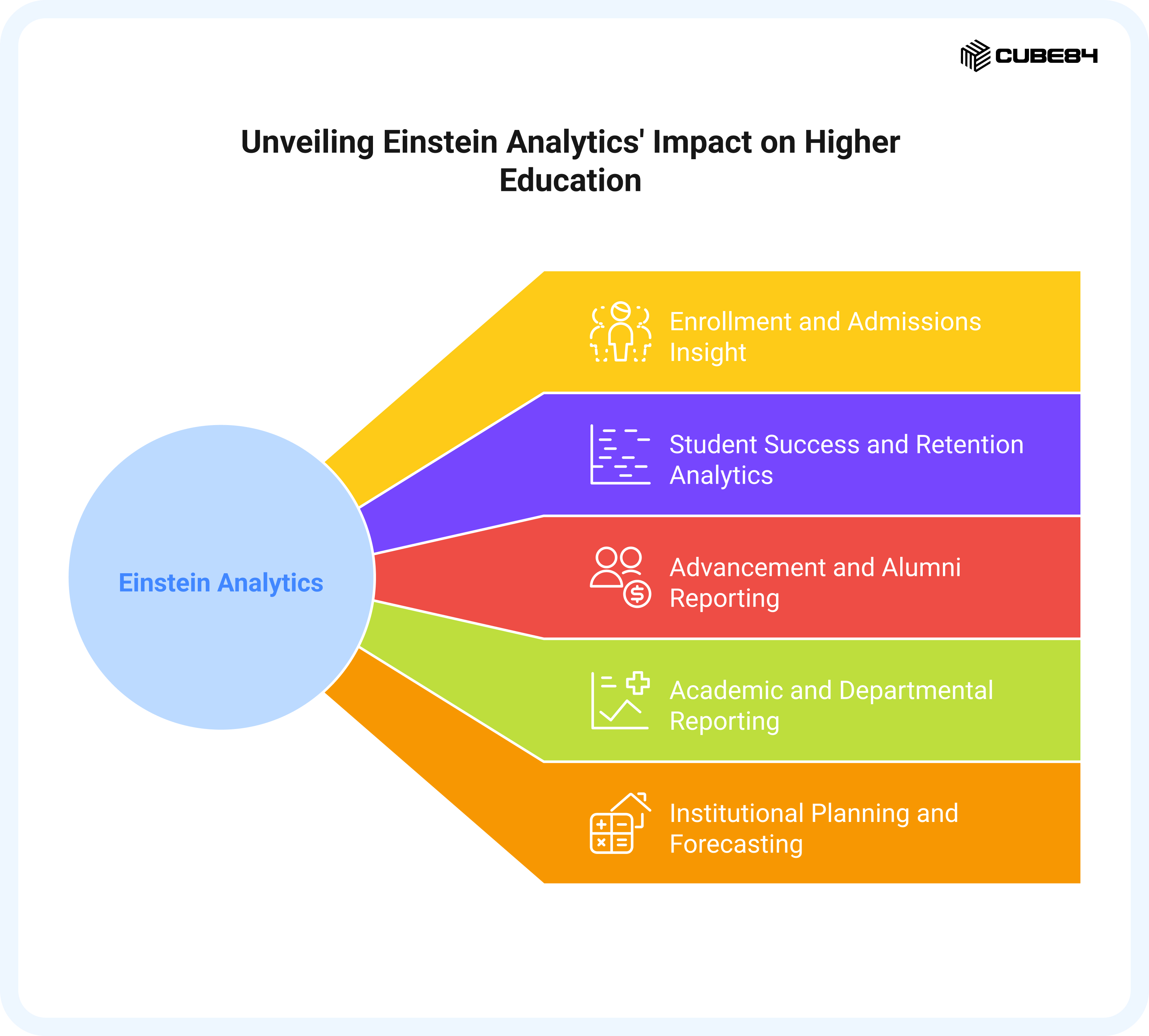
Here are five examples of how universities are applying Salesforce Einstein Analytics to improve admissions, academics, advancement, and institutional planning.
1. Enrollment and admissions insight
Problem: Admissions teams often struggle to track where applicants drop off or which campaigns bring in the best candidates.
Solution: Einstein Analytics builds a complete admissions funnel that maps inquiries, applications, admits, and enrollments.
Example: At a mid-sized college, admissions noticed that most inquiries came from one region but only a small portion converted. The team adjusted outreach and improved their yield.
Benefit: Admissions leaders gain clear visibility into applicant activity and campaign performance.
2. Student success and retention analytics
Problem: Identifying at-risk students early can be difficult when academic performance, attendance, and engagement data are stored separately.
Solution: Einstein Analytics combines LMS activity, grades, and advising notes into one view that highlights early warning signs.
Example: Advisors receive alerts when a student’s attendance drops or engagement falls, allowing timely support.
Benefit: Institutions can step in sooner to help students stay on track.
3. Advancement and alumni reporting
Problem: Alumni and donor data are often scattered across event tools and spreadsheets, making it hard to measure engagement.
Solution: Einstein Analytics brings donation history, participation data, and campaign results into one dashboard.
Example: An advancement office identified alumni who attended recent events but had not donated, creating a re-engagement plan that increased contributions.
Benefit: Advancement teams can understand supporter behavior, prioritize outreach based on engagement scores, and focus on meaningful relationships.
4. Academic and departmental reporting
Problem: Departments use different metrics, making it difficult to compare results across programs.
Solution: Einstein Analytics standardizes KPIs such as pass rates, course completions, and faculty performance across the institution.
Example: The engineering department reviewed course data from previous semesters and added early academic support for students who were struggling.
Benefit: Leadership gains consistent, comparable insights across departments.
5. Institutional planning and forecasting
Problem: Leadership teams often lack a clear view of future enrollment, staffing, or budget needs.
Solution: Einstein Analytics brings together data from admissions, finance, and advancement to forecast trends.
Example: A university anticipated a drop in enrollment and introduced targeted scholarships to maintain class size.
Benefit: Leadership can plan ahead and align decisions with institutional priorities.
Implementation Tips and Common Pitfalls
Adopting Salesforce Einstein Analytics in higher education is most successful when universities start with clear goals and a phased plan. The platform is capable, but outcomes depend on how teams prepare, structure their data, and drive adoption across departments.
Below are common mistakes institutions make during implementation and how to avoid them.
Mistake | Impact | How to Fix It |
Skipping data cleanup | Leads to inaccurate dashboards and unreliable insights | Audit and standardize data before integration begins |
Over-customization | Creates maintenance issues and limits flexibility | Use standard Salesforce objects wherever possible |
Insufficient user training | Results in low adoption and limited value | Conduct role-based training sessions for each department |
Building too much at once | Causes delays and confusion | Start with one use case, validate results, and expand gradually |
Ignoring governance | Makes reporting inconsistent across teams | Define ownership, access levels, and review cycles from the start |
Universities that invest time in data readiness and user alignment see stronger adoption and faster returns. Salesforce Einstein Analytics works best when it is introduced as part of a broader strategy for institutional improvement, not just as a reporting upgrade.
For a step-by-step guide on preparing your system for analytics success, read our blog How to Clean Up Salesforce Org for University Teams.
Measuring Success and ROI
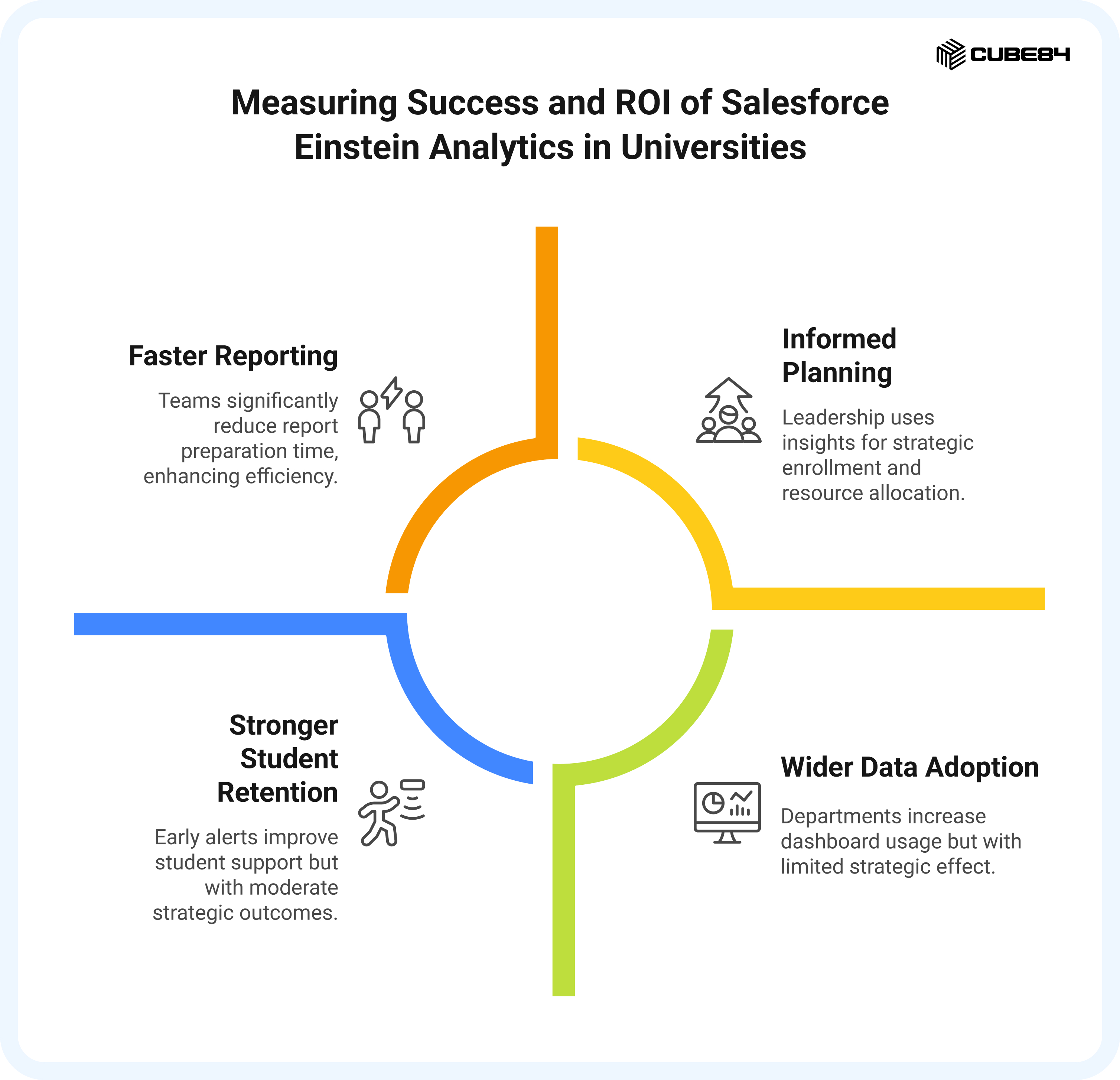
Once Salesforce Einstein Analytics is implemented, universities should set clear measures to understand its impact. The real measure of success lies not in the number of dashboards created, but in how effectively data supports planning, collaboration, and timely decisions across the institution.
Here are practical ways to track success and long-term value:
Faster reporting: Observe how much less time teams spend preparing reports and how often leadership can access updated insights without manual effort.
Stronger student retention: Track whether early alerts and engagement insights are helping advisors identify and support students sooner.
Better fundraising outcomes: Review changes in alumni participation or donor re-engagement after analytics-driven targeting.
Wider data adoption: Measure how frequently departments use dashboards and whether staff rely less on static reports.
More informed planning: Evaluate how leadership uses insights for enrollment targets, staffing decisions, or resource allocation.
When data begins to inform everyday actions, the value of analytics becomes evident in improved coordination, faster responses, and decisions that align more closely with institutional goals.
For insights that help universities refine their Salesforce approach and avoid common challenges, read our blog https://cube84.com/blog/the-biggest-mistakes-universities-make-when-using-salesforce
Conclusion: From Data Chaos to Clarity
Most universities already have the data they need. What has been missing is the ability to view it as one connected story. Salesforce Einstein Analytics gives higher education institutions that perspective, helping them replace scattered reports with insights that guide daily decisions.
From admissions to alumni relations, every department benefits when information flows freely and is easy to interpret. Leaders gain a shared understanding of performance, and teams can act with confidence knowing they are working from the same data.
As higher education changes, Einstein Analytics helps universities use information to support students, strengthen programs, and plan with long-term purpose.
Every institution’s data story is different, but the goal is the same: to make information useful and trusted. Connect with CUBE84 to explore the right approach for your higher education needs.