

Hiring a Salesforce admin sounds straightforward at first. You need someone to manage users, keep data clean, and support your teams. In practice, the role has grown well beyond that.
In 2026, a Salesforce admin is often responsible for maintaining workflows, supporting reporting, coordinating with multiple teams, and making sure the system continues to reflect how the organization actually operates. The quality of this role has a direct impact on how useful Salesforce becomes over time.
Because of that, hiring the right person is less about finding someone who knows the platform in general and more about finding someone who can work within your environment and support how your teams use it day to day.
What a Salesforce Admin Actually Does Today
Before starting the hiring process, it helps to be clear about what the role involves.
A Salesforce admin is typically responsible for managing users and permissions, maintaining data quality, supporting reports and dashboards, and handling configuration changes such as fields, validation rules, and flows. In many organizations, they also act as the first point of contact when teams need changes or run into issues.
In smaller teams, one person may handle everything. In larger organizations, admins often work alongside developers, analysts, or consultants.
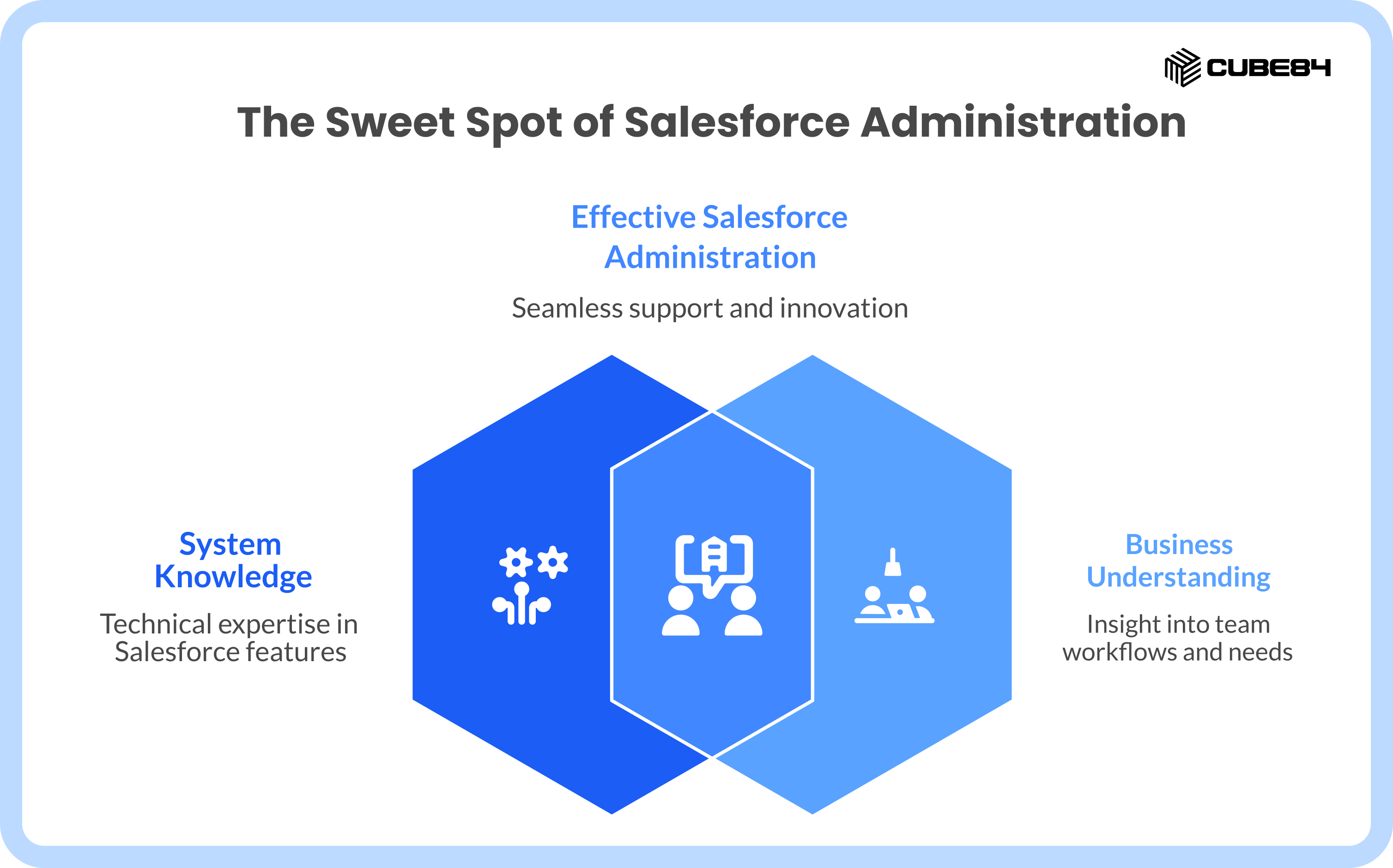
The role sits somewhere between operations and technology. It requires both system knowledge and an understanding of how teams actually work.
Key Skills to Look For
When you hire a Salesforce admin, technical knowledge is important, but it is only one part of the picture. The role requires a mix of platform skills and practical thinking.
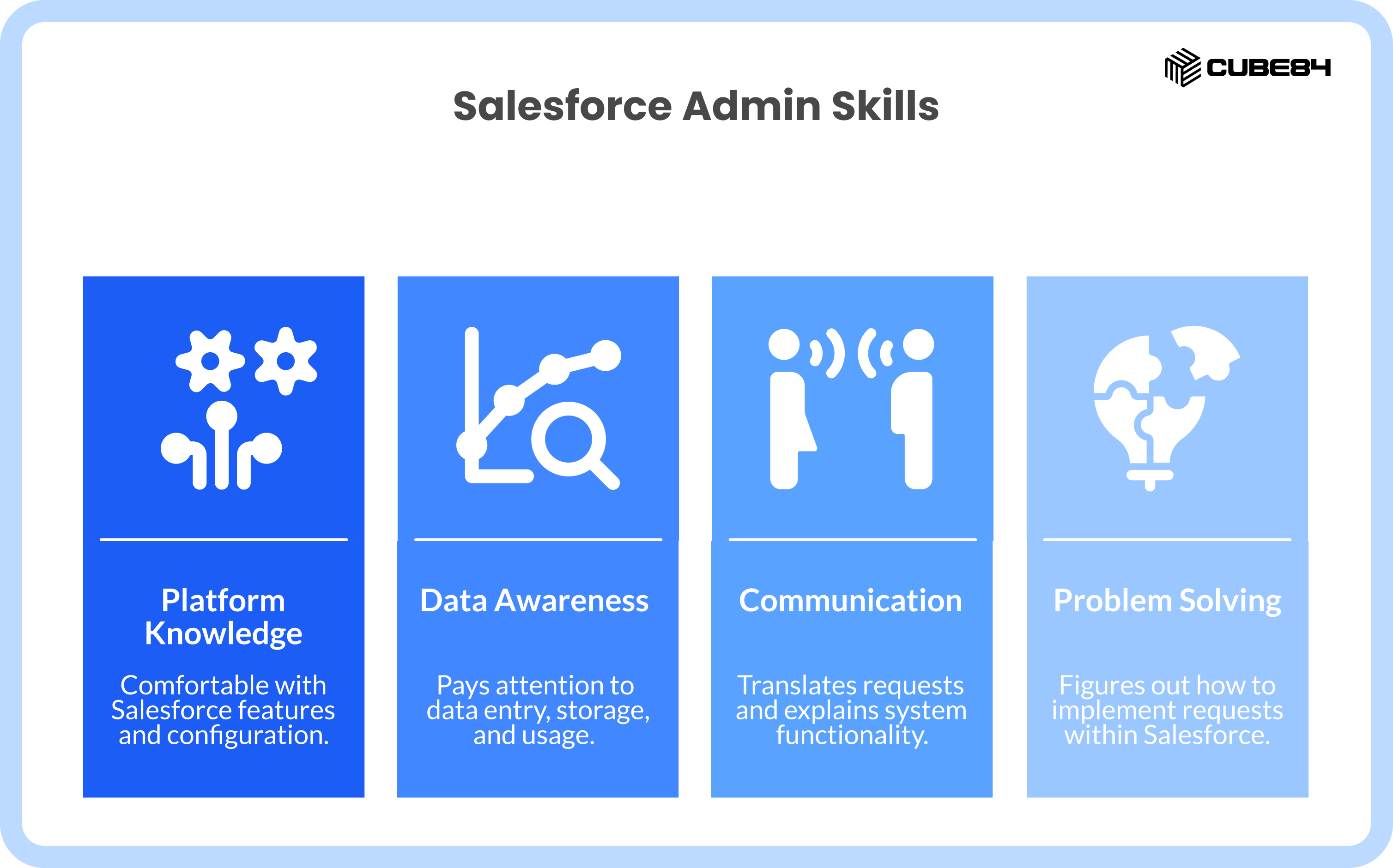
Platform and Configuration Knowledge
An admin should be comfortable working with core Salesforce features such as objects, fields, page layouts, validation rules, and Flow. They should understand how to configure the system without relying on code for every change.
This does not mean they need to know everything in depth, but they should be able to make changes confidently and understand the impact of those changes.
Data Awareness
Salesforce is only as useful as the data inside it. A strong admin pays attention to how data is entered, stored, and used.
They should understand concepts like duplicate management, data structure, and basic reporting logic. More importantly, they should be able to spot when data is becoming inconsistent and take steps to address it.
Communication with Business Teams
Admins spend a large part of their time working with non-technical teams. They translate requests into system changes and explain how the system works in simple terms.
Someone who can ask the right questions and clarify requirements will often be more effective than someone who focuses only on technical detail.
Problem Solving
Not every request comes with a clear solution. Teams may describe what they need in broad terms, and the admin has to figure out how to implement it within Salesforce.
This requires a practical approach to problem-solving and an ability to balance what is possible with what is actually useful.
Experience: What Matters More Than Years
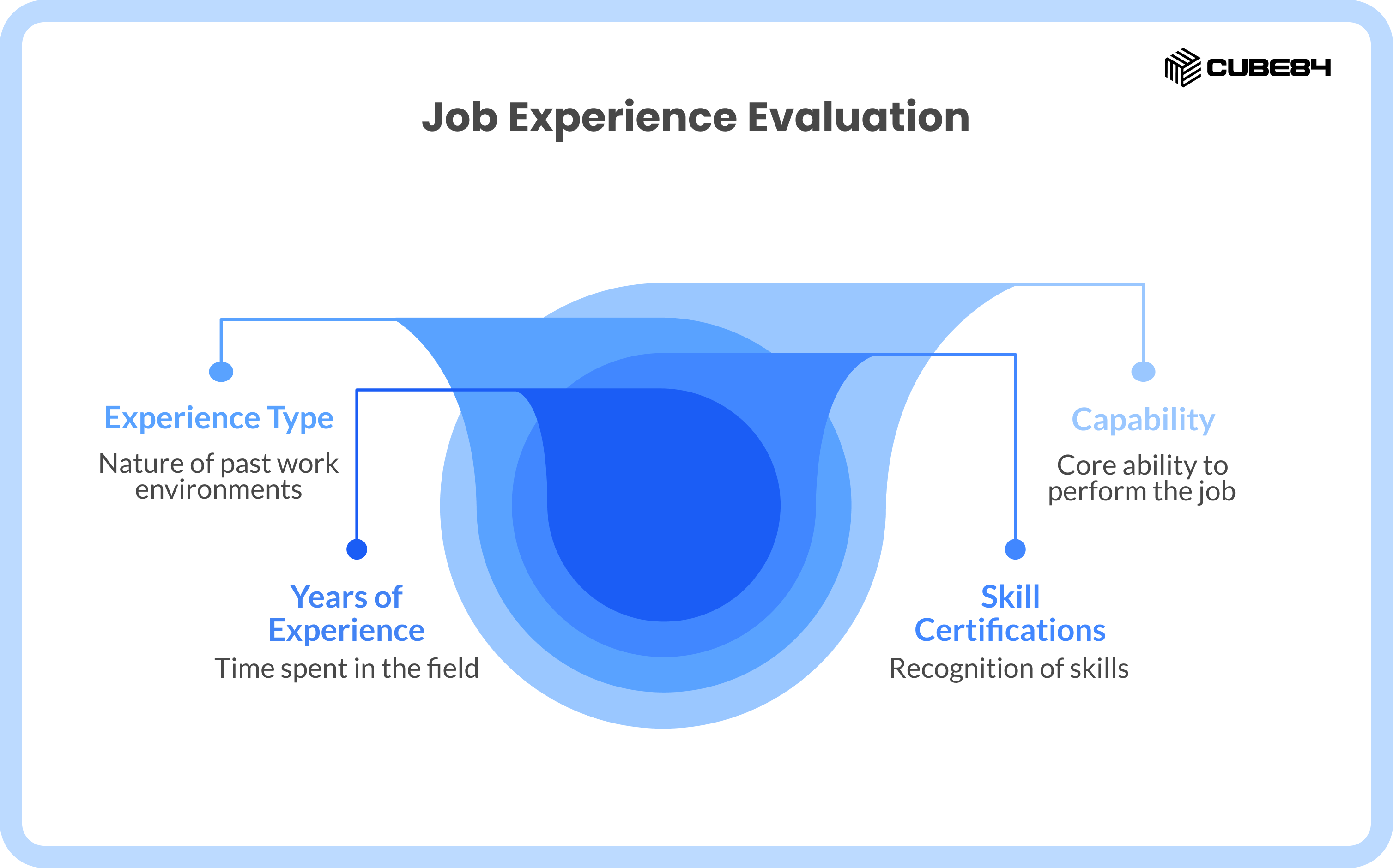
Many job descriptions focus heavily on years of experience, but that alone does not always reflect capability.
It is often more useful to look at the type of environments the candidate has worked in.
For example, someone who has supported a growing team or worked on system improvements may bring more relevant experience than someone who has only maintained an existing setup without much change.
Certifications such as Salesforce Administrator are helpful because they show familiarity with the platform, but they should not be the only factor in the decision.
Questions to Ask During the Hiring Process
The interview process is where you begin to understand how a candidate thinks and works.
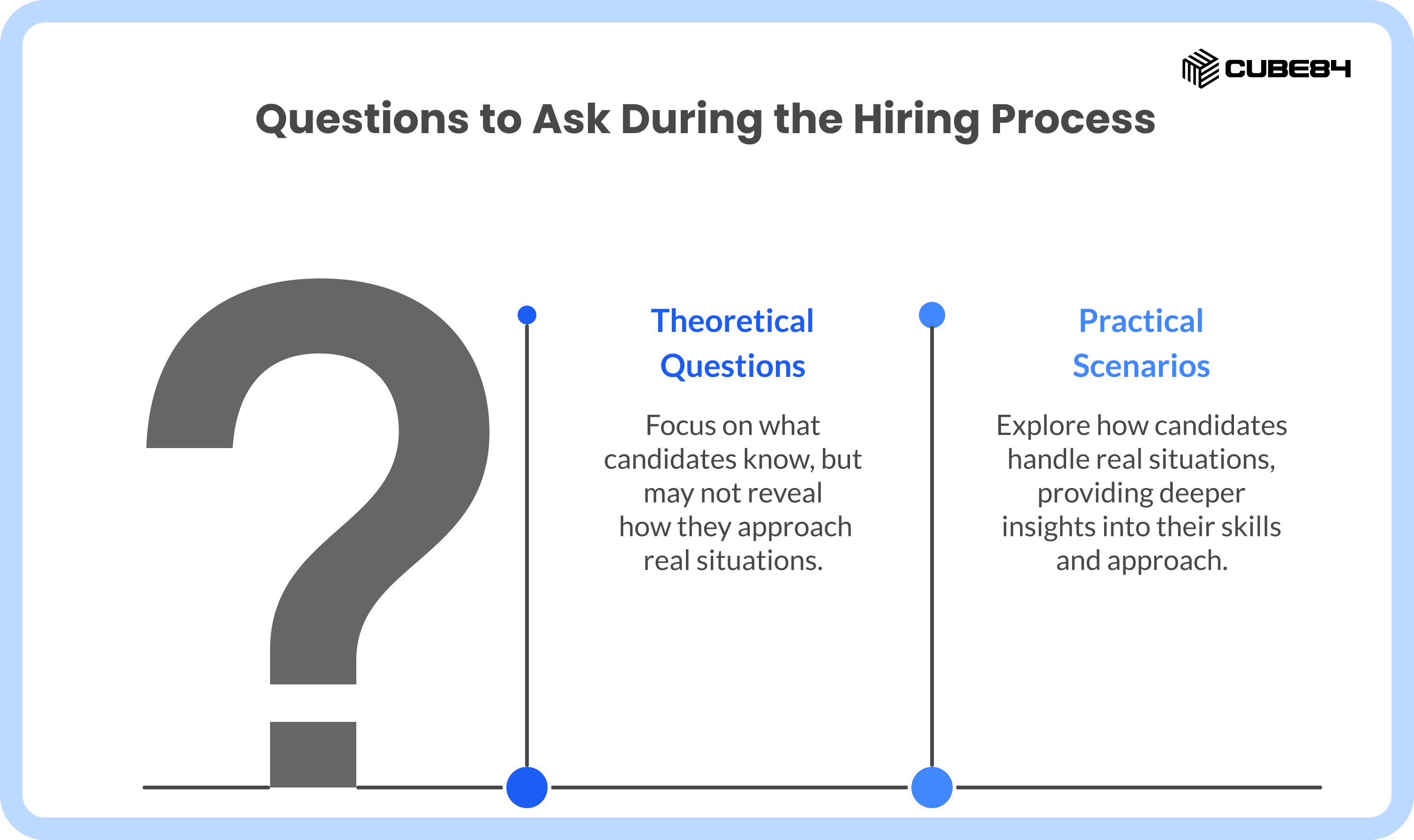
Instead of focusing only on what they know, it helps to explore how they approach real situations.
You might ask how they handled a request that required balancing different team needs, how they improved a process within Salesforce, or how they dealt with data issues in a previous role.
Practical scenarios often reveal more than theoretical questions.
Common Hiring Challenges
Many organizations face similar challenges when trying to hire a Salesforce admin.
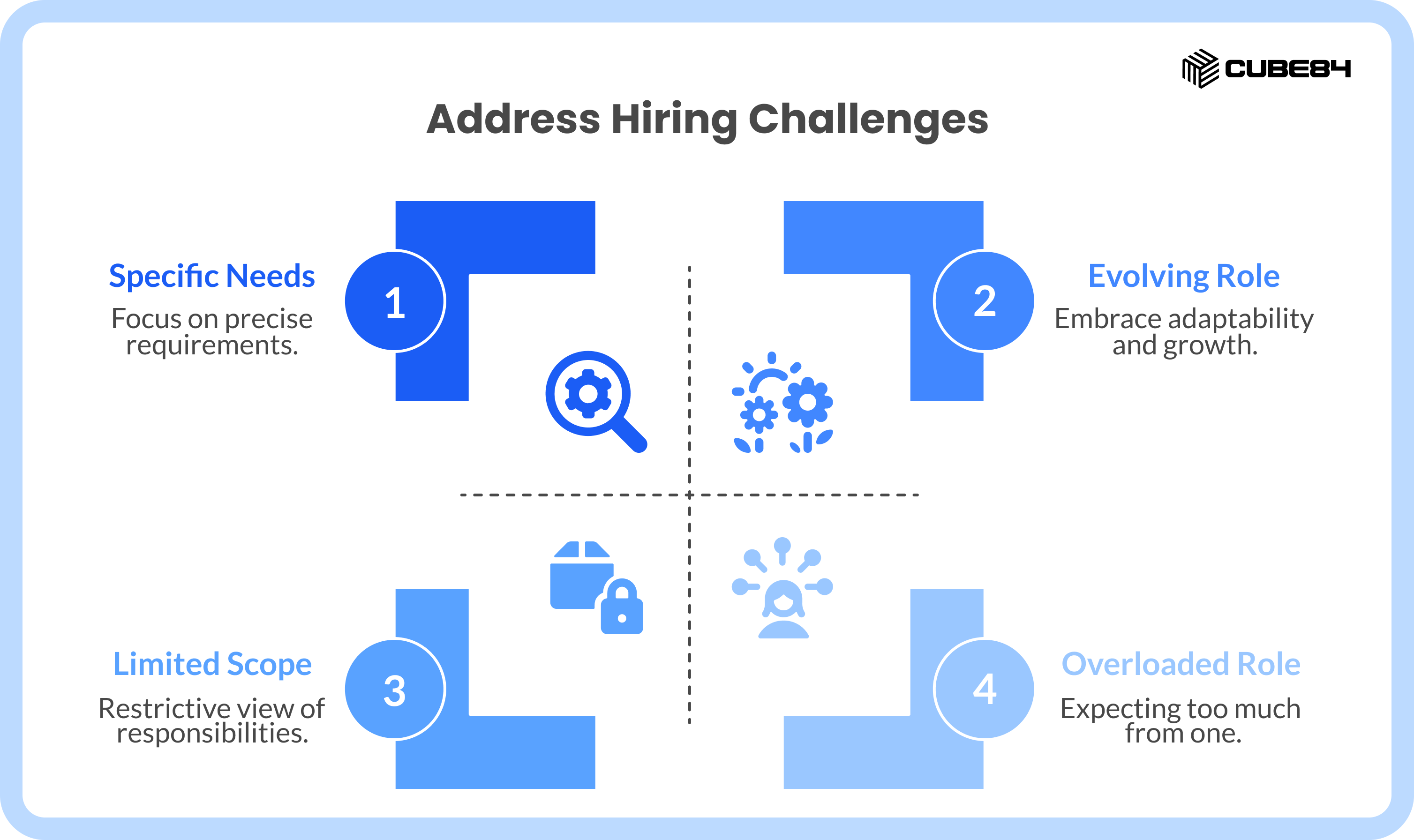
Hiring Too Narrowly
Some teams look for a very specific skill set based on their current setup. This can make it harder to find candidates and may not reflect how the role will evolve.
Expecting One Person to Do Everything
In some cases, organizations expect a single admin to handle configuration, development, reporting, and strategy. This can lead to overload and slow progress over time.
Underestimating the Role
Salesforce admins are sometimes seen as purely technical support. In reality, they play an important role in how teams use the system and how processes improve over time.
When to Hire vs When to Look for Support
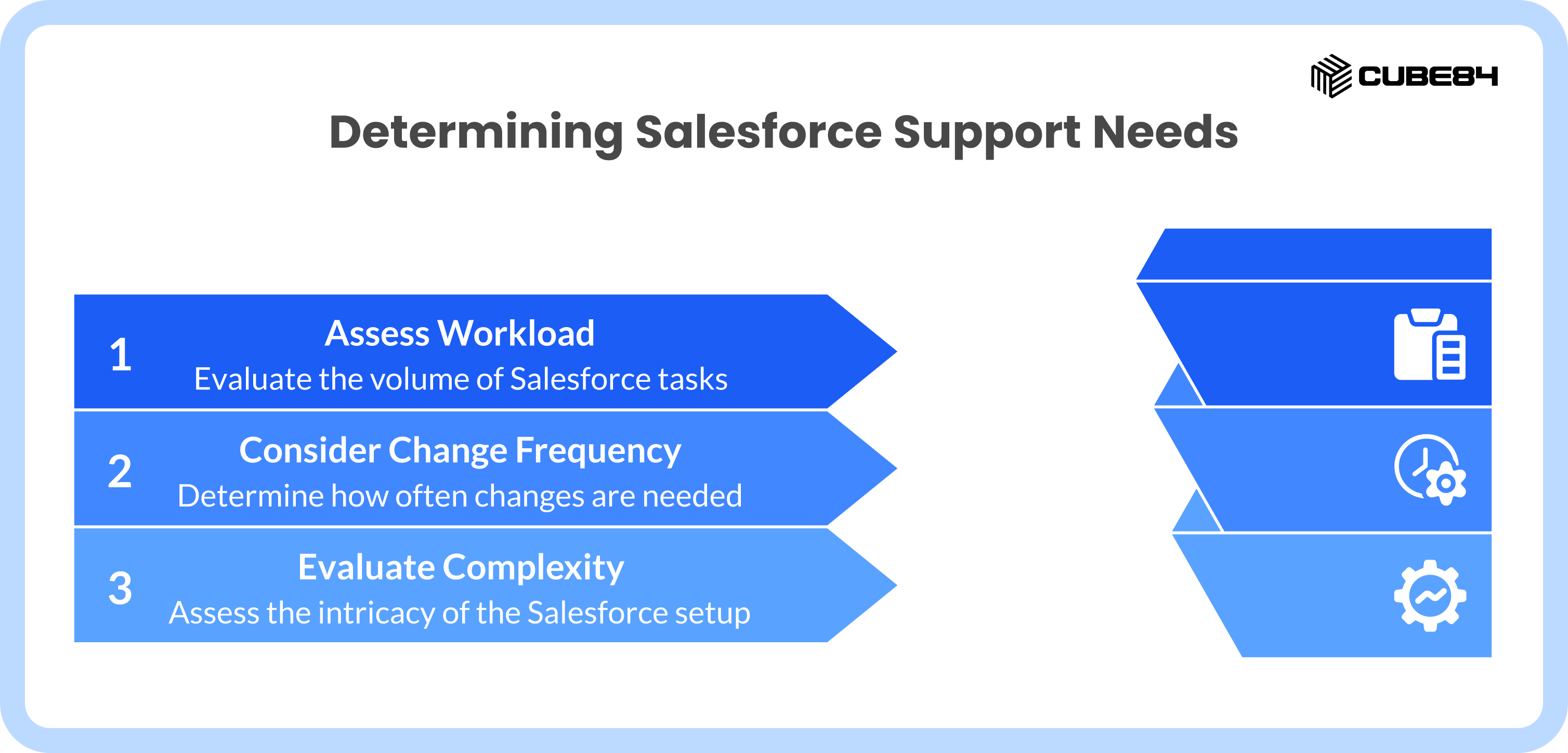
Not every organization needs a full-time admin immediately. Some teams benefit from having in-house support when Salesforce is central to daily operations and requires ongoing changes. Others may not have enough consistent work to justify a full-time role.
In these situations, it can help to look at different ways of supporting the system, whether that involves part-time support, external guidance, or a combination of both. The right approach depends on how frequently changes are needed and how complex the setup is.
Final Thoughts
Hiring a Salesforce admin is not just about filling a role. It is about making sure your system continues to support your teams as they grow and change.
The right person will not only maintain what is already in place but also help improve the use of Salesforce across the organization.
If you are looking to hire a Salesforce admin and want to understand what would work best for your setup, it can help to talk through your current system, your team structure, and how Salesforce is being used today.
At CUBE84, we work with organizations at different stages of this journey, whether they are building internal capability or seeking ongoing support to manage and improve their Salesforce environment. If you would like to explore what this could look like for your team, feel free to reach out to us!