


There is a certain kind of week that returns every year in housing nonprofits, and most teams can recognize it without anyone needing to say it out loud.
Deadlines are approaching, reports are taking shape, and conversations begin to circle around the same quiet questions. Are all the numbers in place? Have all fields been filled? Does everything line up the way it should? People revisit files they thought were done, cross-check entries, and keep one eye on the clock while trying to stay careful.
HUD reporting tends to do this. It brings with it a sense of responsibility that is hard to ignore, because these reports are not just internal documents. They reflect the work being done, the outcomes being achieved, and in many cases, they influence continued funding and trust.
APR and CAPER reporting, which are annual reports submitted to HUD to track program performance and outcomes, are meant to capture this story in a structured way.
And yet, for many teams, the process of putting them together still feels heavier than it should.
Why HUD Reporting Often Becomes Complicated
On paper, it sounds straightforward. The data exists, the format is defined, and the requirement is clear. But the experience of actually building these reports is rarely that simple.
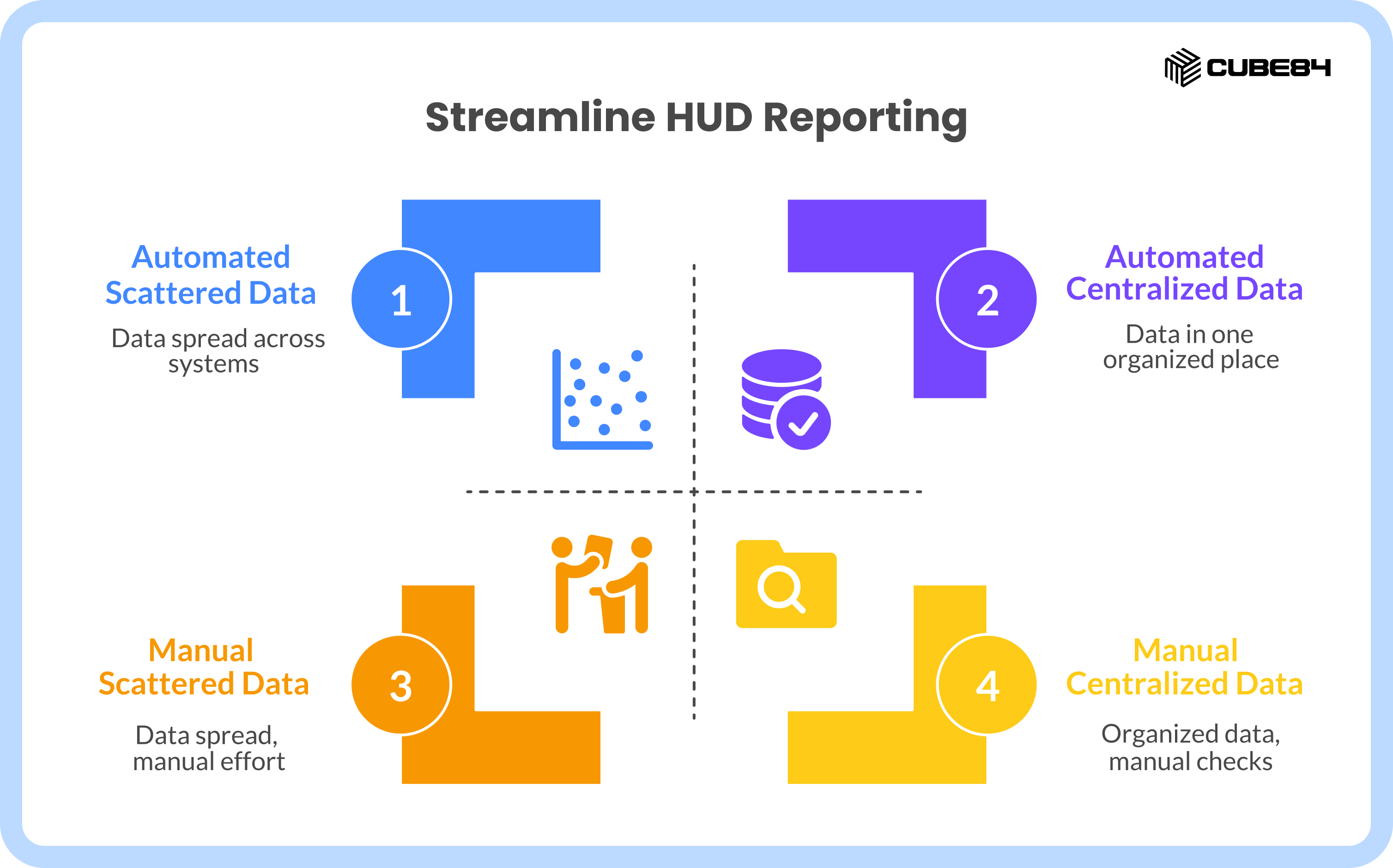
Data is rarely in one place
Over the course of a year, information builds up across systems, spreadsheets, and notes. Client details, service records, program timelines, outcomes, all of it sits in different corners.
When reporting season arrives, the first step is not analysis or review, but gathering. And in that process, even small mismatches can begin to creep in.
Manual work creates strain
Many teams still rely on a series of careful, manual steps to prepare reports, like pulling data, arranging it into the right format, checking each section, and making corrections along the way.
There is nothing careless about this approach. In fact, it often reflects how committed teams are to getting things right. But it does make the process longer, and it increases the chances of something being overlooked simply because there are so many moving parts.
The rules behind the reports are not always visible
APR and CAPER reports follow HUD-defined structures and expectations, and the data needs to align with those rules.
Some fields depend on others. Some values must follow specific formats. Missing or inconsistent data can lead to issues when the report is reviewed or submitted.
These are things teams learn over time, often by experience, which means they are sometimes discovered in the middle of a deadline.
The final review takes more time than expected
Before submission, everything is checked again. Numbers are revisited, sections are compared, and questions are passed between team members. It is a necessary step, but it often stretches longer than planned. Even after all of this, there can still be a small pause before submission, just to be sure.
What teams are really looking for
If you speak to people who handle reporting regularly, the expectations are quite reasonable.
They are not looking for something complicated.
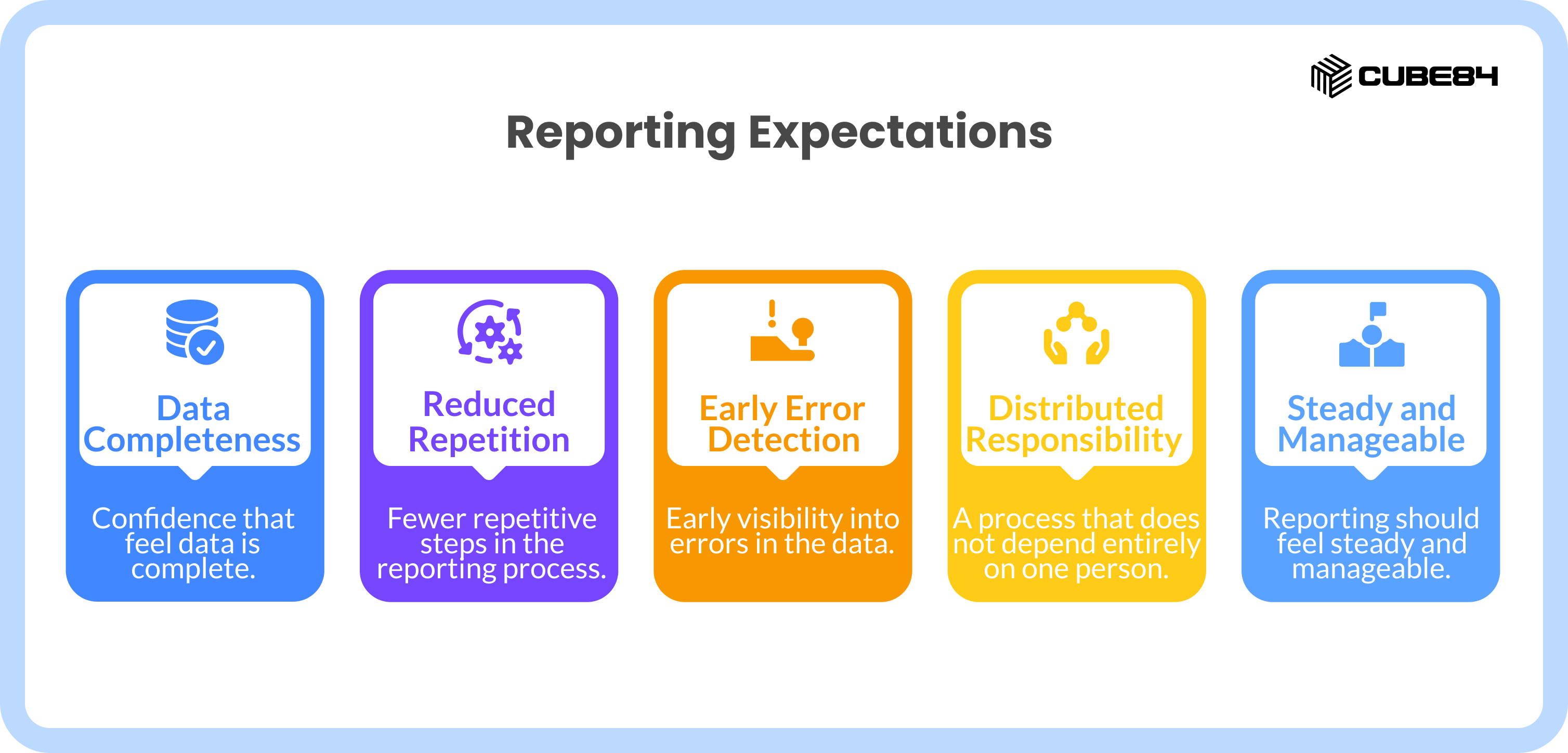
They want:
Confidence that their data is complete
Fewer repetitive steps
Early visibility into errors
A process that does not depend entirely on one person
More than anything, they want reporting to feel steady and manageable.
Where Salesforce begins to make a difference
For organizations already using Salesforce, there is already a strong foundation in place. Data is more centralized, and teams are already familiar with the system.
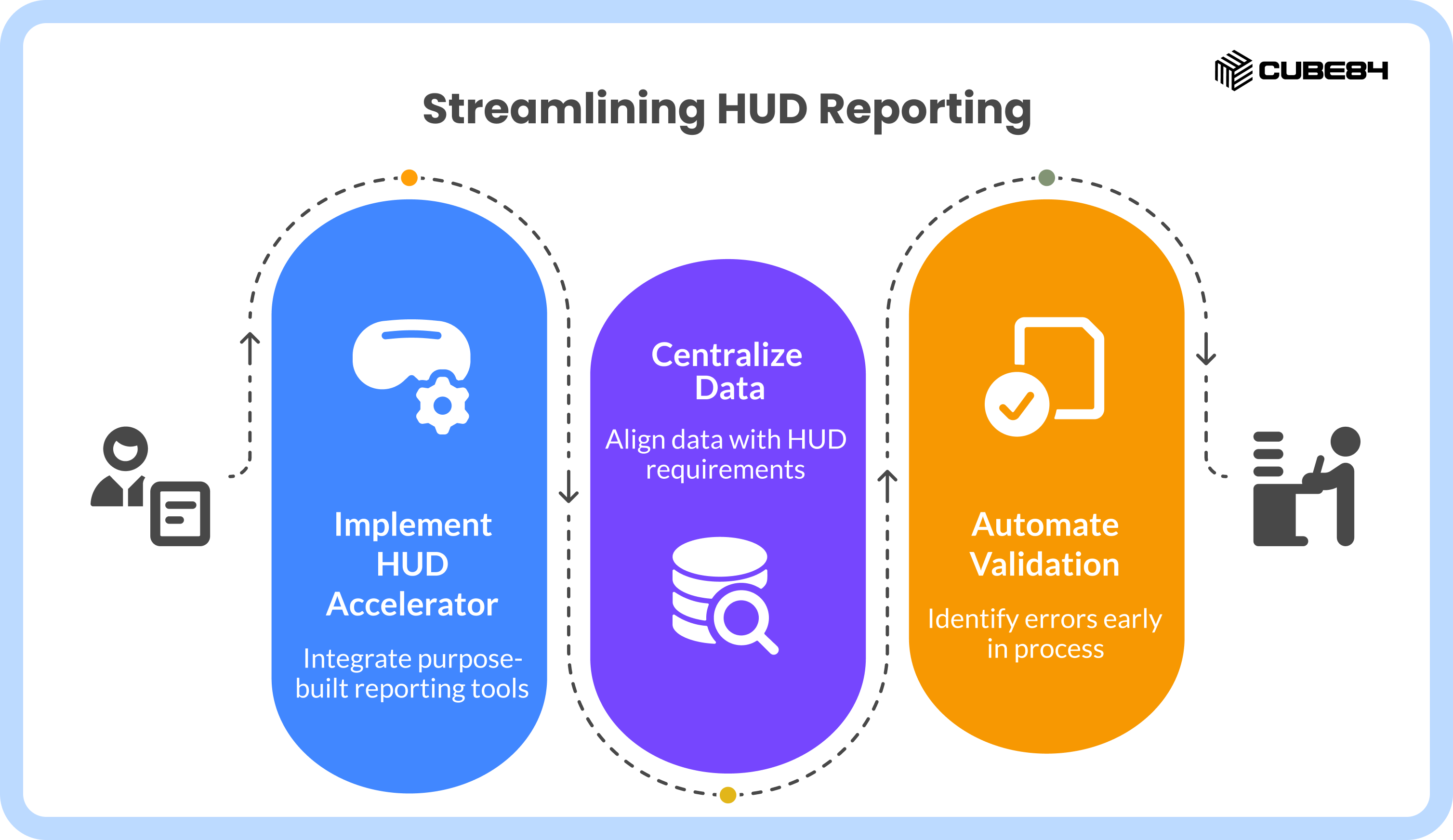
But reporting can still feel difficult when the structure of that data does not fully match HUD requirements, or when validation and report preparation still depend on manual effort. This is where having something purpose-built within that environment begins to help.
When reporting is supported by tools that understand HUD formats and expectations, a few things start to change. Required fields can be checked earlier, errors can be identified before the final stage, and reports can be prepared in the format expected for submission without as much back and forth.
In many Salesforce environments, approaches like the HUD Reporting Accelerator bring reporting closer to the data itself, which makes the whole process feel less like something that has to be put together at the last minute.
What a calmer reporting process can look like
When the process is set up more thoughtfully, the experience shifts in small but noticeable ways.
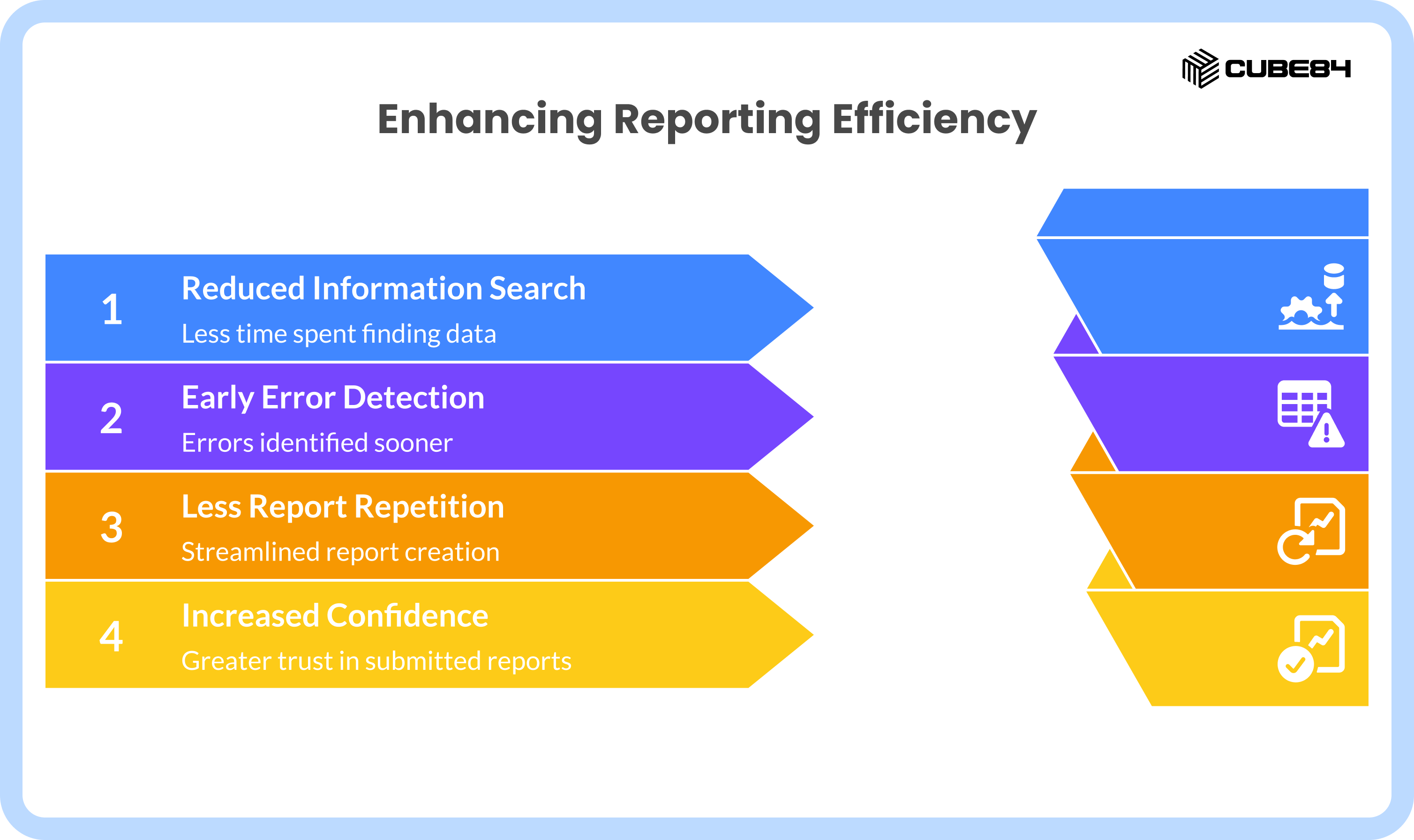
You are not spending as much time searching for information.
Errors tend to show up earlier, when they are easier to fix.
Reports come together with less repetition.
And there is more confidence in what is being submitted.
The work itself does not change, but the way it feels does.
Making reporting feel a little more manageable
HUD reporting is always going to require care and attention. It is, after all, tied closely to accountability and impact. But it does not need to feel like a scramble each time it comes around.
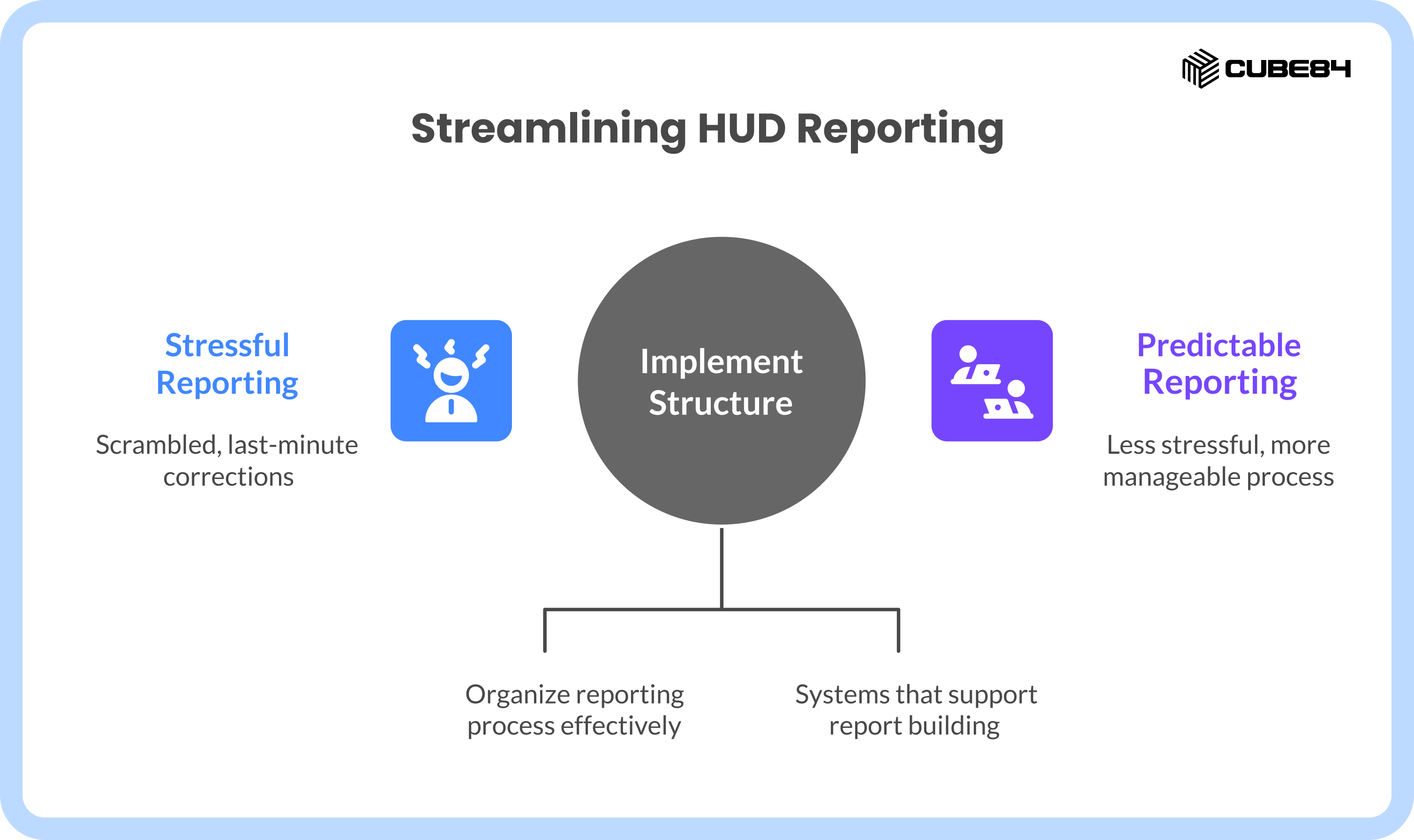
With the right structure in place, and with systems that support the way these reports are actually built, the process can become far more predictable and far less stressful for the people involved.
If this sounds familiar and your team is still working through long reporting cycles or last-minute corrections, it might be worth taking a step back to look at how the process is set up today.
At CUBE84, we spend a lot of time working with housing and homelessness organizations that are dealing with these exact challenges. If you would like to talk through your current setup or simply explore what a smoother approach could look like, we would be glad to connect.