


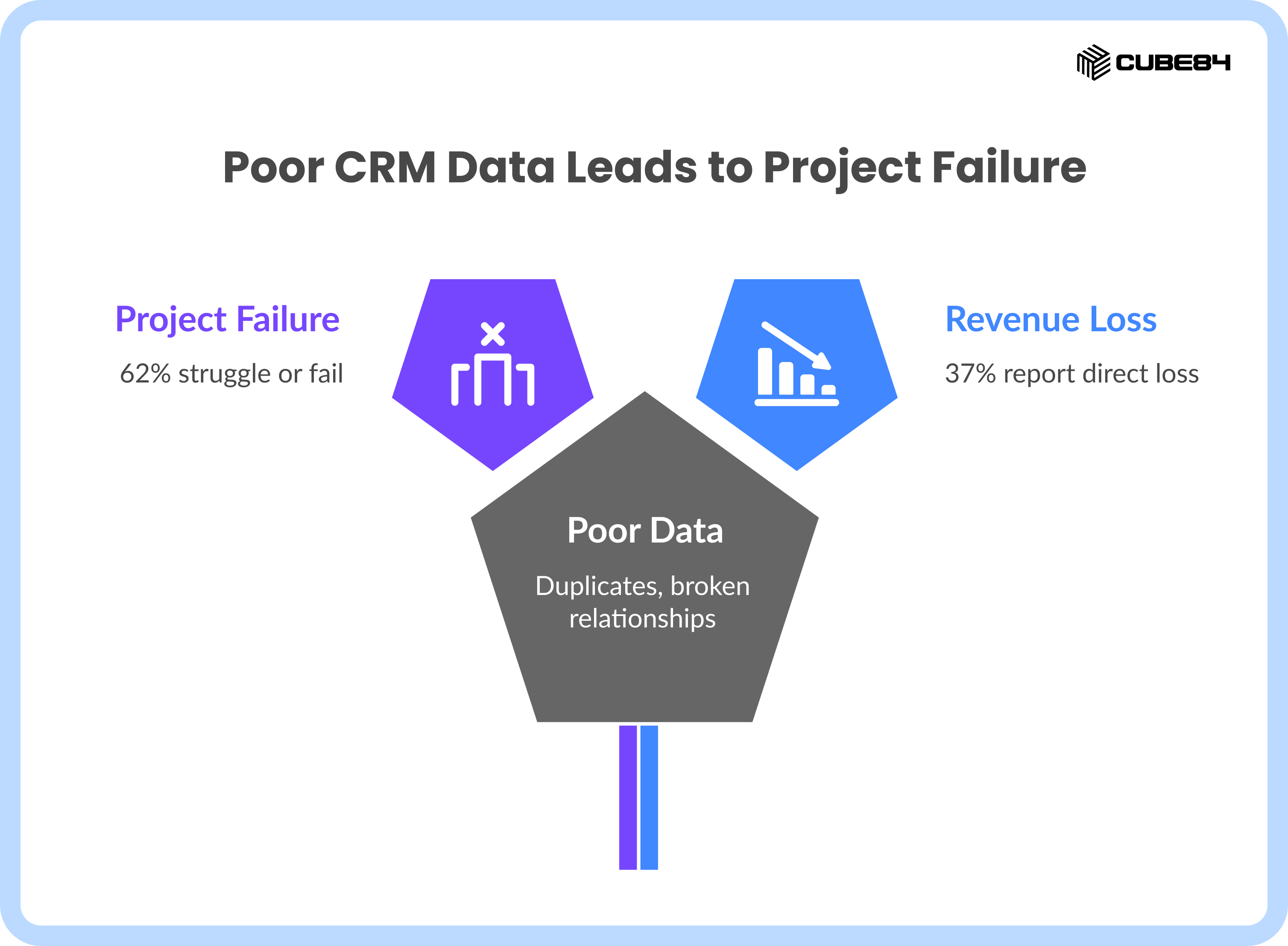
In the 2026 business climate, a CRM migration is no longer a "lift-and-shift" exercise. It is a digital organ transplant. As organizations rush to adopt agentic workflows, the "icebergs" of legacy data - duplicates, broken relationships, and siloed activity histories - have become the primary reason for project failure.
According to research on cloud migration failures in 2026, nearly 62% of migration projects struggle or fail to meet their business outcomes due to poor planning and underestimated complexity. For North American mid-market firms, the stakes are even higher: Validity’s 2025 Data Management report found that 37% of CRM users reported direct revenue loss as a consequence of poor data quality.
To navigate this, you need a blueprint that treats data as an engineering challenge, not an export-import task.
The Migration Complexity Scorecard
Use this scorecard to determine your "Migration Tier." This grid aligns with 2026 industry benchmarks for mid-market transitions.
Complexity Factor | Tier 1: The Clean Break | Tier 2: The Strategic Pivot | Tier 3: The Enterprise Overhaul |
Record Volume | < 50,000 | 50,000 – 250,000 | 1,000,000+ |
Primary Source | HubSpot Starter / Pro | HubSpot Ent / Dynamics 365 | Multi-Source (ERP + Legacy CRM) |
Automation Load | < 10 Basic Workflows | 10–50 Multi-Object Flows | High-Scale / Apex-heavy |
Est. Timeline | 4 – 6 Weeks | 8 – 14 Weeks | 16 – 24+ Weeks |
Avg. Implementation Cost | $5k – $20k | $30k – $85k | $120k+ |
1. The HubSpot "Flat-File" Trap
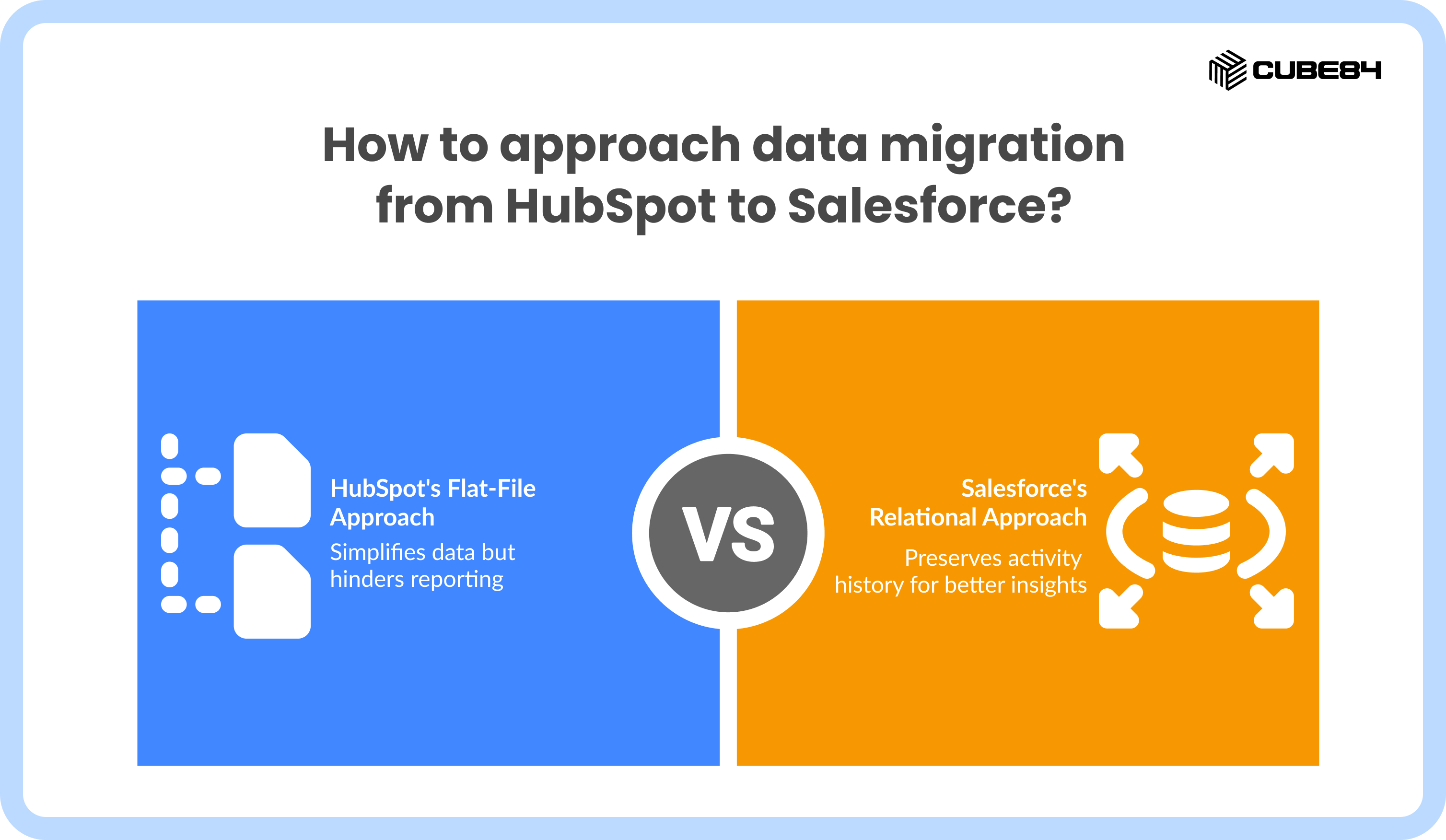
HubSpot’s ease of use often comes from its simplified data structure. However, migrating to Salesforce requires a fundamental shift in how you view data relationships.
The Challenge: HubSpot often collapses Lead and Contact data into a single view. Moving this to Salesforce without a Relational Mapping Protocol results in "flattened" data that kills your reporting accuracy.
The Modern Standard: A successful migration must preserve "Activity History" - every email open, meeting note, and website click. This context is what fuels Salesforce Data Cloud and Einstein AI insights.
2. The Dynamics 365 "Silo" Departure
For firms leaving the Microsoft ecosystem, the primary goal is often breaking free from siloed data. Forrester’s Total Economic Impact studies highlight that consolidating onto Salesforce can drive up to a 354% ROI by decommissioning legacy integrations and spreadsheet-based processes.
The Challenge: Dynamics data is often deeply intertwined with proprietary Microsoft SQL structures.
The Modern Standard: "Re-imagine, don't just Re-platform." Instead of mimicking old, clunky Dynamics workflows, use the migration as a chance to modernize using Salesforce Flow, which Gartner recognizes for its "completeness of vision" in automated data quality.
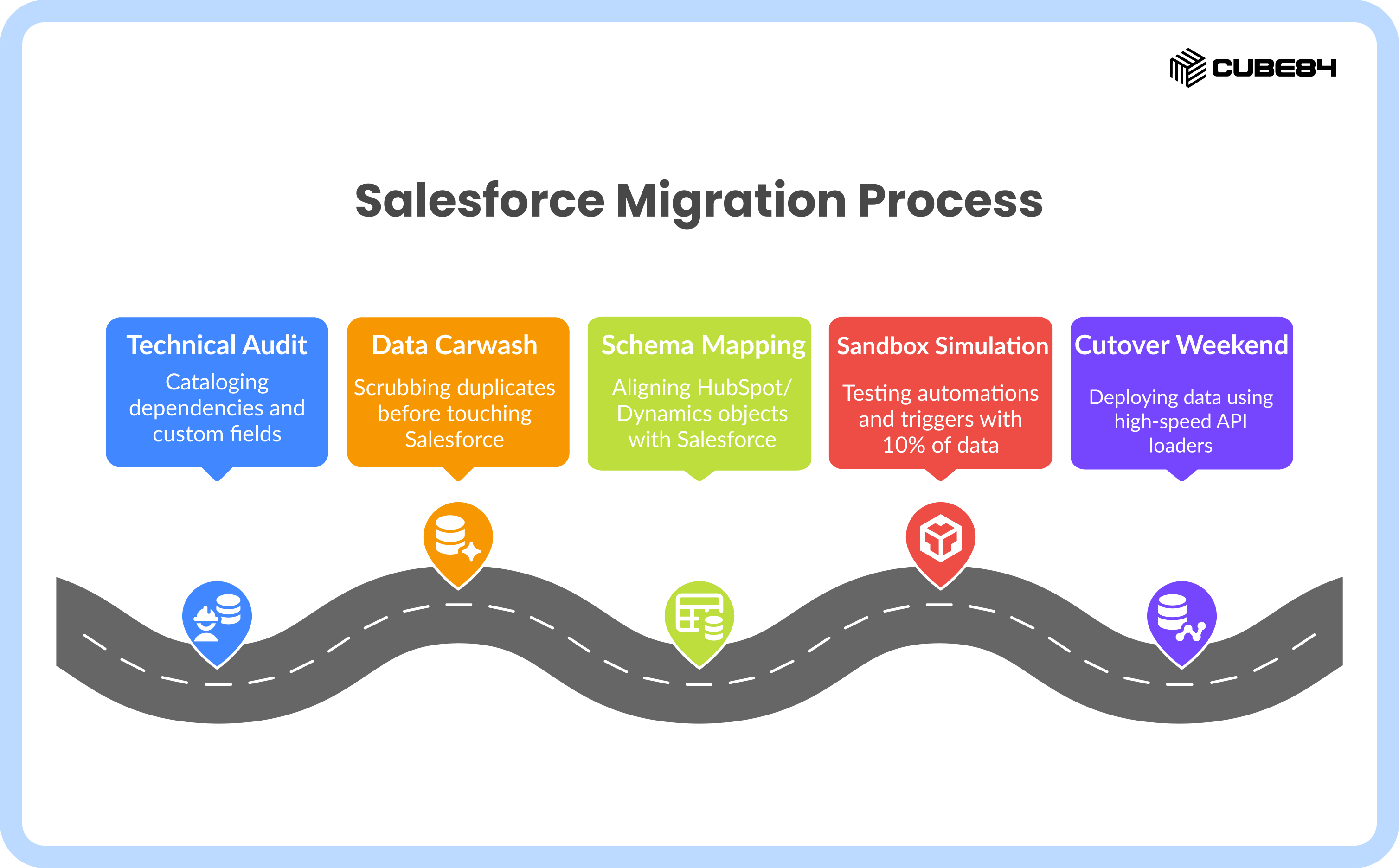
3. The 5-Step Blueprint for a "Zero-Downtime" Move
Technical Audit: Catalog every dependency, API hook, and "zombie" custom field in your source system.
The "Data Carwash": Scrubbing duplicates before they touch Salesforce. CUBE84 specializes in this "clean-start" approach, ensuring 100% record accuracy through governed validation.
Schema Mapping: Defining one-to-one alignment between HubSpot/Dynamics objects and Salesforce's robust architecture.
Sandbox Simulation: A "trial run" with 10% of your data to ensure that automations and triggers behave as expected.
The Cutover Weekend: A phased or full deployment using high-speed API loaders to ensure your team is operational by Monday morning.
Conclusion: Data is Your AI Fuel
In 2026, your CRM is only as smart as the data you give it. Migrating with a partner like CUBE84 - which has completed over 1,000 successful engagements, you aren't just moving records; you are building an AI-ready infrastructure. By focusing on "zero-loss" data integrity, you ensure that your investment in Salesforce starts delivering ROI on Day 1.