

Introduction
Dreamforce 2025 felt like a turning point. Salesforce moved the conversation beyond new tools and focused on what it calls the Agentic Enterprise, a model for how businesses can work next.
The theme signals a deeper transformation across the ecosystem. Salesforce is no longer positioning AI as an enhancement to existing workflows, but as a foundation for how work itself is organized and executed.
Instead of imagining what AI might do someday, Salesforce showed how it is already reshaping the way people work. Intelligent agents are moving from concept to practice, partnering with humans to plan, decide, and deliver results more intelligently.
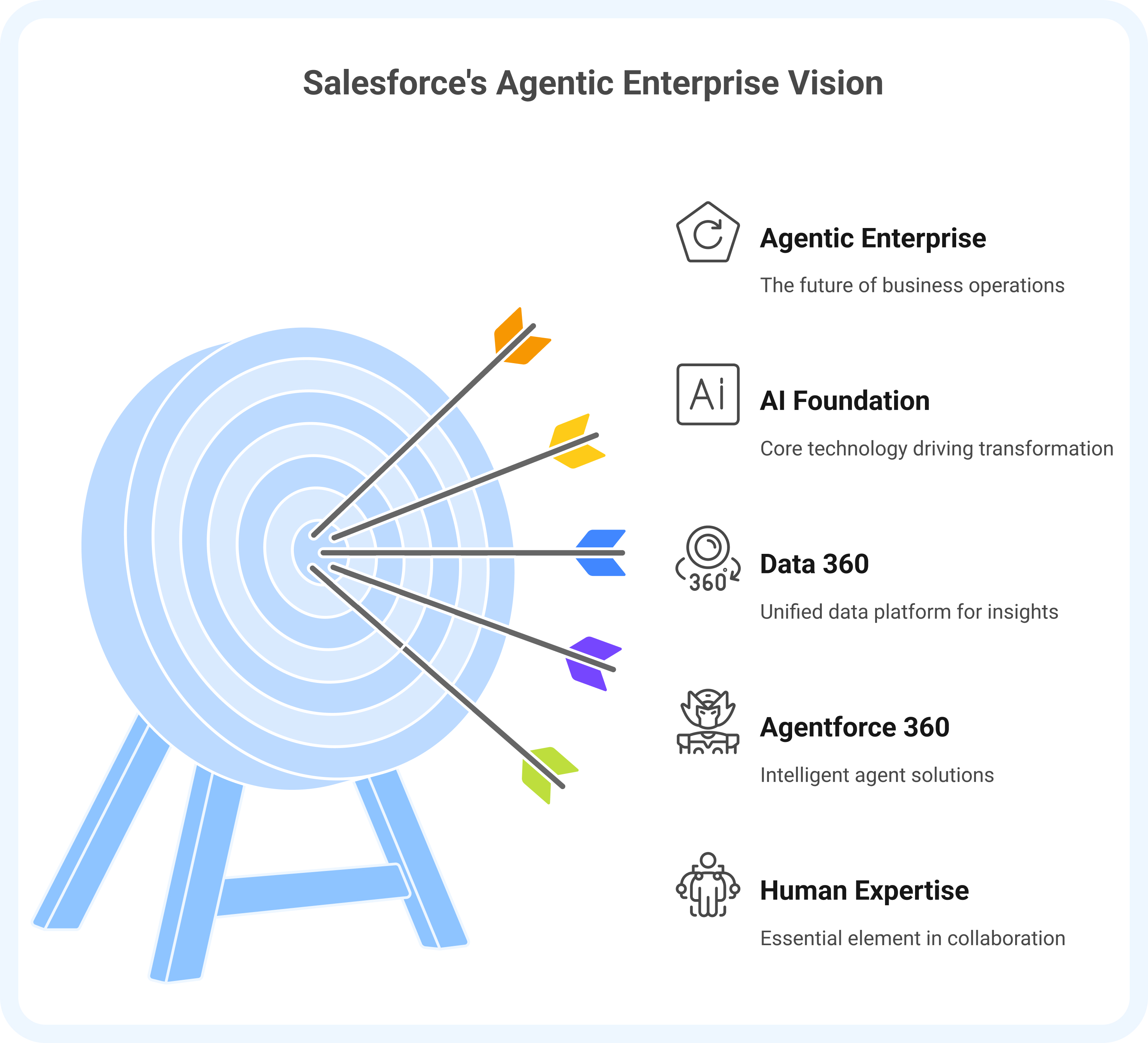
From the launch of Agentforce 360 (formerly Salesforce Agentforce) to the repositioning of Data Cloud into Data 360, Salesforce presented a unified vision of how data, AI, and human expertise come together to drive performance.
In this blog, we look at seven key takeaways from Dreamforce 2025 that reveal where Salesforce is heading and what these developments mean for business leaders, technology teams, and Salesforce users preparing for the next phase of growth.
Here are the seven biggest takeaways from Dreamforce 2025 and why they matter for anyone building on Salesforce today.
1. The Agentic Enterprise is here to stay
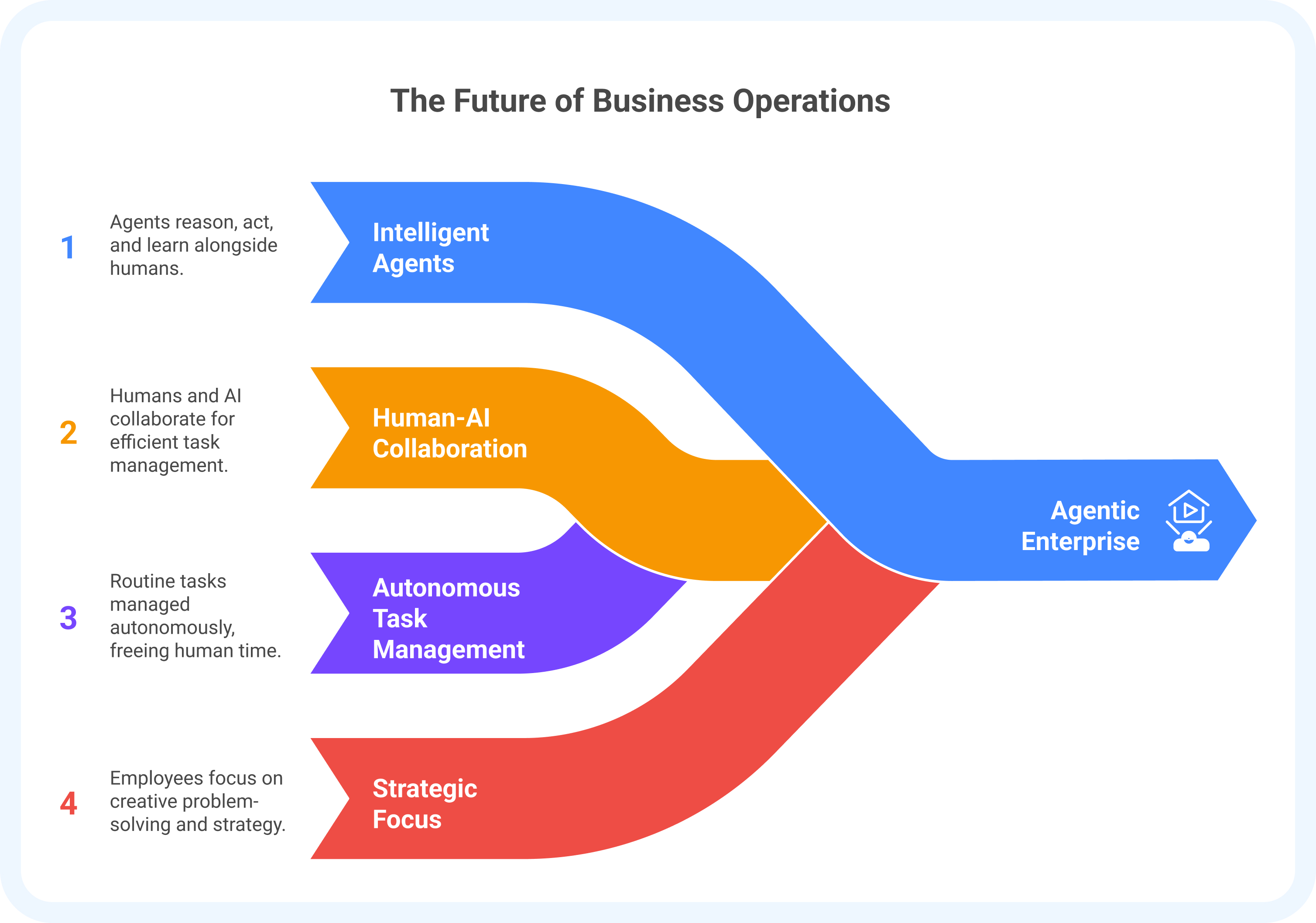
The phrase Agentic Enterprise appeared throughout Dreamforce 2025, not as an early idea but as Salesforce’s long-term direction for how businesses will operate. The company described a future where every Salesforce product is guided by intelligent agents that can reason, act, and learn alongside people.
For many organizations, this marks a shift from isolated automation to true collaboration between humans and AI. Routine tasks such as case routing, data entry, and follow-ups are now being managed autonomously, giving employees more time to focus on creative problem-solving and strategic work.
This shift is reshaping how teams work and how leaders think about accountability, skills, and decisions. When agents carry context across systems and understand both business goals and data relationships, they create a foundation for faster, better-aligned outcomes.
Example: In a customer service setting, an agent can identify the nature of a support request, access related history from Data 360, and suggest the most relevant response within seconds. Human representatives then step in for complex or sensitive issues, ensuring that effort is focused where it matters most.
This idea becomes even clearer with the introduction of Agentforce 360, Salesforce’s unified platform built specifically to design, deploy, and manage these intelligent agents at scale.
2. Launch of Agentforce 360, a unified agent platform
The headline announcement at Dreamforce 2025 was Agentforce 360, (formerly Agentforce) , Salesforce’s new platform for designing, deploying, and managing intelligent agents. It brings together Data 360, AI Cloud, and the Salesforce Platform into a single framework that gives agents governed context across applications.
For years, enterprises have built automations separately within Sales Cloud, Service Cloud, and Marketing Cloud. Agentforce 360 removes that fragmentation. It allows organizations to connect data, workflows, and reasoning capabilities across Salesforce.
Why this matters is simple. Until now, companies wanting to implement agents needed multiple tools for orchestration, data governance, and user access. With Agentforce 360, those functions are native. Leaders gain a secure, governed environment where agents can collaborate with humans, follow company policies, and deliver measurable business outcomes.
Example: A marketing agent can use Data 360 to identify a customer segment showing high engagement, then automatically create a campaign, assign tasks, and personalize follow-ups directly inside Salesforce. The workflow happens without switching tools, ensuring speed and consistency.
3. Agentforce Voice and conversational interfaces expand agent reach
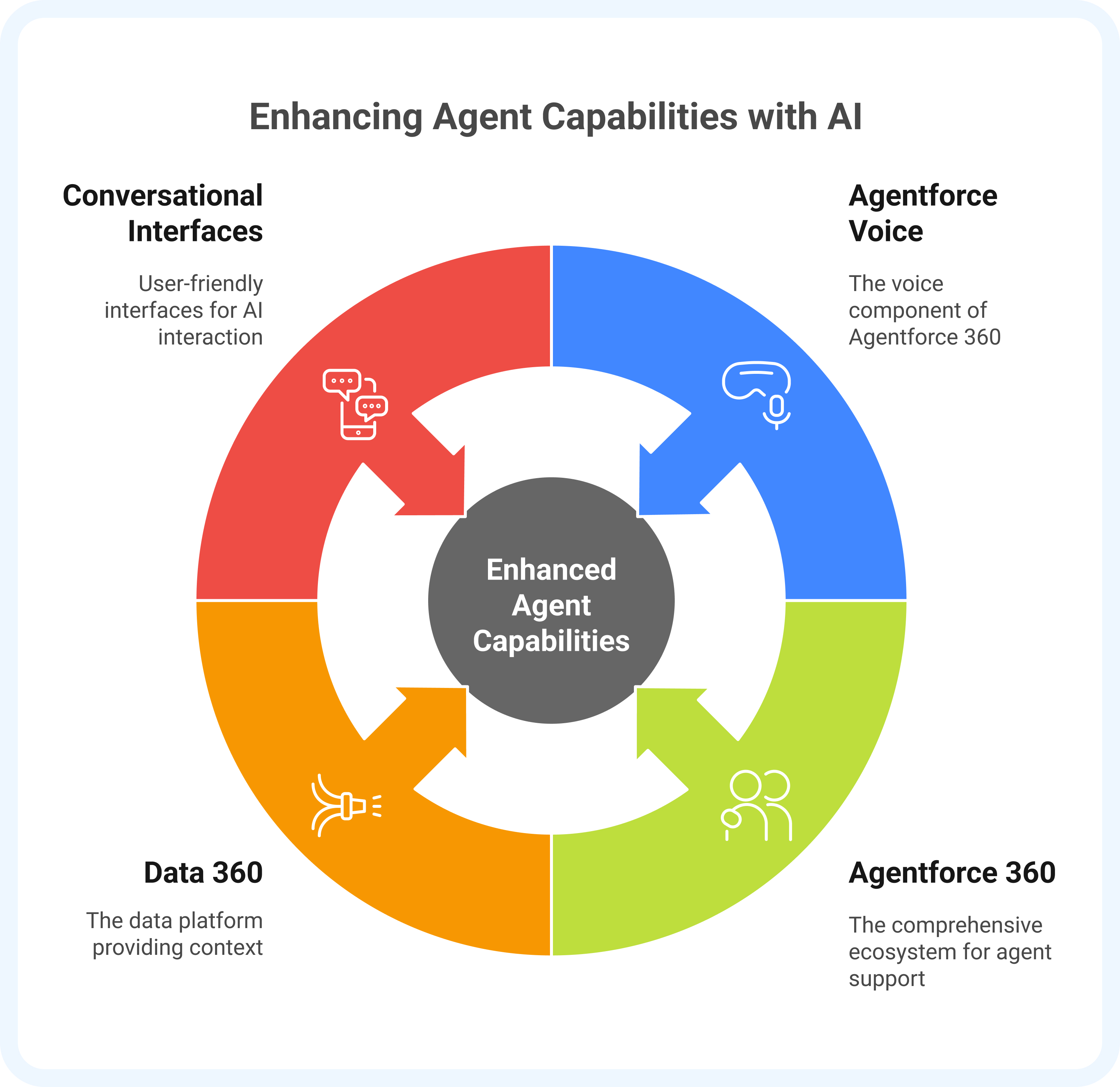
Salesforce used Dreamforce 2025 to highlight how Agentforce Voice, part of the Agentforce 360 ecosystem, is extending the reach of intelligent agents beyond the desktop. The new capabilities allow agents to listen, understand, and respond in natural language, creating a more intuitive way for people to interact with Salesforce.
This update moves agents closer to where work actually happens. Field technicians, customer support teams, or nonprofit helpline operators can now speak to an agent directly and receive context-aware assistance without logging into a dashboard. Conversational interfaces make AI accessible to everyone in an organization, not just those who work inside a CRM every day.
Example: A donor calls a helpline to check on the status of a recurring contribution. Agentforce Voice identifies the caller, retrieves donation history from Data 360, and provides an instant update before routing the conversation to a human if needed. The experience feels seamless and personal, with human empathy supported by automated precision.
4. Data Cloud reimagined as Data 360, the intelligence layer
A key announcement at Dreamforce 2025 was Data 360. More than a new name, this reflects Salesforce’s intent to make data the core intelligence layer that powers the entire Agentforce platform.
Data 360 brings together both structured and unstructured information, connecting CRM data with signals from documents, conversations, and third-party systems. This integration gives agents a more complete view of context so they can take informed actions instead of relying on fragmented inputs.
For business teams, the change is about trust and accessibility. Data 360 improves how information moves across systems while maintaining quality and governance. It also allows teams to use live verified data to guide actions and decisions directly inside Salesforce.
Example: A retail company can use Data 360 to combine browsing history, purchase patterns, and feedback data. An agent can then use these insights to tailor recommendations or alert service teams about potential issues. The outcome is faster, data-driven engagement supported by reliable information.
5. Slack repositioned as the agentic workspace
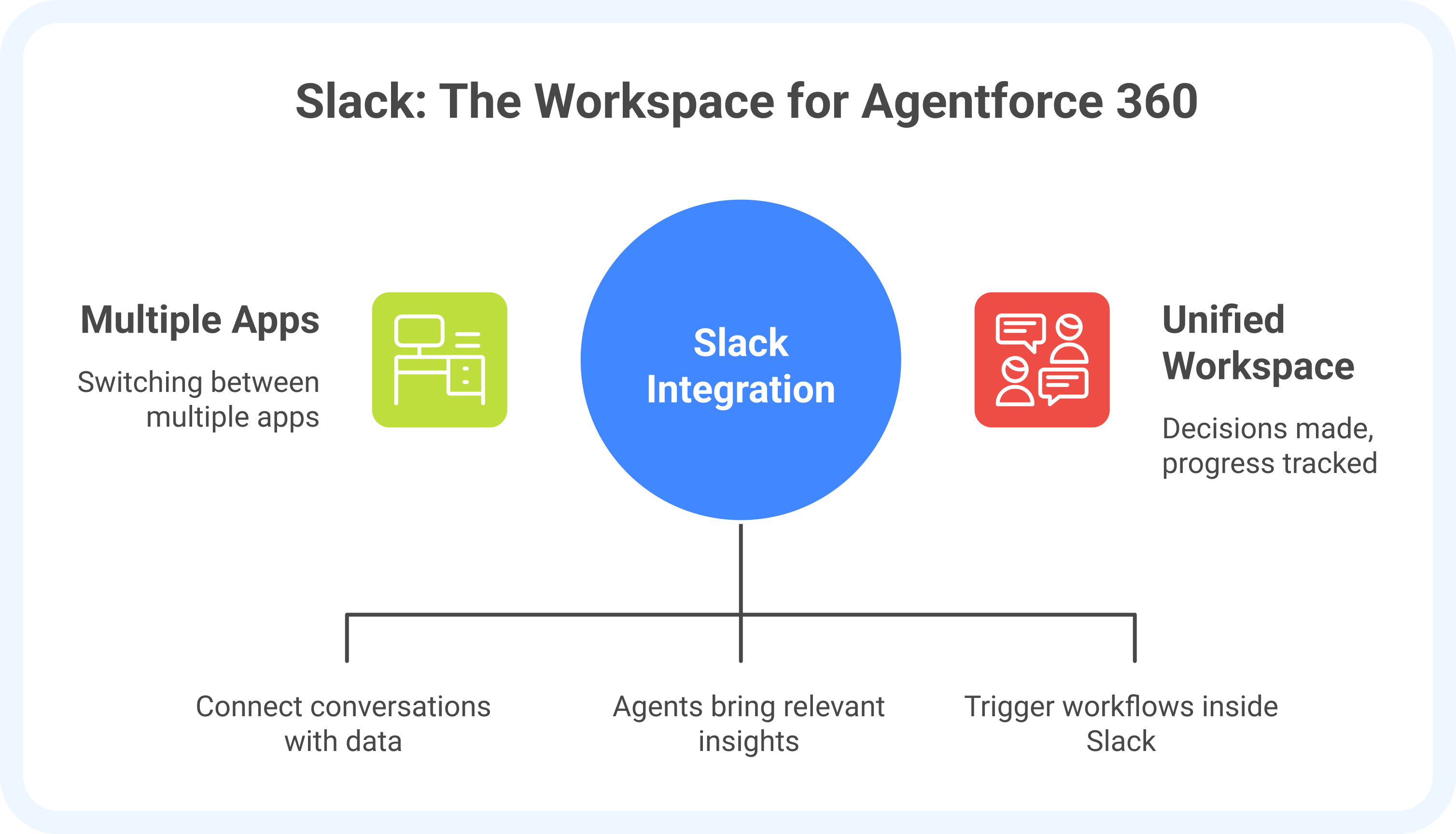
Dreamforce 2025 reinforced that Slack is now more than a communication tool. Salesforce presented it as the workspace where people and agents work side by side. With its deeper integration into the Agentforce 360 ecosystem, Slack now connects conversations directly with data, records, and automated actions.
Instead of moving between multiple apps to find answers, update records, or trigger workflows, teams can now do it all inside Slack. Agents bring relevant insights into the conversation, summarize updates, or take next steps when prompted. This keeps collaboration focused and reduces context switching across teams.
Example: A sales rep types in Slack, ‘Next steps for Acme Corp?’ Within seconds, an agent retrieves the latest opportunity details from Sales Cloud, recommends a follow-up action, and schedules a meeting.
This repositioning makes Slack the practical front line for daily work. It turns collaboration from a passive exchange into a place where decisions are made and progress is tracked live.
6. Customer success stories showcase Agentforce in use
One of the strongest signals from Dreamforce 2025 was that intelligent agents are already in use across organizations. Salesforce featured companies such as Williams-Sonoma, Pandora, PepsiCo, and Dell using Agentforce, the intelligent agents built on Salesforce’s new Agentforce 360 platform, to automate service tasks, improve recommendations, and streamline customer interactions.
These examples matter because they prove that the technology has moved beyond pilot programs. Agents are being deployed in production environments where scale, security, and measurable results are essential. This gives organizations more confidence to explore agent-led processes within their own operations.
Example: At Williams-Sonoma, a digital shopping assistant named Olive helps customers choose gifts and meal kits. It reduces live-agent workload and shortens response times during peak seasons, creating a smoother shopping experience for customers and more focused support for staff.
For business and IT leaders, these case studies validate that Agentforce 360 is not an experimental framework but a stable foundation for deploying intelligent agents that deliver tangible results.
7. Monetization and platform strategy, AI plus ecosystem growth
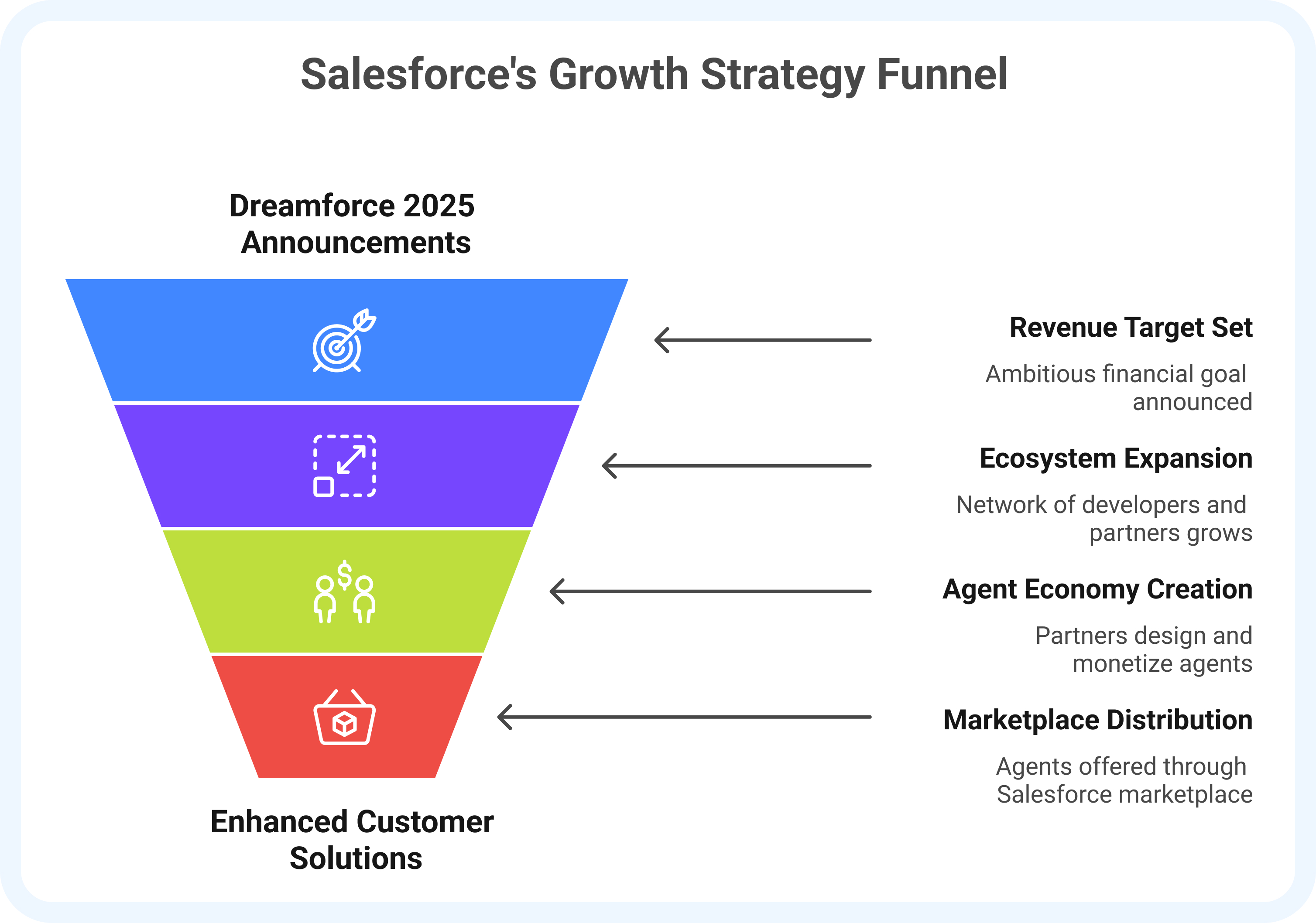
Beyond product updates, Dreamforce 2025 made it clear that Salesforce’s long-term plan is built around platform growth and partner participation. The company announced its goal of reaching nearly 60 billion USD in annual revenue by 2030, driven by an expanding network of developers, partners, and customers building within the Agentforce 360 ecosystem.
The focus now is on creating an agent economy. Instead of selling only licenses, Salesforce is encouraging partners to design and monetize specialized agents for industries such as healthcare, retail, and financial services. These agents can then be distributed through the Salesforce marketplace, giving customers ready-to-deploy solutions while extending partner reach.
Example: A consulting partner that previously implemented Sales Cloud or Service Cloud can now develop and manage bespoke agents that handle onboarding, compliance checks, or data reconciliation for clients. This model generates new recurring revenue streams while keeping value tied directly to measurable business outcomes.
For customers and partners alike, this signals a more sustainable and collaborative path forward. The platform strategy behind Agentforce 360 creates room for innovation while ensuring that governance, performance, and data integrity remain consistent across the platform.
Conclusion
Dreamforce 2025 marked a turning point for Salesforce and its customers. Every announcement pointed toward one direction: making agents a trusted part of everyday work.
This shift is not about distant possibilities. It is about using data more effectively, simplifying how teams operate, and giving people time to focus on work that requires human judgment.
For organizations already using Salesforce, the next step is to start experimenting. Test an agent within a known process, observe how it supports your teams, and build from there. These small pilots often reveal where the biggest opportunities lie. For a deeper look at how to prepare your systems and teams for this change, explore our blog What It Really Takes to Build a Digital Workforce With Salesforce AI Agents.
The takeaway is clear. Agents are ready, the platform is mature, and leadership readiness will decide who moves first and benefits fastest.
Talk to us at CUBE84 to explore where Agentforce 360 can bring the most value to your teams!