


The Student Engagement Gap in Higher Education
Student expectations have changed in a very real way. Today’s students expect real-time updates, personalized communication, and a single digital location to manage their entire academic journey.
We understand that delivering this is incredibly complex behind the scenes. Most universities still operate on fragmented systems where admissions, financial aid, academics, and campus services often sit in separate platforms. Each one works fine on its own, but this setup inadvertently creates friction at every step of the student journey.
These disconnected experiences directly impact the things that matter most to institutional health. We see it affect student retention, enrollment yield, overall student satisfaction, and the day-to-day efficiency of hardworking staff. Omnichannel engagement is a core strategy for improving student success and overall institutional performance.
In this blog, we will look at how institutions can move toward a more connected campus experience and the role Experience Cloud plays in making that possible.
What Is Omnichannel Student Engagement and Why It Matters
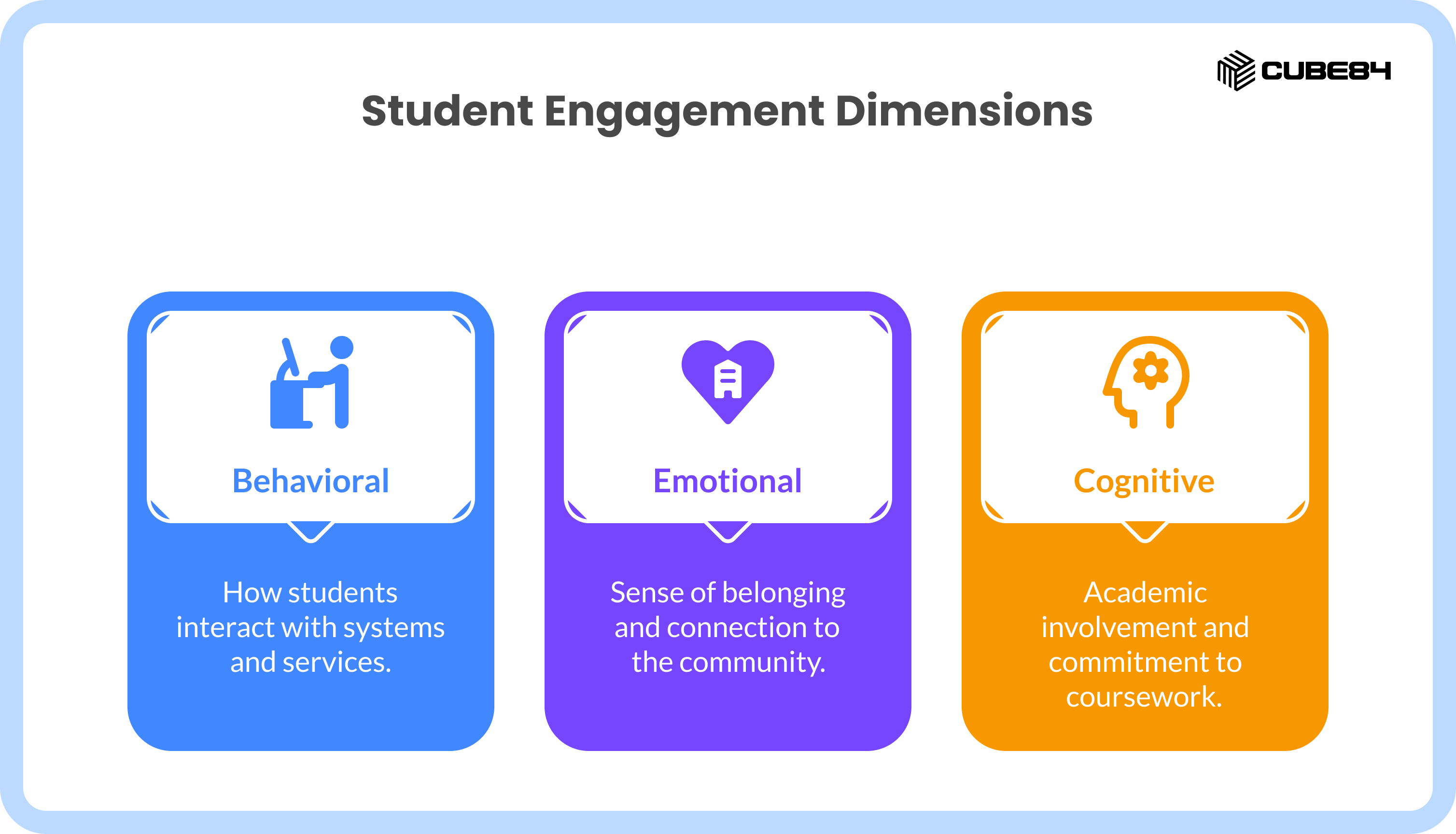
To truly understand this approach, we first need to define what student engagement actually means in a digital context. Student engagement spans three key dimensions:
Behavioral: How students actively interact with your systems, portals, and campus services.
Emotional: Their sense of belonging, connection to the campus community, and mental well-being.
Cognitive: Their level of academic involvement, curiosity, and commitment to their coursework.
When we talk about engaging students across these dimensions, the conversation often turns to multichannel versus omnichannel communication. These two terms sound similar, but they represent entirely different strategies.
Multichannel means an institution has multiple touchpoints like an email newsletter, a mobile app, and a website. However, these channels operate separately. A multichannel approach is why a student might receive an email about a missing financial aid document, but when they log into their student portal, there is no alert or next step waiting for them.
Omnichannel connects those separate touchpoints into a single, continuous experience with a shared context. In an omnichannel student experience, every department shares the same view of the student. If a student asks a chatbot a question about enrollment, their academic advisor can see that interaction and follow up appropriately.
This matters more now because universities are currently dealing with increasing competition for enrollment, shifting student expectations, and intense pressure to improve retention outcomes. A connected, omnichannel experience helps institutions respond effectively to all three challenges.
The Real Cost of Disconnected Campus Systems
Disconnected systems are easy to overlook because they are so common. But their impact is significant.
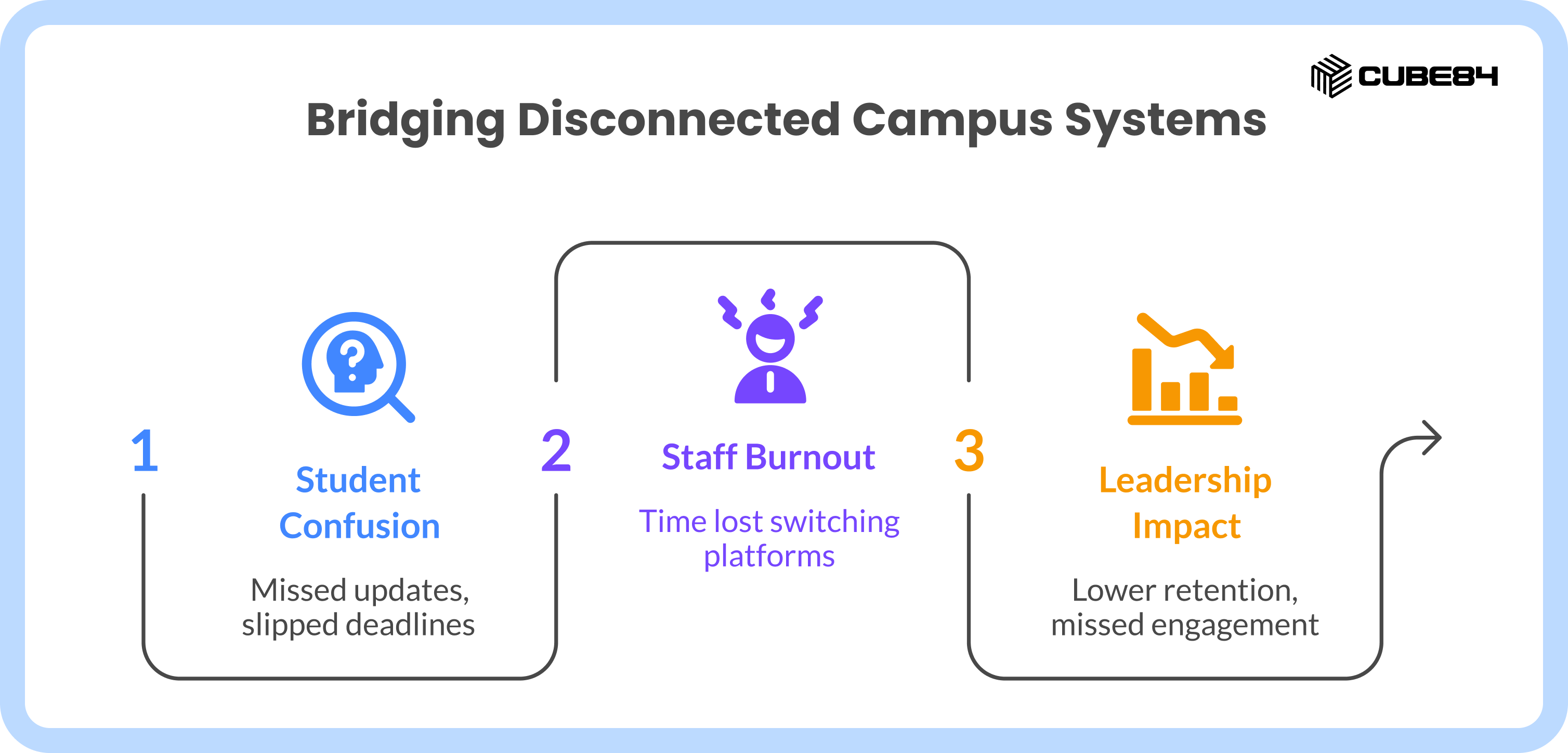
For students, it often shows up as confusion. They move between systems for financial aid, course registration, and support services without a clear sense of what comes next. Important updates get missed. Deadlines slip by.
For staff members, the cost is measured in time and burnout. Faculty and administrative teams lose countless hours switching between different software platforms. They have to do highly manual work to piece together a complete picture of a student's situation, which takes time away from actual student support.
For leadership, the ultimate cost is seen in lower retention and completion rates. When a student feels lost in the administrative shuffle, they are at a higher risk for summer melt or dropping out entirely. Disconnected systems also mean missed opportunities for meaningful engagement across the entire student lifecycle. This is exactly where many institutions lose students without ever realizing why it happened.
In many cases, institutions are doing the right things, but the systems supporting those efforts are not aligned. That gap is where students are often lost.
How Salesforce Experience Cloud Powers the Connected Campus
This is where a platform like Salesforce Experience Cloud comes in.
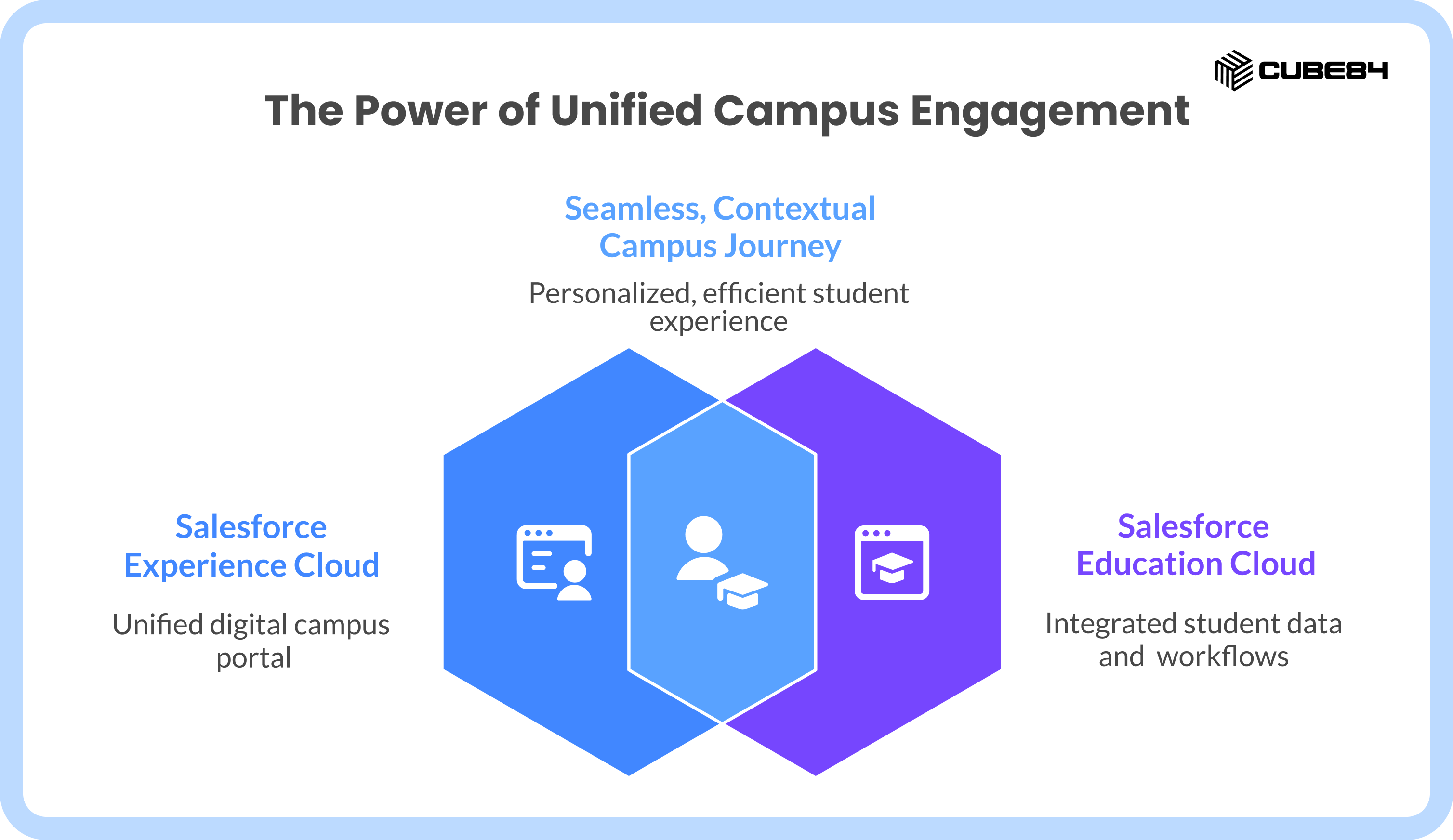
At its core, Experience Cloud provides a unified digital space where students, staff, and alumni can interact through a single, branded environment. Instead of jumping between systems, users access what they need in one place.
When connected with Salesforce Education Cloud and other Salesforce products, it brings together data from across departments into a shared view. That means teams are working with the same context, and students are not repeating themselves at every step.
Some of the ways this shows up in practice include:
A centralized portal where students can manage applications, view academic information, and access support services
Communication that reflects a student’s current stage, whether they are applying, enrolled, or nearing graduation
Mobile-friendly access so students can engage from any device
Integration with systems like LMS and CRM to maintain continuity across the journey
By tying these elements together, Experience Cloud creates a consistent, guided journey instead of a series of disjointed interactions.
Impact Across the Student Lifecycle
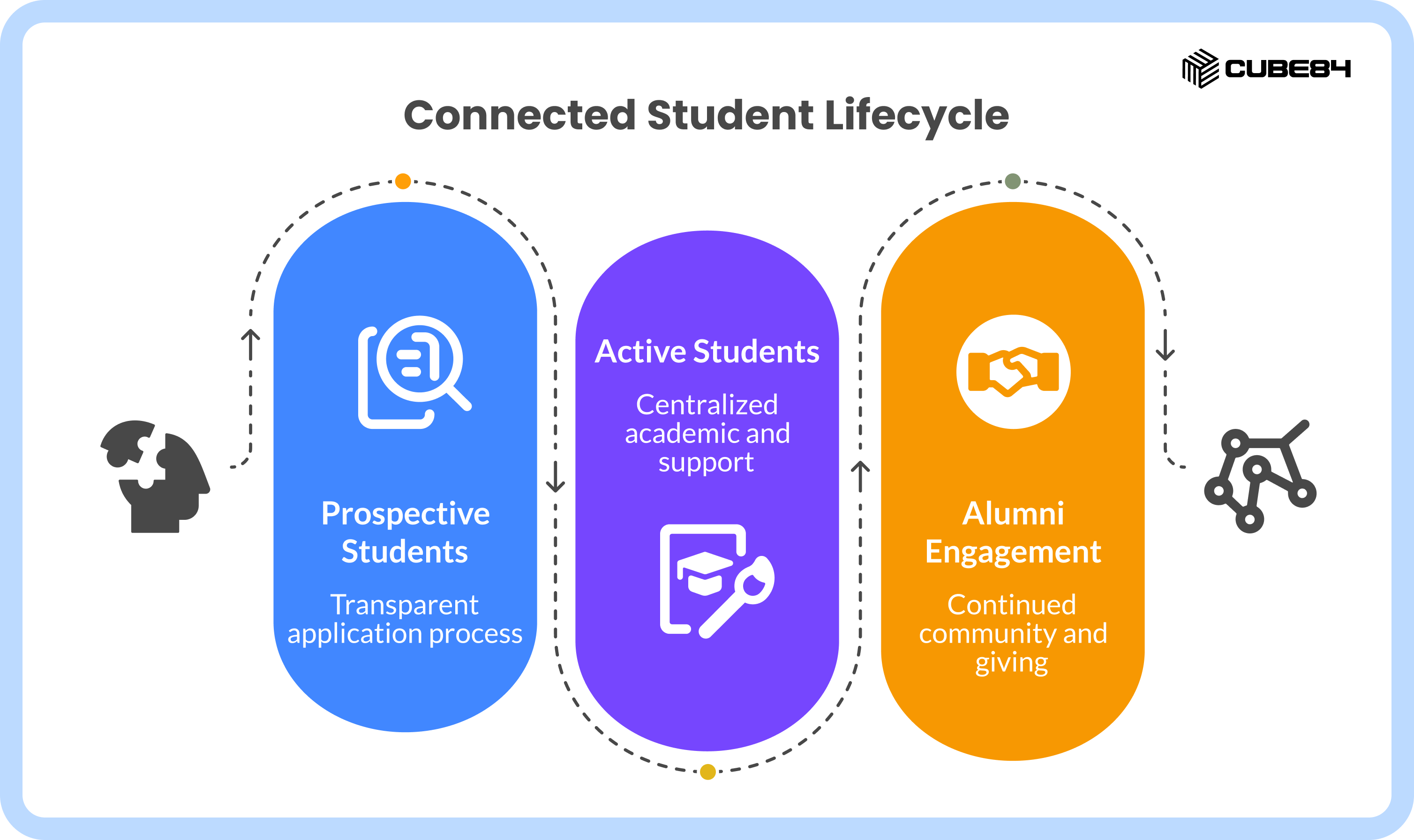
A truly connected approach ensures continuity from the very first interaction all the way to long-term alumni engagement. When managing the student lifecycle in higher education, Experience Cloud provides tailored benefits for every phase.
For prospective students, a unified portal makes the application process transparent. Applicants can easily track their status, see clear next steps, and receive consistent communication throughout the entire admissions and recruitment journey.
For active students, Experience Cloud provides centralized access to advising, academics, and campus resources. More importantly, because all the data is connected, it allows staff to identify students who may need support much earlier in the semester. If a student stops logging into the LMS and misses a financial aid deadline, the system can automatically alert an advisor to step in.
For alumni, the platform ensures continued engagement through dedicated digital communities and event hubs. It makes participation in mentorship programs and donor giving incredibly easy, fostering a lifelong relationship with the institution.
Real Results and How to Measure Success
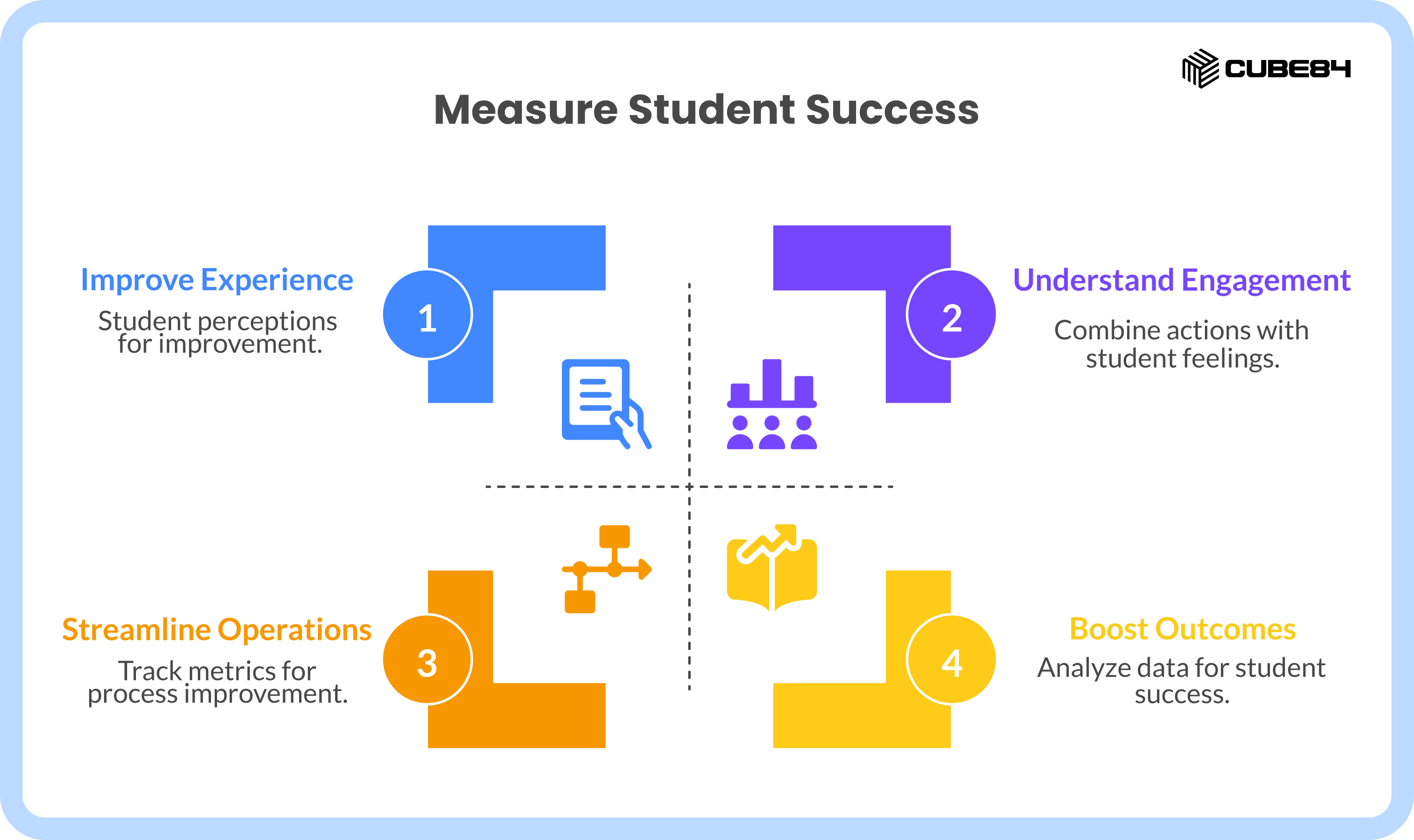
To understand the value of a connected campus, it is important to look at how success is measured.
Some of the key metrics institutions track include:
Retention and graduation rates
Inquiry-to-enrollment conversion
Response and resolution times for student queries
Engagement levels across digital platforms
These metrics give a clear view of both student outcomes and operational efficiency.
To give a practical example, we have seen mid-sized universities use Experience Cloud to launch unified onboarding portals. By giving incoming freshmen a single place to track their orientation tasks, housing applications, and financial aid status, these institutions have successfully boosted portal adoption by over forty percent and significantly reduced their summer melt.
To measure engagement comprehensively, universities should combine quantitative behavioral data with qualitative feedback. You can look at what students actually do across your systems and combine that data with perception-based feedback frameworks like the National Survey of Student Engagement (NSSE) or the Community College Survey of Student Engagement (CCSSE).
This dual approach gives leadership a complete picture of student success.
Implementing Experience Cloud: A Practical Approach
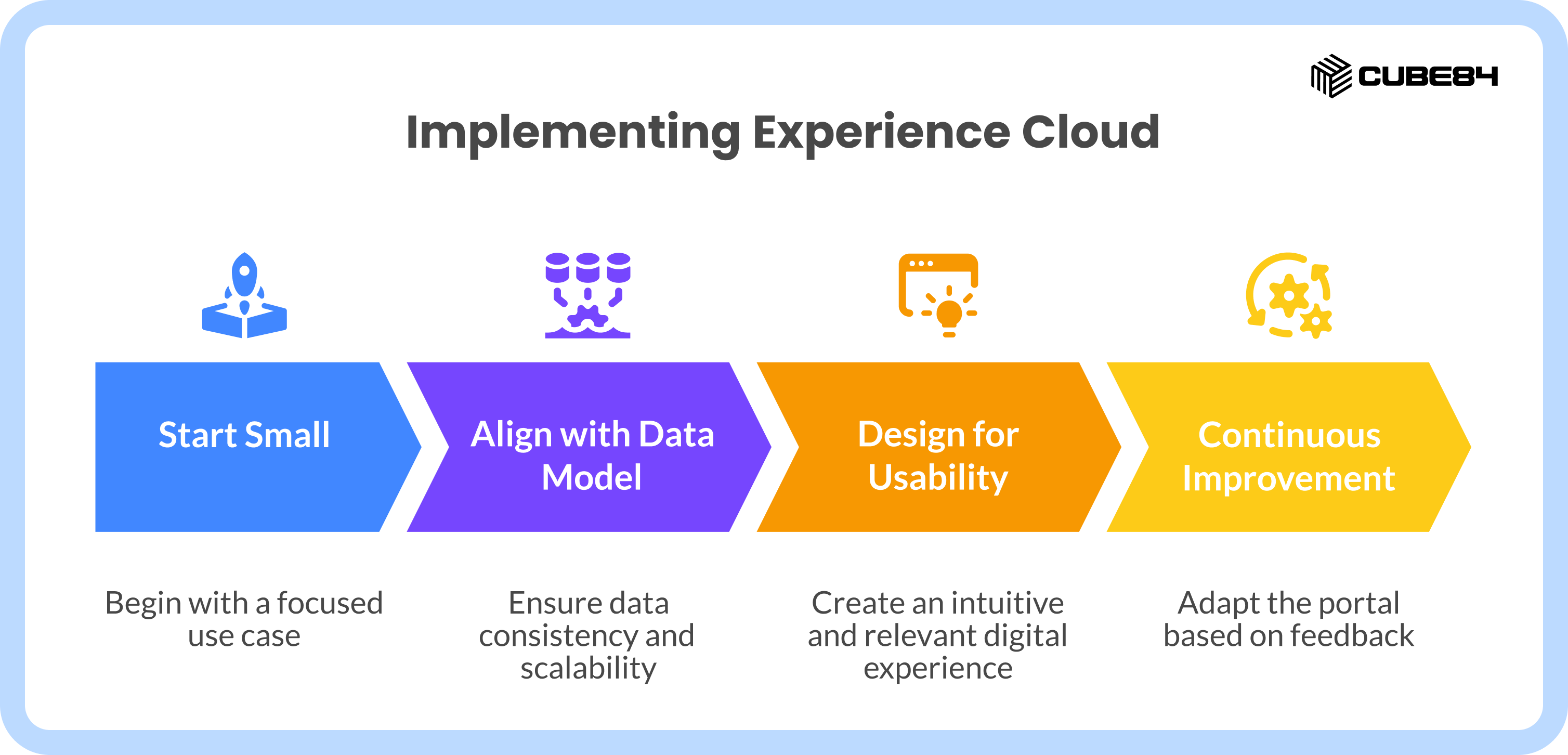
Moving toward a connected campus does not require a full transformation on day one. In fact, the most effective approach is to start small and build from there.
Start with a focused use case. Begin with a high-impact area such as an admissions portal or a student success hub rather than attempting a full digital transformation all at once. Securing an early win builds momentum and trust across campus departments.
As you build, make sure to align your project with the Education Cloud data model. By using Salesforce's core standard objects for education, you ensure that your data remains consistent and highly scalable as you add more departments later.
Always design for usability. Keep the digital experience simple, intuitive, and highly relevant to different student groups. An overcomplicated portal will only drive students back to calling the registrar's office. Finally, enable continuous improvement. Your team can use the low-code tools within Experience Cloud to adapt the portal quickly based on student feedback and changing campus needs without waiting months for IT support.
Future Trends: AI and the Next Phase of Student Engagement
AI improves the timing, relevance, and overall quality of decision-making support.
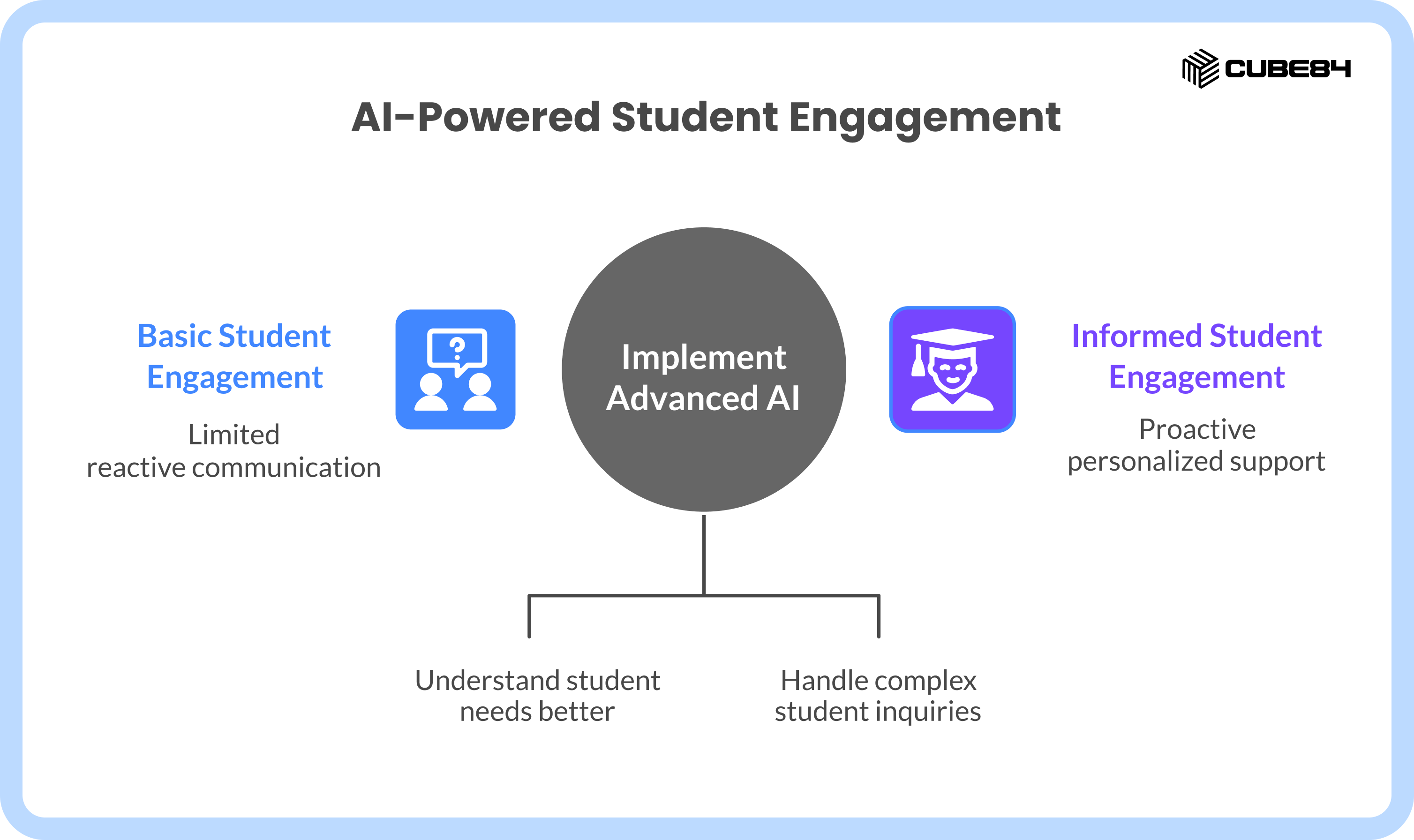
Today, AI student engagement in higher education means moving beyond basic chatbots. We are seeing a strong move toward smarter communication based on real-time student behavior and better identification of students who need intervention.
A major part of this evolution is the introduction of advanced AI architectures like Salesforce Agentforce. These autonomous AI agents can handle complex, multi-step student inquiries inside the portal without requiring human intervention for every basic question. The focus here is not automation alone. The goal is to provide more informed and timely engagement so that your staff is freed up to handle the complex, deeply human conversations that truly impact a student's life.
Where Student Engagement Goes from Here
We have seen disconnected systems create friction across the student journey. A connected approach helps remove that friction and brings consistency to how students interact with the institution.
Universities that invest in this kind of experience are better positioned to improve student outcomes while also making day-to-day operations more efficient.
A good place to start is by looking at your current student journey and identifying where things break down across admissions, academics, and support services.
To make that easier, we have put together a Connected Campus Checklist for 2026. It is designed to help you quickly spot gaps in your current setup and prioritize where to focus first.
The 2026 Connected Campus Checklist
A Practical Self-Assessment for Omnichannel Student Engagement
Use this checklist to evaluate how connected, consistent, and student-friendly your current systems really are.
1. The Unified Digital Front Door (Student Experience)
Ask yourself: Does our institution actually provide a seamless digital entry point?
☐ Do you have a single authenticated portal where students can access LMS, financial aid, advising, campus life, and support services?
☐ Do students see a personalized dashboard with their specific next steps, deadlines, and holds?
☐ Does your portal deliver full mobile functionality, not just a scaled-down web view?
☐ Can students complete processes like applications, registration, and support requests without re-entering data or switching systems?
☐ Can most student issues be resolved digitally without requiring visits to multiple offices?
Why this matters:
Modern students expect consumer-grade digital experiences. Fragmented portals often lead to missed deadlines, confusion, and drop-offs during critical stages like admissions.
2. Contextual Communication and Engagement
Ask yourself: Are you communicating with context, or sending broad messages?
☐ Do you trigger automated outreach based on real student behavior, such as missed deadlines or low LMS activity?
☐ Do departments use a shared communication system to avoid duplicate or conflicting messages?
☐ Can students reply to an SMS or email and continue the conversation within a connected system?
☐ Is your messaging tailored based on lifecycle stage, from prospect to active student to alumni?
☐ Have you reduced reliance on generic broadcast messages in favor of more relevant, targeted communication?
Why this matters:
Students tend to ignore messages that are not relevant. Timely and contextual communication improves response rates and supports both enrollment and retention.
3. Staff Efficiency and the 360-Degree View
Ask yourself: Do your teams have the visibility they need without added complexity?
☐ Can advisors view a complete history of student interactions across departments in one place?
☐ Can front-line staff resolve common queries without transferring students between teams?
☐ Have you reduced manual data entry and reliance on spreadsheets?
☐ Can faculty and staff securely log notes that are visible to relevant teams?
☐ Do your tools reduce administrative effort instead of adding more systems to manage?
Why this matters:
When staff have full context, they can respond faster and more effectively. This reduces operational strain and improves the quality of student interactions.
4. Proactive Retention and Well-Being
Ask yourself: Are you able to step in early when students need support?
☐ Can your systems identify at-risk students based on engagement or behavioral signals?
☐ Do students have easy digital access to support services like mental health, financial aid, and tutoring?
☐ Are follow-ups automatically assigned when a student is flagged as at-risk?
☐ Do you receive alerts when student engagement drops across systems?
☐ Do you have a process to confirm that students received and used the support offered?
Why this matters:
Early intervention plays a key role in student success. Without it, institutions often respond only after challenges have already escalated.
5. Tech Stack Maturity and AI Readiness
Ask yourself: Is your foundation ready to support connected and intelligent experiences?
☐ Do your core systems, such as CRM, SIS, and LMS, share data without manual uploads?
☐ Are you currently using or testing AI tools, including AI agents, for basic student support?
☐ Are you aligned to a unified Education Cloud data model that reduces silos across departments?
☐ Are your security and privacy standards consistent while still maintaining ease of use?
☐ Do you have a clear roadmap for adopting AI capabilities that support staff workflows?
Why this matters:
A connected foundation is essential for delivering consistent experiences and supporting future capabilities like AI-driven engagement.
6. Measurement and Continuous Improvement
Ask yourself: Are you measuring what actually drives student success?
☐ Do you track behavioral metrics like portal usage and engagement patterns alongside retention and conversion rates?
☐ Do you combine system data with student feedback from surveys such as National Survey of Student Engagement or Community College Survey of Student Engagement?
☐ Are insights actively used to improve processes rather than only being reported?
☐ Do teams review performance regularly and adjust based on results?
☐ Is there a consistent feedback loop between students and administration?
Why this matters:
Without clear measurement, it is difficult to understand what is working and where improvements are needed.
How to Score Your Campus
Most boxes checked → You have a strong, connected foundation. Next step is to refine personalization and explore advanced capabilities like Salesforce Agentforce.
About half checked → Your tools are in place, but there are gaps in integration and consistency. Focus on creating a unified portal and improving data visibility.
Only a few checked → Your experience is likely fragmented. Start with a focused initiative, such as an admissions or student success portal, and build from there.
If you're exploring how to build a more connected campus experience, we'd be happy to help you identify the right starting point and roadmap for your institution.