

The Crisis No One Sees Until It’s Too Late
Across higher ed, there is a growing pressure to bring in more students every year. Recruitment targets are rising, pipelines are shrinking, and competition is only getting tighter. But there is another problem that does not get the same attention, even though it has just as much impact.
Students are leaving. Not always through formal withdrawals, not always with a clear signal. They just fade.
This is what we call silent churn.
Student churn costs higher education billions of dollars every single year. When first-year students drop out, it creates a massive leak in institutional revenue and impacts the long-term health of the university. We often picture a student marching into the registrar's office to formally withdraw. The reality is much less dramatic.
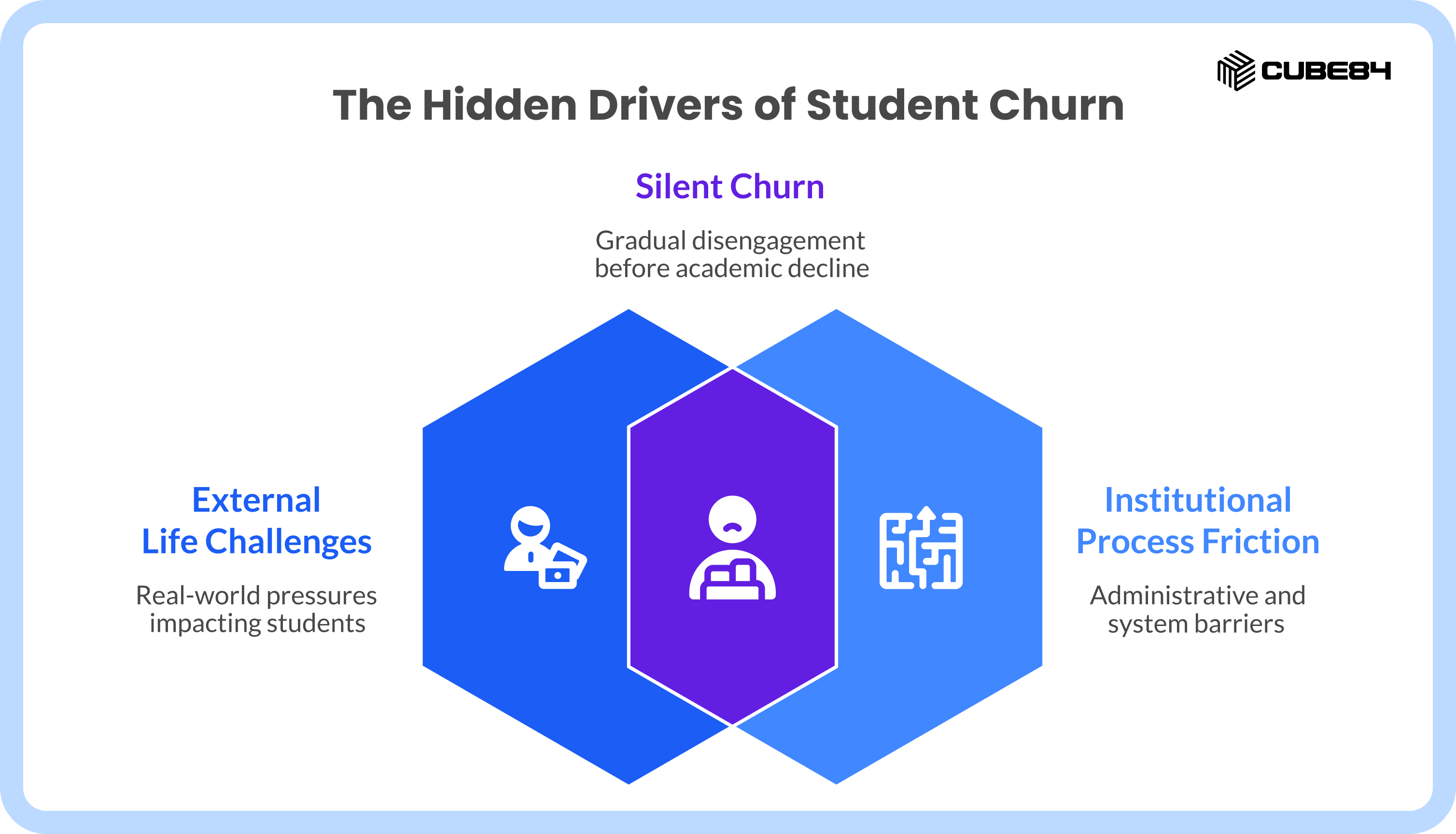
These are students who enrolled, showed up, and started their journey. But over time, they stopped attending classes regularly. They logged into systems less often. Assignments were missed. Messages went unanswered. Eventually, they disappeared from the institution without a clear moment where someone could step in and change the outcome.
Most institutions are not short on effort. There are advising teams, early alert systems, faculty outreach, and student success initiatives. The real challenge is visibility. By the time a problem becomes visible, it is often already too late to act effectively.
If there is one shift that matters right now, it is this:
the ability to identify disengagement early and act on it in time.
Expectation vs. Reality: What Silent Churn Actually Looks Like
When a student leaves, it is easy to assume they struggled with the academic rigor of the coursework or simply lacked the personal motivation to push through. Maybe the coursework is too difficult. Maybe the student is not putting in enough effort. Maybe they just are not motivated.
The truth happening on the ground looks very different.
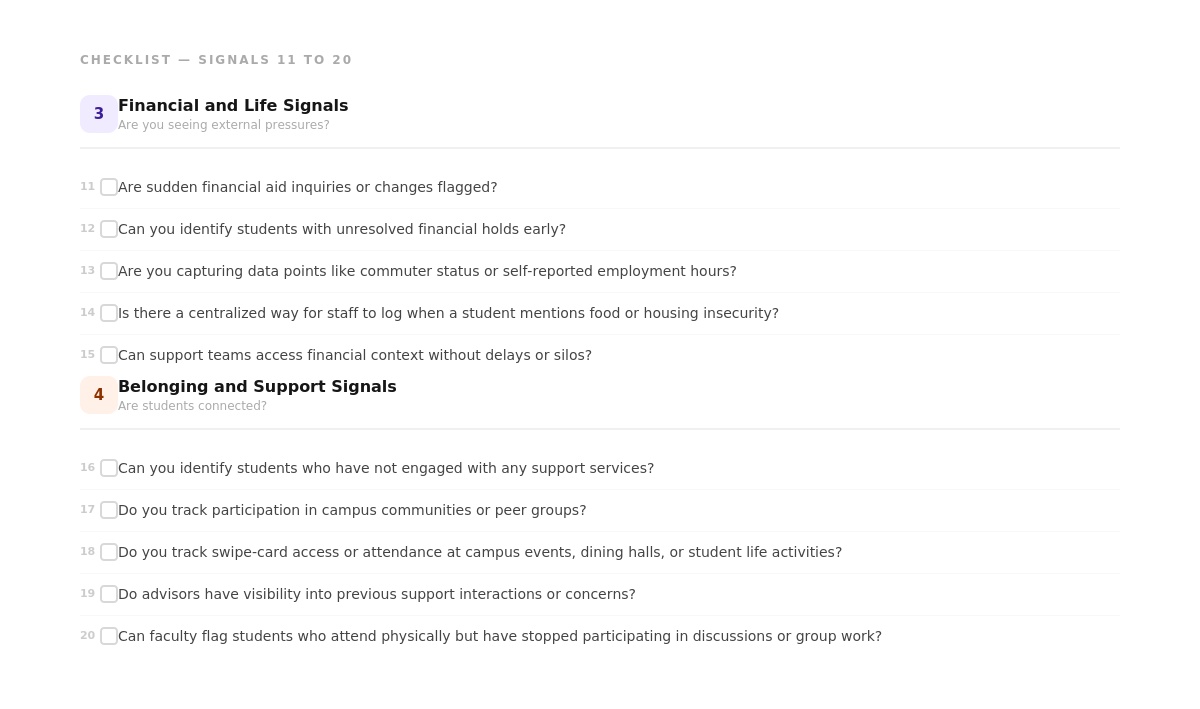
Many students today are balancing far more than academics, dealing with invisible poverty. Some are working part-time or even full-time jobs. Some are dealing with financial uncertainty, housing concerns, or family responsibilities. Others feel disconnected in large campus environments where it is easy to feel like just another number.
There is also friction in everyday processes. Financial aid delays, registration issues, unclear communication, and too many disconnected systems can make even simple tasks feel overwhelming.
What makes silent churn difficult to catch is that it rarely happens all at once. It follows a pattern.
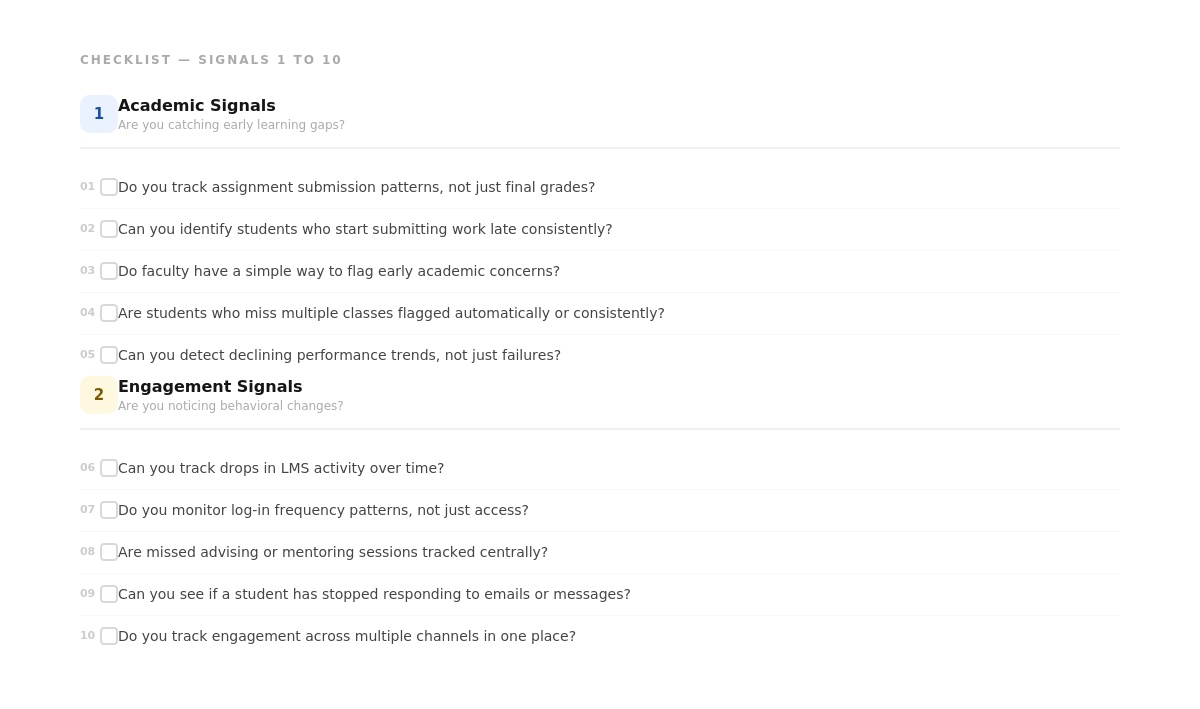
Attendance starts to drop
Activity in the learning platform becomes inconsistent
Assignments are submitted late or not at all
Advising appointments are missed
Financial or administrative issues go unresolved
Then grades begin to fall
By the time grades reflect the problem, the student has already been disengaging for weeks.
The Root Causes: Why Our Systems Keep Missing the Signals
Today's college demographic looks different than it did twenty years ago. One major shift is the rise of what many call the new-majority learner.
The new-majority learner is often a first-generation student, a non-traditional adult learner, or a commuter who is strapped for time. They do not naturally know how to navigate complex university bureaucracy, and they rarely raise their hand to ask for help proactively, especially if they are not sure where to go.
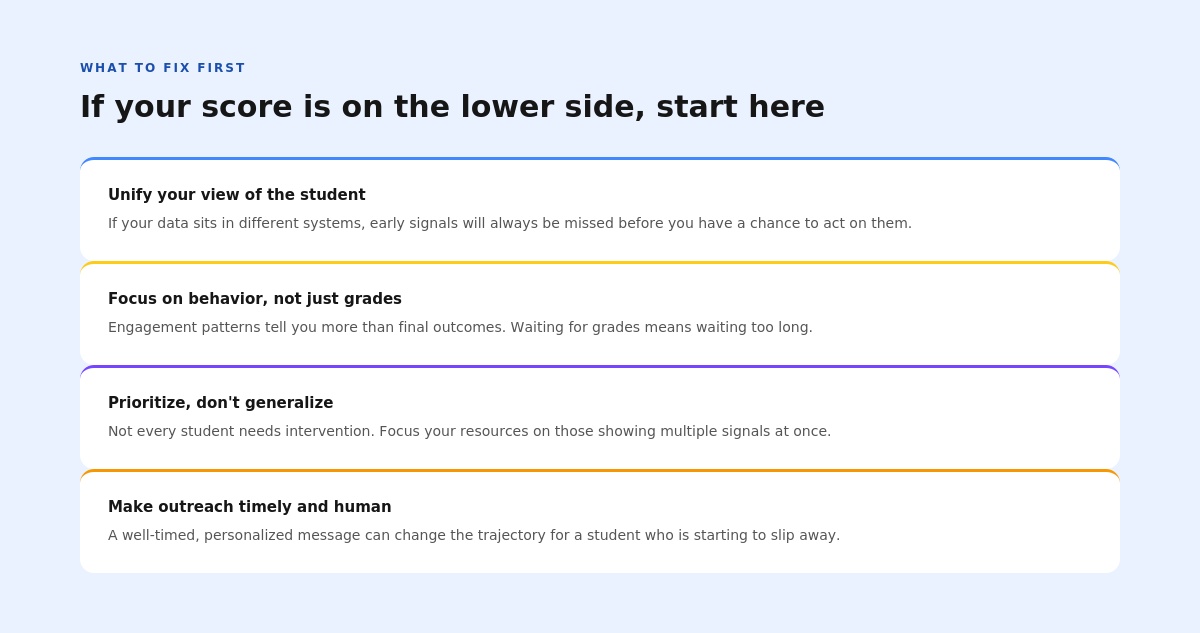
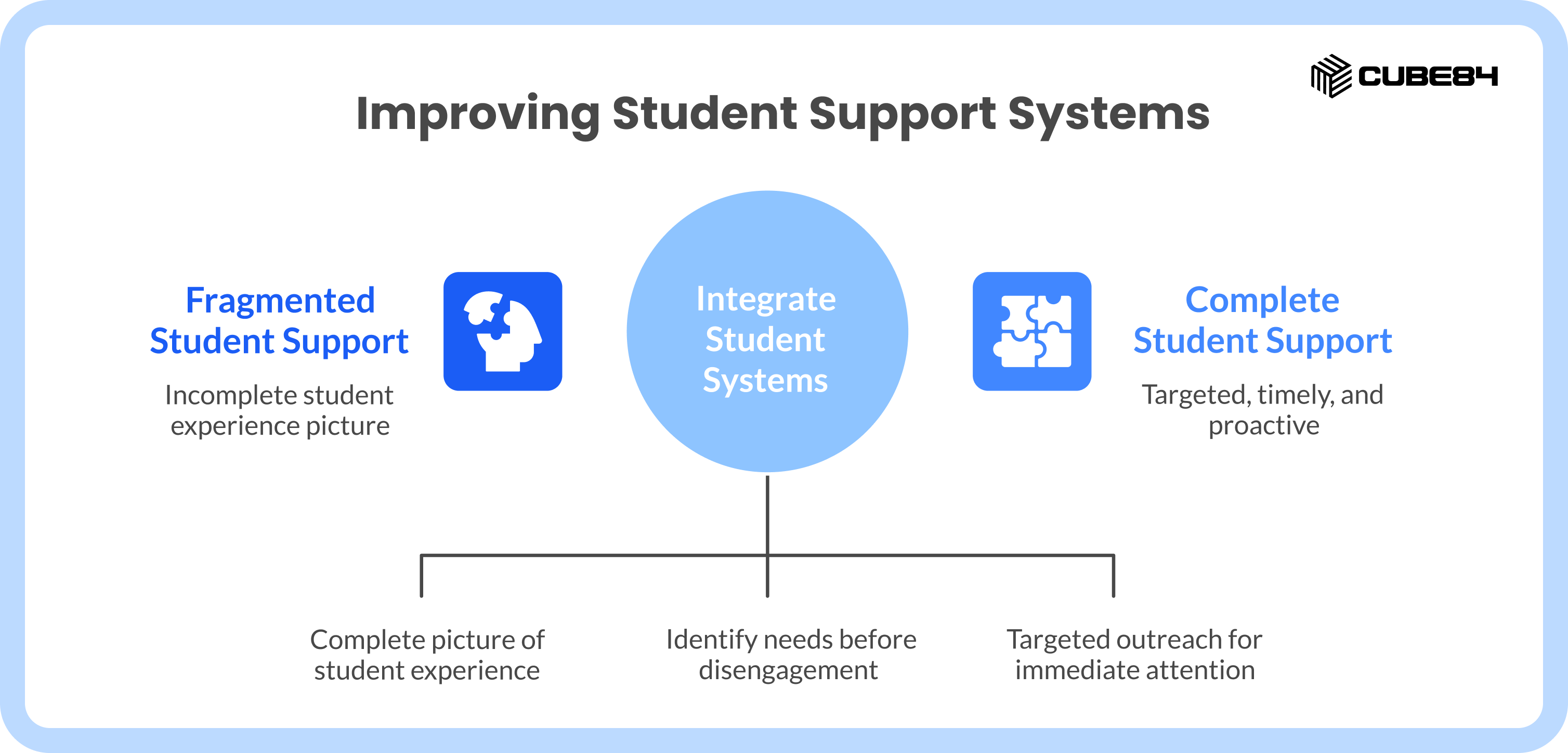
At the same time, most institutions operate with fragmented systems. Student information systems, learning platforms, advising tools, and financial aid systems all hold valuable data. But they do not always connect in a way that gives a complete picture of the student experience.
There is also a timing issue in how interventions happen. Many campuses still rely on signals like midterm grades or formal alerts. By that point, the student has already been disengaging for some time.
On top of that, advising and support teams are stretched. Managing hundreds of students at once makes it difficult to identify who needs immediate attention. Without clear prioritization, outreach often becomes broad and generic instead of targeted and timely.
The Timing Gap: Why Institutions Miss the Moment That Matters
One of the most important aspects of silent churn is when it begins.
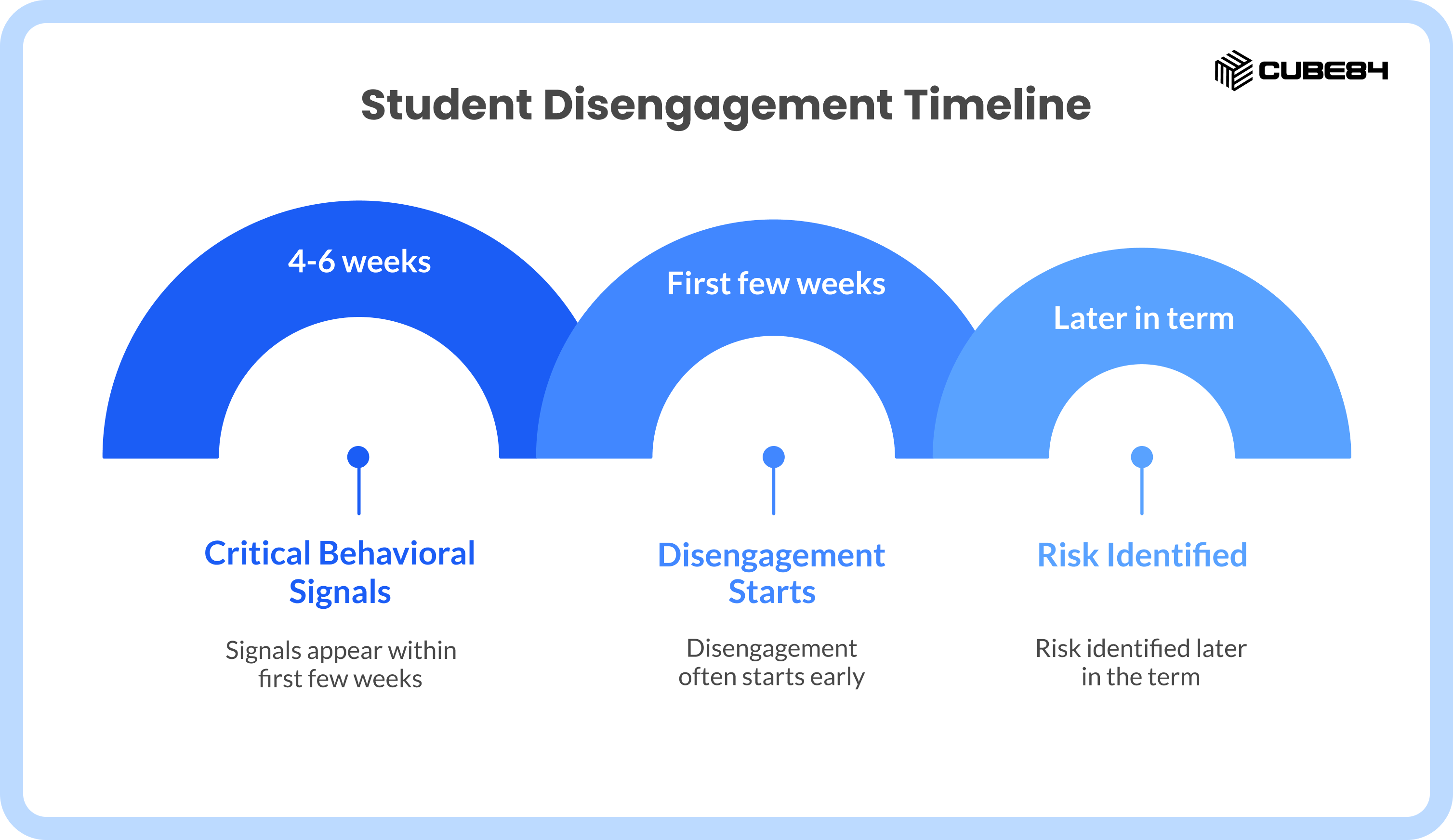
From what we’ve noticed and heard from our clients the most critical behavioral signals appear within the first four to six weeks of classes.
Disengagement does not start at midterms. It often starts within the first few weeks of the semester.
Small changes appear early. A student attends fewer classes. They log in less frequently. They delay submitting assignments. These are early signals, but they are easy to miss if no one is actively looking for them.
Most institutions identify risk later in the term, when performance drops or formal alerts are triggered. By then, the student may already feel disconnected or overwhelmed. Re-engaging at that stage is much harder.
This creates a gap between when the problem starts and when it is noticed.
Closing that gap is where real impact happens.
The 6-Step Framework to Identify and Rescue At-Risk Students
There is no single solution that fixes this overnight. But there is a practical approach institutions can start with and build on over time.
You can begin adopting a clear playbook to identify and rescue these at-risk students right now.
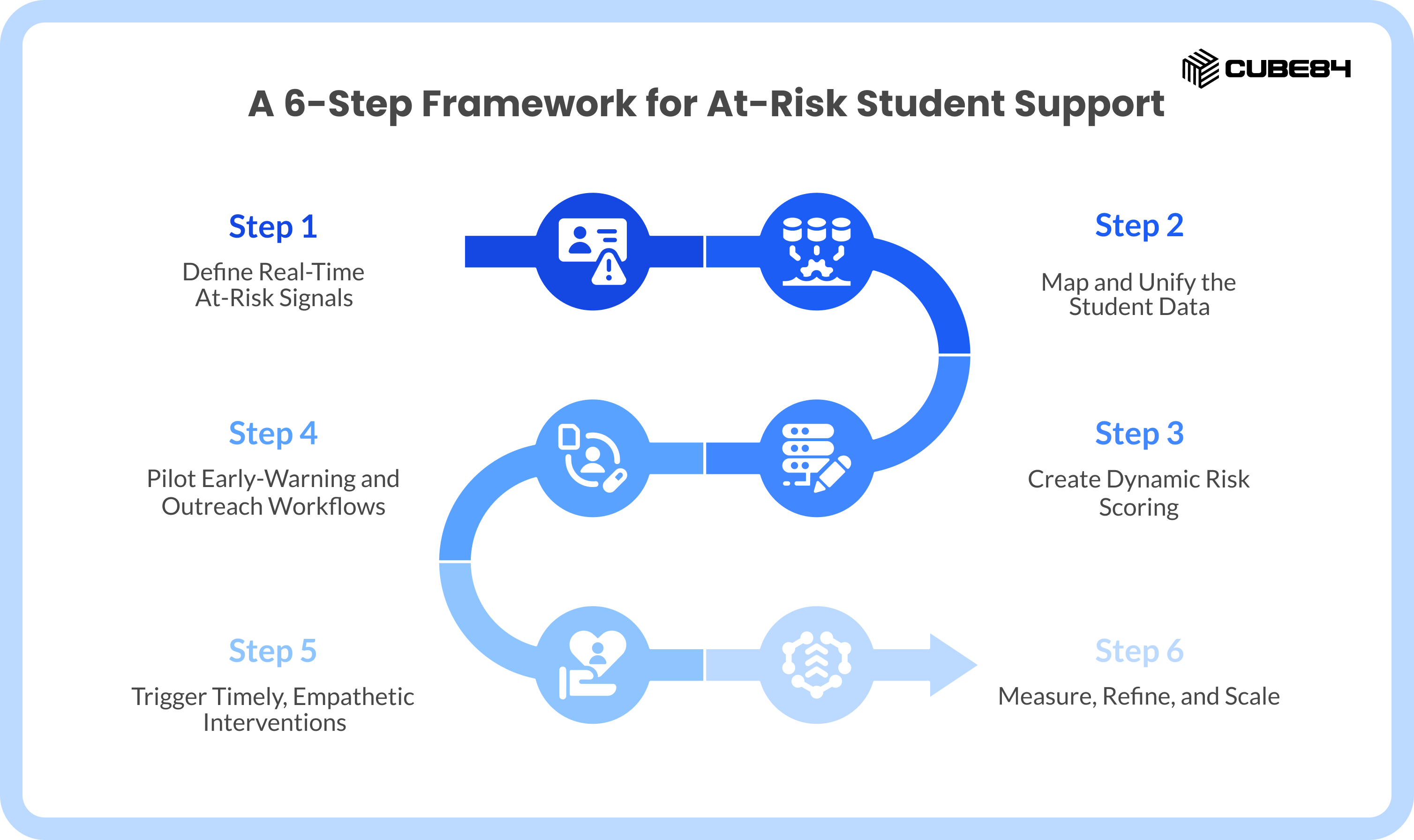
Step 1: Define Real-Time At-Risk Signals. You must move beyond looking solely at a student's Grade Point Average. Start tracking behavioral leading indicators. Look for sudden drops in LMS logins, missed early assignments, ignored campus emails, and sudden inquiries about financial aid status.
Step 2: Map and Unify the Student Data. You have to break down the departmental silos. Bring your LMS activity, SIS data, CRM engagement metrics, and financial aid statuses into one central dashboard.
Step 3: Create Dynamic Risk Scoring. Move away from a simple binary model where a student is either at risk or entirely fine. Use tiered scoring to automatically prioritize your advisor caseloads based on who needs help today.
Step 4: Pilot Early-Warning and Outreach Workflows. Start small by focusing on a specific cohort or a single academic department. Define exactly who reaches out, when they do it, and the method they use. Train your teams on how to conduct empathetic outreach.
Step 5: Trigger Timely, Empathetic Interventions. Change the tone of your communication. Instead of asking a student why they are failing, reach out to say you noticed they haven't logged in recently and ask how you can support them. Use automated alerts to prompt these human check-ins.
Step 6: Measure, Refine, and Scale. Carefully measure which interventions actually improve your retention rates. Continuously refine your risk models based on what works before you roll the system out to the entire institution.
This does not need to be perfect from the start. What matters is building a system that improves over time.
How Modern CRM Platforms Streamline the Rescue (The Soft Tech Pitch)
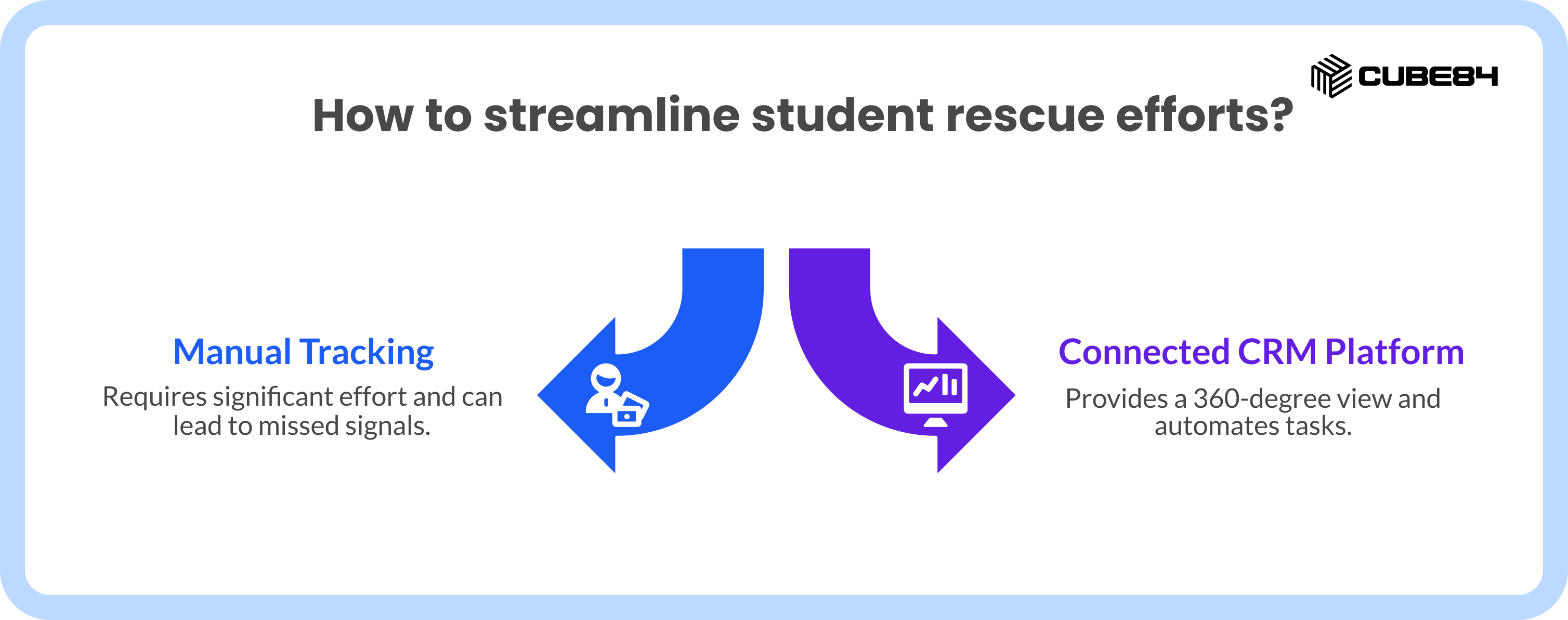
As institutions try to bring these steps together, one challenge becomes clear. The effort required to manually track, connect, and act on all this data can be significant.
This is where a connected platform can make a difference, as it gives you a powerful, 360-degree view of your campus.
A unified system can bring together academic data, engagement activity, financial information, and support interactions into a single view. Instead of switching between multiple tools, advisors can see a student’s situation in one place.
Platforms like Salesforce Education Cloud or Student Success Hub eliminate the need for your advisors to toggle between five different systems just to understand one student's context.
With the right setup, early signals can trigger alerts automatically. This helps teams focus on students who need attention at the right time, rather than relying on manual tracking.
Automation can also support communication. Reminders, check-ins, and nudges can be sent at the right moments, while still allowing advisors and faculty to step in for meaningful conversations when needed.
For example, AI-assisted risk scoring and automated workflows free up massive amounts of time for your faculty and staff. When the software handles the tedious data-hunting, your human team members can handle the high-touch, empathetic coaching that students desperately need.
What Higher Ed Leaders Need to Do Next
Silent churn is not always visible, but its impact is real.
Students who disengage early often do so without drawing attention to themselves. Institutions that rely only on late-stage signals will continue to face challenges in improving retention.
The opportunity lies in seeing the signs earlier and acting with clarity and care.
If you’re exploring ways to spot and act on these signals earlier, we’d love to share what’s worked across similar institutions.
If you’d like to continue the conversation, let’s chat.