


For nonprofit leaders, fundraising and impact are deeply connected. Donors want to know where their money went and what changed because of it. Boards want to understand whether goals are being met across programs. Teams want a way to show progress without spending countless hours pulling information together.
Even when important work is happening on the ground, it can be surprisingly hard to tell that story clearly. Information often lives in different places, spread across spreadsheets, emails, and updates from the field. Bringing all of that together takes time and still does not always give a complete picture.
This gap between fundraising and impact reporting is one of the most common challenges nonprofits face, and it is where the right technology can make a real difference.
Why Trust Depends On Clear Visibility
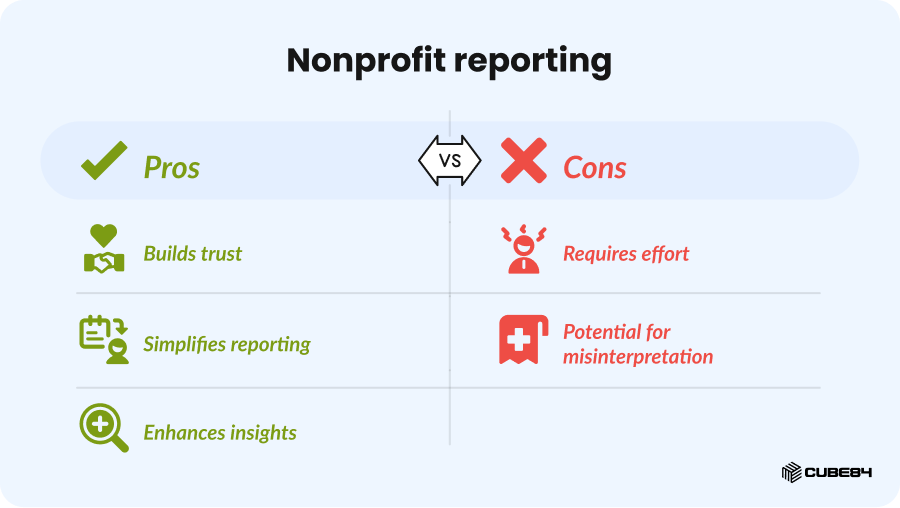
Every dollar raised is tied to trust. Donors want confidence that their contributions are being used as intended, and they want to see evidence that progress is being made. That evidence does not need to be complicated, but it does need to be clear.
Stories are important, but stories on their own are rarely enough. Donors, boards, and funders also look for numbers, milestones, and results that show how promises compare to progress. Without that visibility, reporting becomes stressful and time-consuming, and important insights can be missed.
When nonprofits can clearly connect dollars raised to outcomes delivered, reporting becomes easier and trust grows naturally over time.
Common Challenges Nonprofits Face
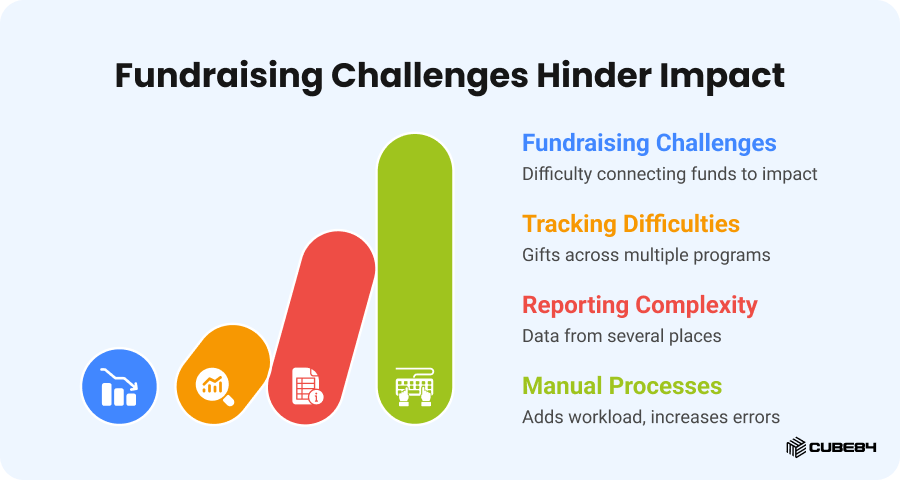
When nonprofits try to connect fundraising to impact, a few challenges tend to come up again and again.
Tracking donor gifts across multiple programs can be difficult, especially when one contribution supports more than one initiative. Reporting outcomes in a way that makes sense to both donors and boards often requires pulling data from several places. Many teams also rely heavily on manual processes, which adds to the workload and increases the risk of errors.
Without one system tying fundraising and program delivery together, the full story can get lost, even when the work itself is strong.
Bringing Fundraising And Programs Together In One View
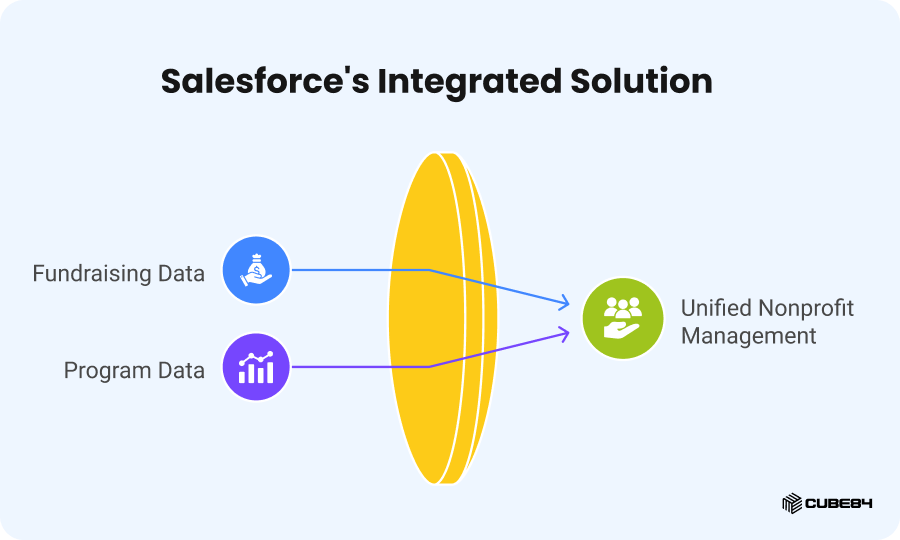
Salesforce offers nonprofits a way to bring fundraising and impact data into one connected system. This makes it easier to understand not just how much money has been raised, but where it came from, how it was allocated, and what progress those funds supported.
A fundraising dashboard can give leaders a clear view of revenue and donor activity at a glance. Total funds raised, growth in the number of donors, and changes in average gift size can all be seen in one place. Campaign performance across different channels, such as emails, events, and major gifts, can also be reviewed without digging through separate reports.
This kind of visibility helps teams understand what is working, plan future campaigns, and communicate results with more confidence.
Seeing The Full Donor Story
Looking at an individual donor record provides even deeper clarity. Instead of searching through multiple systems, teams can see relationship history, lifetime giving, and how contributions have supported different programs over time.
When a donor gives to more than one initiative, each allocation can be tracked clearly. This makes it much easier to report back to donors and boards without guesswork or manual reconciliation.
For example, a single gift might support both a construction project and an education program. Salesforce allows each portion of that gift to be tied directly to the relevant program, along with the progress being made in each area.
Tracking Progress And Outcomes Clearly
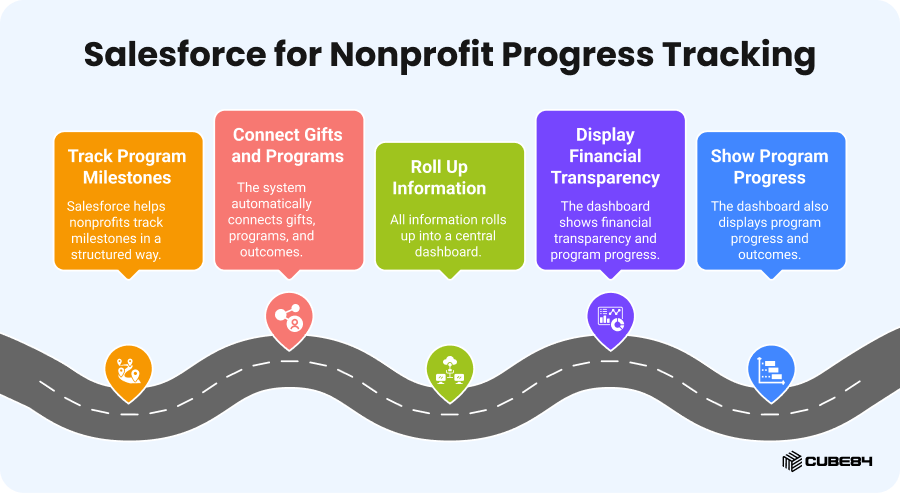
On the program side, Salesforce helps nonprofits track milestones and results in a structured way. For a construction initiative, this might include classrooms completed, stages of work in progress, and costs incurred at each stage. For an education or literacy program, it could include baseline assessments, improvement goals, and current results compared to targets.
What makes this especially helpful is that the system connects gifts, programs, and outcomes automatically. Teams do not have to jump between screens or rebuild reports manually. The relationships are already in place.
All of this information can then roll up into a central dashboard that shows both financial transparency and program progress in one view. Leaders can see how much has been invested, how funds are distributed across initiatives, and what outcomes are being achieved as a result.
Making Reporting Easier And More Reliable
When fundraising and impact data are connected, reporting becomes less of a burden. Boards can see progress clearly. Donors receive updates that are accurate and timely. Teams spend less time assembling reports and more time focusing on their programs.
Automated communications also help maintain consistency. Thank you messages and impact updates can be generated based on donor contributions, ensuring supporters receive relevant information without adding extra manual work for staff.
This kind of structure supports transparency and helps build long-term confidence with supporters.
Using Data To Support Better Decisions
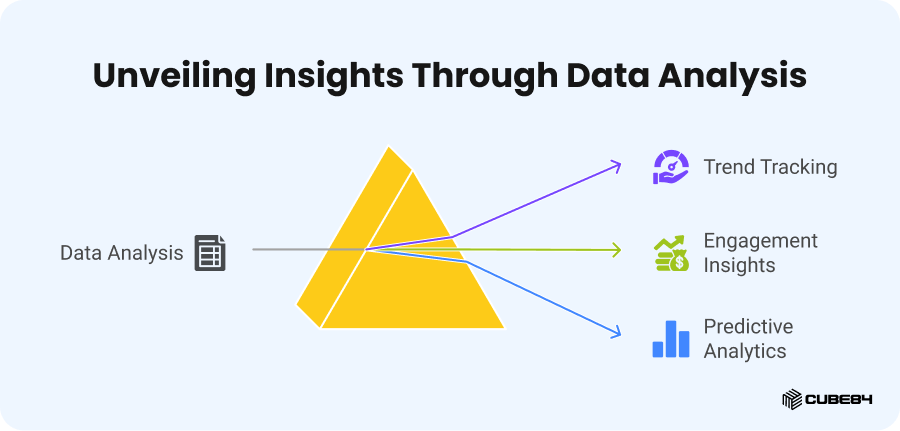
Salesforce also makes it easier to track trends over time. Donor retention from year to year, growth in giving, and seasonal patterns can all be reviewed through reporting. With the right setup, teams can understand how engagement changes over time and adjust their outreach accordingly.
Some nonprofits are also beginning to explore how newer tools can support fundraising and donor engagement by identifying patterns and providing helpful insights, while still keeping human relationships at the center of their work.
A Final Note
These ideas and examples were shared during a recent conversation focused on how nonprofits can better connect fundraising to impact using Salesforce. If you would like to see the full walkthrough and hear the discussion in more detail, you can watch the webinar here.
If you are thinking about how to improve visibility, reporting, and trust across your own organization, reach out to us. A thoughtful look at how fundraising and program data come together is a good place to start.