


University admissions offices are under more pressure than ever, because while application numbers continue to grow, the pool of traditional college-age students in North America is shrinking. Many institutions are also facing tighter budgets and rising expectations from prospective students who expect quick responses and personalized communication.
Artificial intelligence is quickly becoming one of the tools universities are using to manage these challenges. Admissions teams are not handing decisions entirely to algorithms. Instead, they are using AI to handle repetitive tasks, analyze large datasets, and surface insights that help staff focus on meaningful interactions with applicants.
The result is a quieter but significant shift in how admissions offices operate. What once required weeks of manual review can now be organized, prioritized, and analyzed much faster.
The New Reality of Admissions Operations
Admissions teams today manage far more applications than they did even a decade ago. Some large universities process tens of thousands of applications each cycle, each containing transcripts, essays, letters of recommendation, and supplemental materials.
Artificial intelligence helps institutions manage this scale by assisting with administrative review tasks.
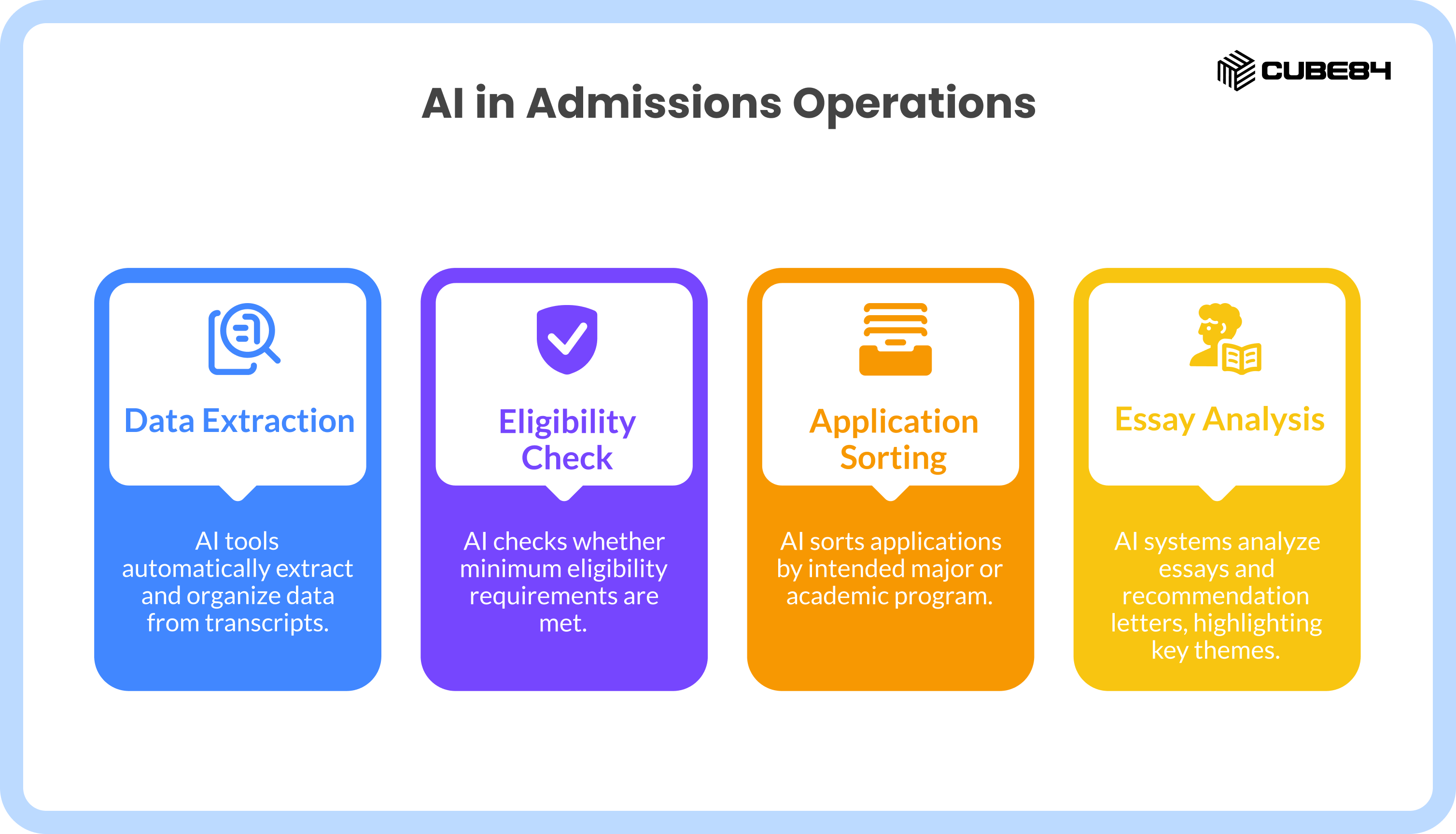
AI tools can automatically extract and organize data from transcripts, check whether minimum eligibility requirements are met, and sort applications by intended major or academic program.
In some cases, these systems can process application materials at speeds that are impossible for human readers alone. For example, AI systems can analyze thousands of essays or recommendation letters in a short period of time while highlighting key themes or areas that require closer human review.
This does not remove the role of admissions officers. Instead, it allows them to spend less time on administrative sorting and more time evaluating the context behind each application.
Predictive Analytics and Enrollment Strategy
One of the most widely adopted uses of AI in admissions involves predictive analytics.
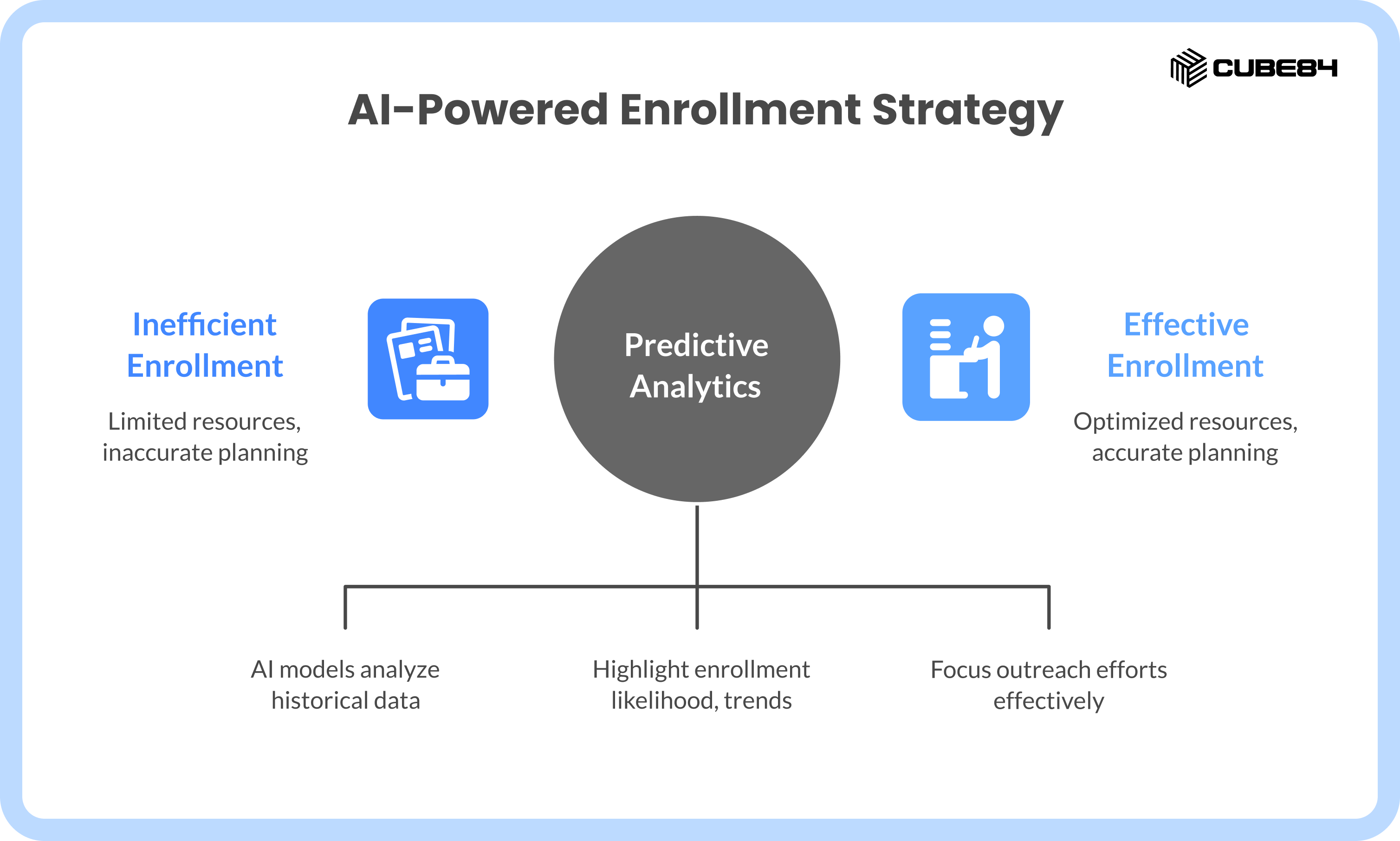
Universities maintain years of historical admissions data. AI models can analyze patterns within this data to help admissions teams make better decisions about recruitment and enrollment strategies.
These models can estimate how likely an admitted student is to enroll, which helps institutions manage yield and plan class sizes more accurately.
They can also highlight patterns such as:
These insights allow admissions teams to allocate recruitment resources more effectively and focus outreach efforts where they are most likely to make a difference.
Personalizing the Applicant Experience
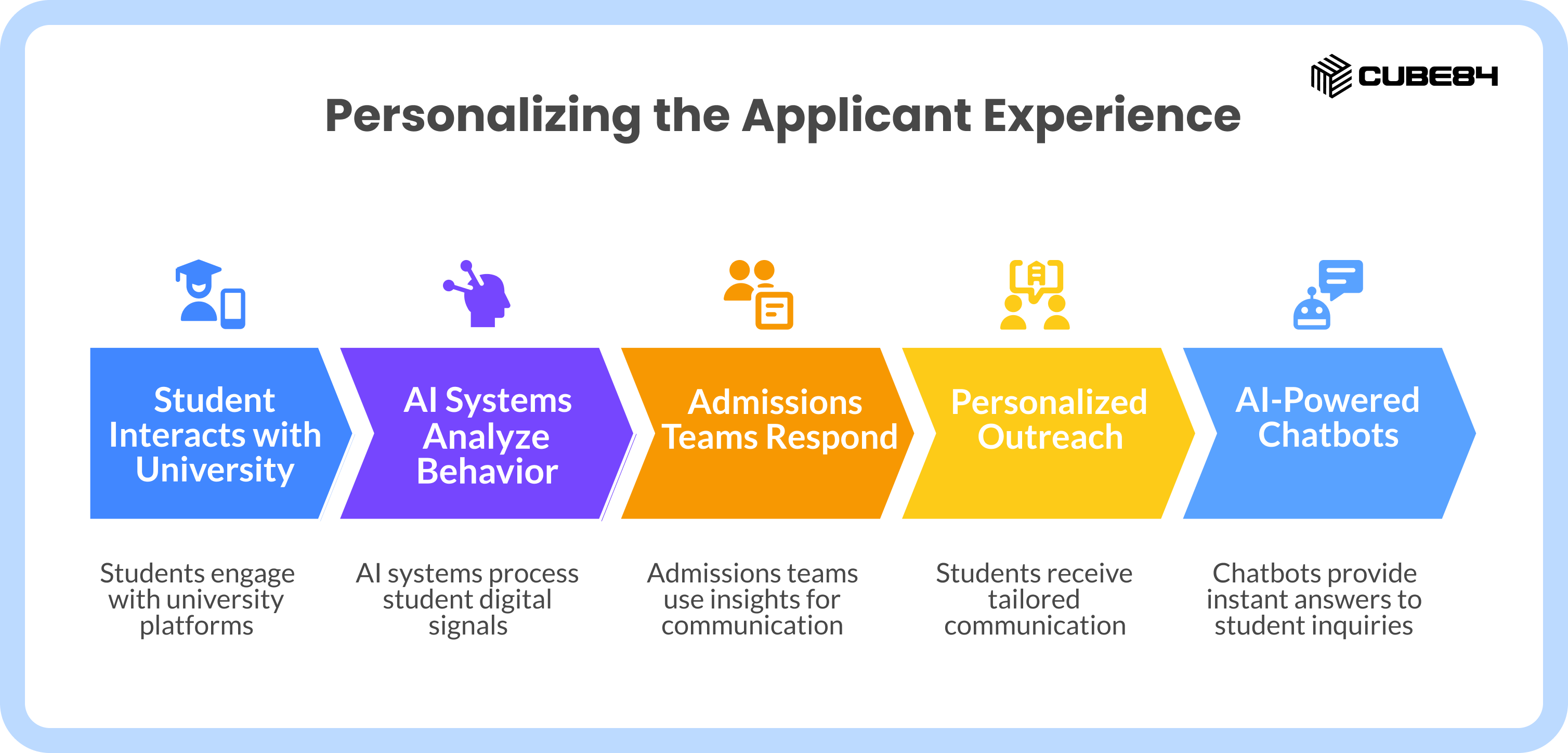
Another major shift in 2026 involves personalization, with platforms like Salesforce Experience Cloud enabling institutions to segment audiences and deliver more relevant experiences at scale. Prospective students often interact with universities months or even years before submitting an application, leaving behind digital signals such as website visits, email engagement, and chatbot conversations. AI systems help make sense of this behavior and surface what each student is actually looking for.
Admissions teams can then respond with more timely and contextual communication. To support this, we’ve created a personalization playbook that outlines how institutions can translate these signals into meaningful outreach.
AI-powered chatbots also play an increasing role in answering routine questions from prospective students. These systems can respond instantly to questions about application requirements, deadlines, or campus programs, helping admissions offices manage high volumes of inquiries.
For many universities, this kind of personalized outreach helps prospective students feel seen earlier in the application journey.
Application Review and Data Integrity
Admissions review is one of the most sensitive parts of the process, and universities remain cautious about how AI is used in this context.
Most institutions emphasize that final decisions remain in human hands. AI tools are typically used to assist with evaluation rather than replace admissions committees.
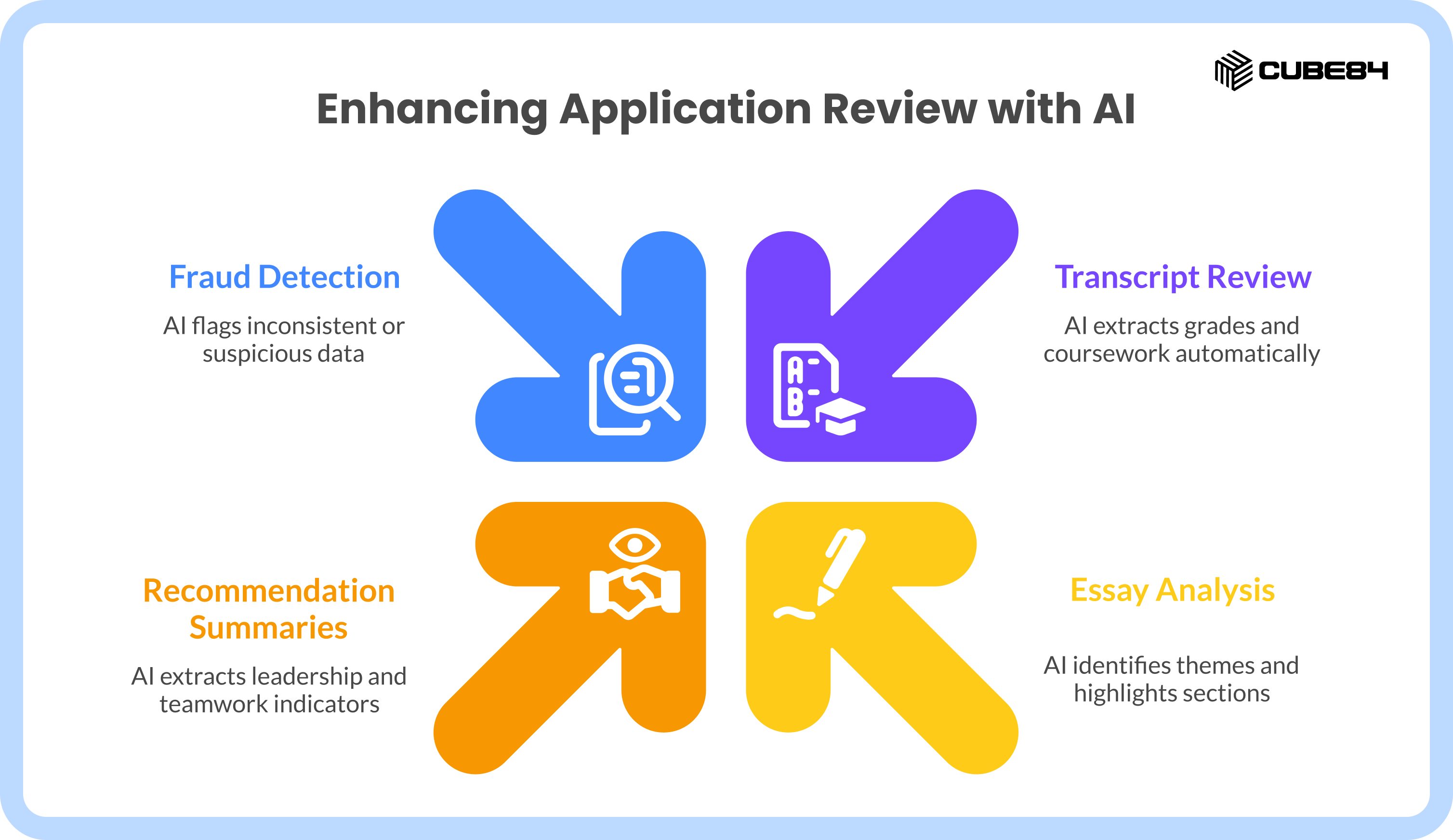
Common AI-supported review tasks include:
AI can also help detect inconsistencies within applications and identify possible fraudulent submissions, improving application integrity and compliance.
These tools allow admissions teams to focus their attention on the qualitative aspects of each applicant rather than manual data processing.
Ethical Questions and Institutional Responsibility
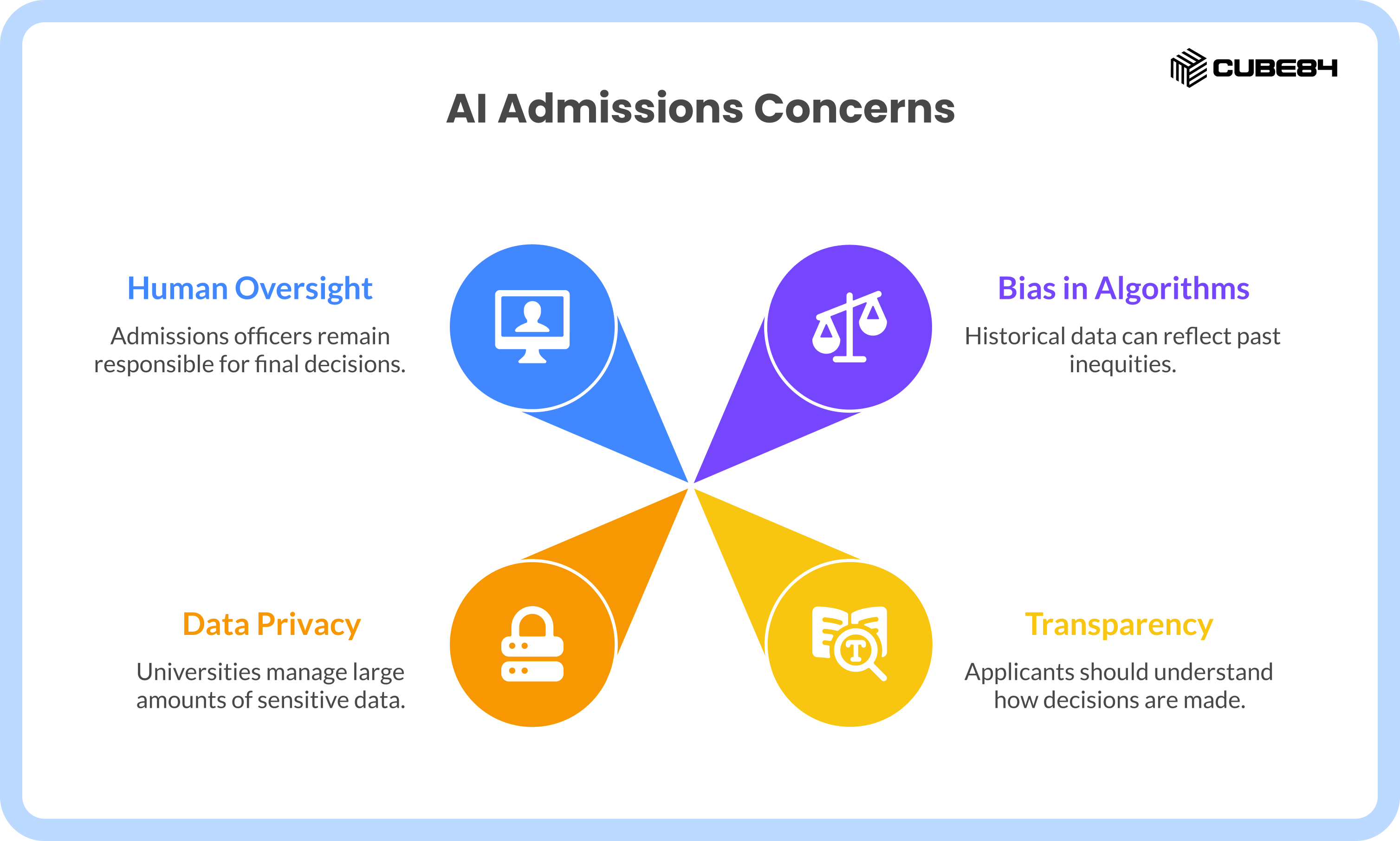
As AI adoption grows, universities are also discussing how to use these technologies responsibly.
Admissions decisions have long-term consequences for students and institutions. Because of this, many universities emphasize transparency, human oversight, and fairness when deploying AI tools.
Several concerns often appear in these discussions.
The Future Admissions Office
The admissions office of the future will likely look different from the one that existed ten years ago.
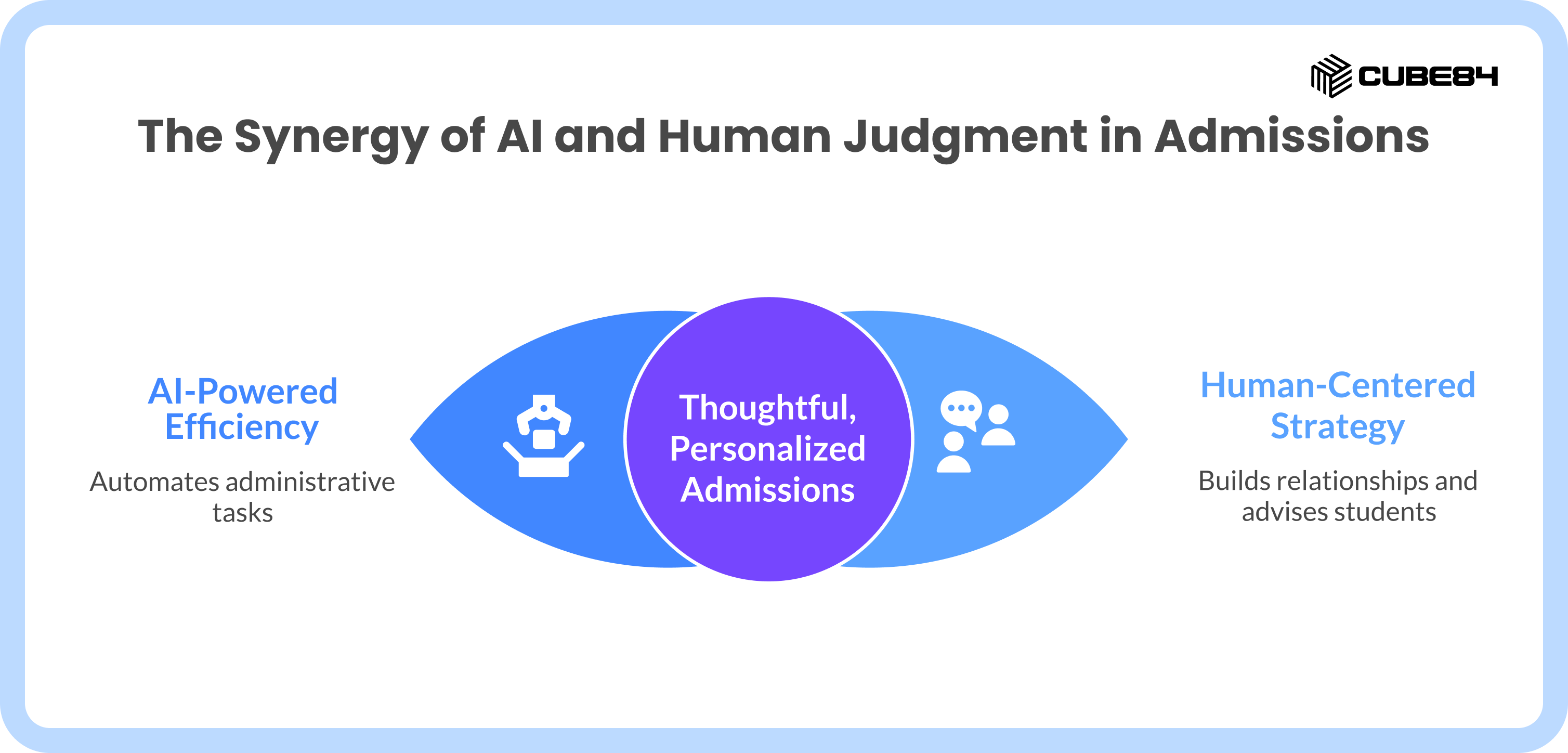
Instead of spending most of their time reviewing spreadsheets or entering application data, admissions professionals will increasingly focus on relationship building, student advising, and strategic recruitment.
AI will handle much of the background analysis that once required large administrative teams.
For institutions, this shift is not simply about efficiency but about responding to a new reality in which competition for students is increasing, and prospective applicants expect faster, more personalized interactions.
Technology alone will not solve the challenges facing higher education. What it can do is help institutions respond with greater clarity and coordination.
Admissions decisions will always require human judgment. AI simply gives admissions teams better information and more time to apply that judgment thoughtfully.
Conclusion
Artificial intelligence is already reshaping how universities manage admissions in 2026. From application review and predictive enrollment modeling to personalized communication and fraud detection, these tools are helping institutions handle complexity at a scale that was difficult to manage just a few years ago.
The most successful universities will likely be those that treat AI as a partner rather than a replacement. Technology can process data quickly, but it cannot replace the judgment, empathy, and context that admissions professionals bring to each decision.
If your institution is exploring how AI and CRM platforms can support admissions operations, the first step is understanding how these tools fit within your existing processes.
At CUBE84, we work with universities to design Salesforce solutions that integrate admissions data, student engagement insights, and workflow automation to support both staff and students.
If you would like to explore what this could look like for your institution, feel free to contact us and start the conversation.