

Student retention has become one of the most important priorities for colleges across North America. Many institutions are navigating rising operational costs while enrollment pipelines continue to change. In this environment, every student who leaves early represents both a personal loss and a serious institutional concern.
For many years, universities relied heavily on academic performance as the primary signal that a student might be struggling. Advisors often step in once grades begin to fall. The difficulty with this approach is timing. By the time GPA declines, the challenges affecting the student may have already been present for weeks.
Students today often face pressures that exist outside the classroom. Financial strain, mental health concerns, transportation challenges, childcare responsibilities, and housing instability all affect a student's ability to continue their education. These barriers rarely appear in a gradebook first.
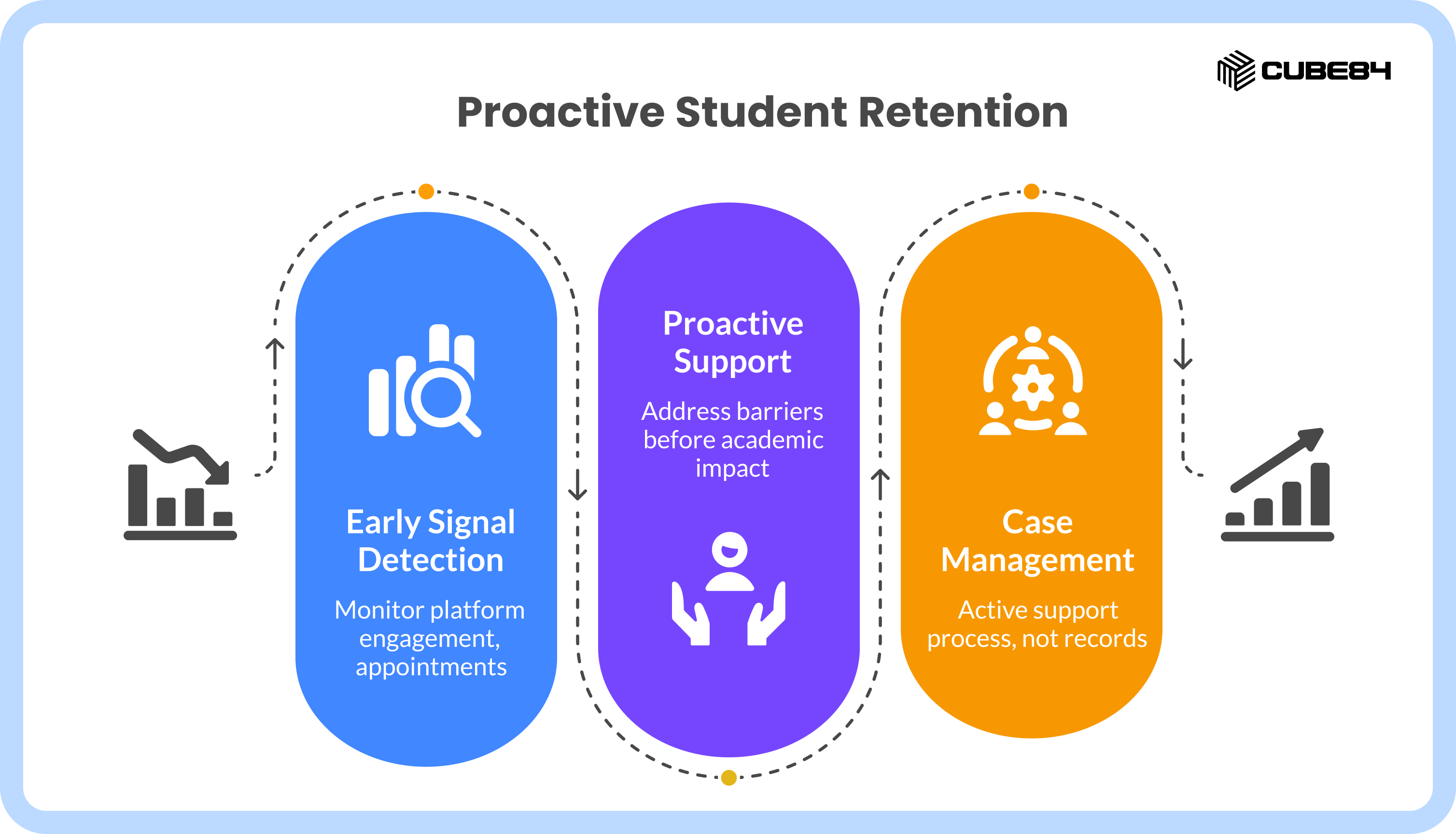
Salesforce Case Management provides a way for institutions to recognize and respond to these signals earlier. When student challenges are treated as trackable cases rather than isolated events, universities can build a coordinated support system that brings the right people together around the student.
The Anatomy of a Retention Crisis
“The GPA Mirage: Why Grades Are the Wrong Early Warning Signal.”
Waiting for grades to fall before identifying a struggling student often means the institution is responding after the situation has already developed. GPA reflects the result of challenges that may have been building for some time.
Across North American higher education, institutions are also confronting the demographic cliff. The number of traditional college-age students is shrinking, which means that every enrolled student matters even more. At the same time, many students arrive with more complex life circumstances than institutions have historically supported.
First-generation students may be navigating university systems without family guidance. Working students are balancing employment with coursework. Others may be managing personal or mental health challenges that quietly disrupt their routines.
Many of the earliest signals appear outside academic performance. A student may stop logging into the learning platform, miss advising appointments, or withdraw from campus engagement. These changes often occur before grades decline.
A few terms often appear in retention discussions.
A case management framework supports both retention and persistence by helping institutions respond earlier and more consistently.
Designing the Student Success Case
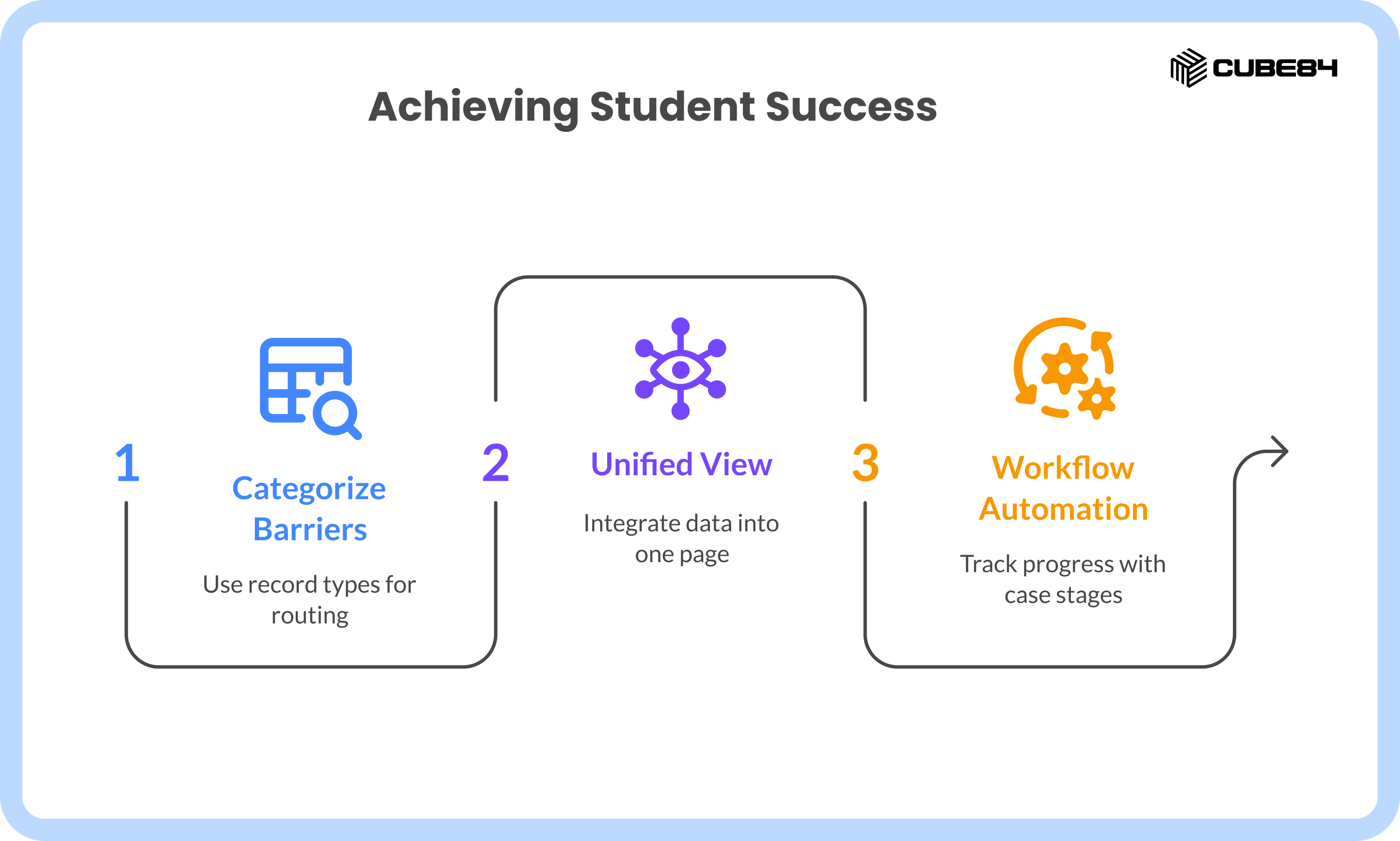
“Categorizing Barriers: Why Record Types Are Your Foundation.”
In Salesforce, a case represents a situation that requires attention. Within a university setting, the case usually reflects a barrier affecting a student's ability to continue their studies.
Record types help institutions categorize these barriers so that cases are routed to the appropriate teams and follow the correct support process.
Most universities begin with three common categories.
Each category can follow a different response path. A financial aid hold may require immediate contact from a financial aid officer, while academic concerns may be routed directly to advising staff.
Building a Whole Student View
Universities already collect significant amounts of student information. The challenge is that the data often lives across several systems that are in no way connected to each other.
The Student Information System holds enrollment and financial data. The learning management system tracks course participation. Advising notes and housing records may exist elsewhere.
A well-designed case page can bring these signals together.
Advisors may see current enrollment status, financial aid holds, learning platform activity, previous interventions, and notes from other staff. When these details appear in one place, it becomes easier to understand the student's situation and respond appropriately.
This unified view also creates a strong foundation for more advanced capabilities over time, enabling institutions to move beyond reactive support and toward more proactive, insight-driven decision making.
Case Status Workflows
The standard Salesforce case status field usually includes simple values such as New and Closed. Student support processes often require more stages.
These stages allow teams to track the progress of each intervention.
Proactive Early Warning Systems
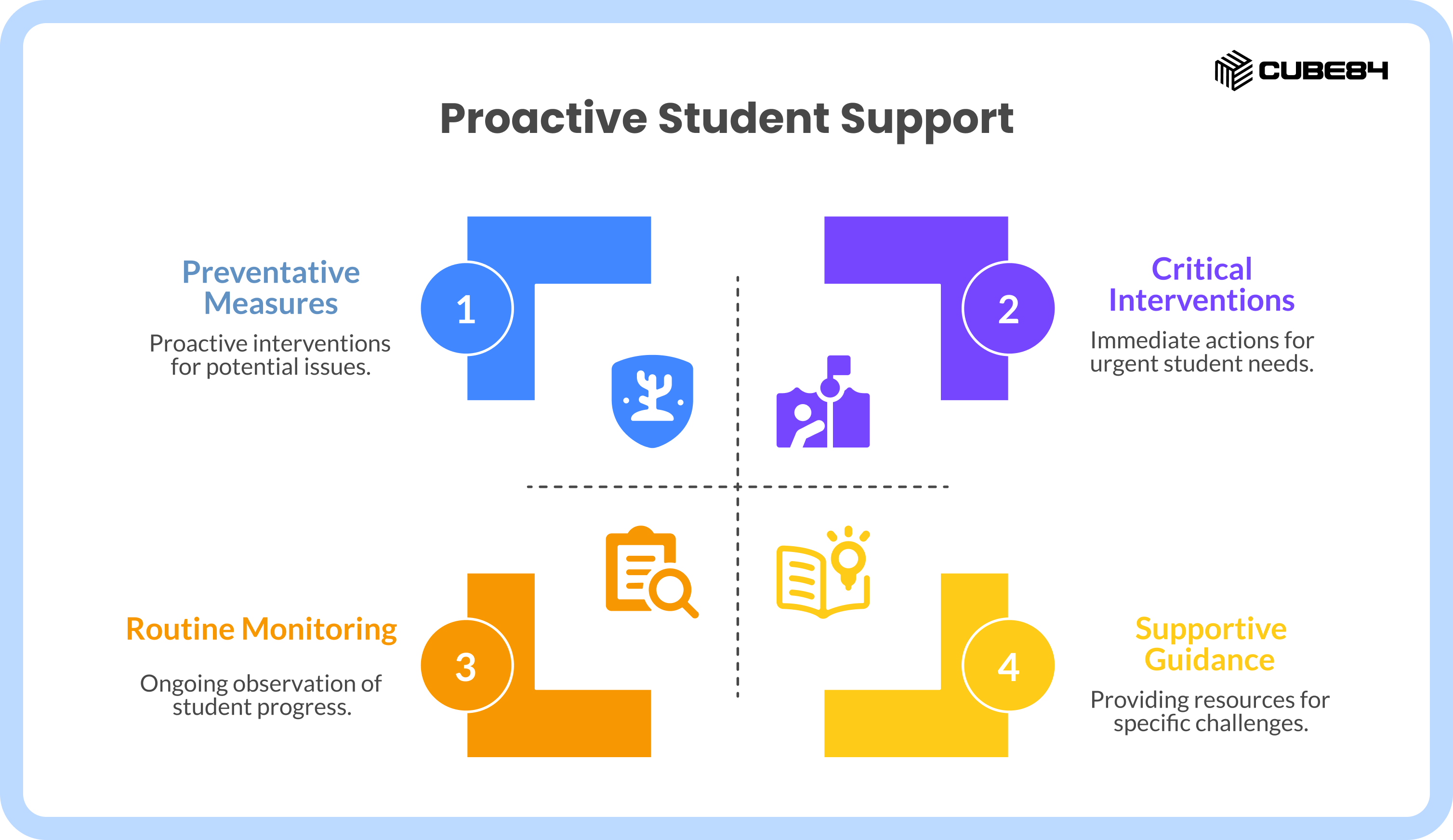
Advisors often support large groups of students, which makes manual monitoring difficult. Automated signals can help surface early concerns.
Many useful signals come from changes in behavior rather than explicit requests for help.
Faculty also play an important role. A simple faculty alert form can allow instructors to flag concerns quickly without leaving their normal workflow.
While many institutions begin with rule-based triggers, leading institutions are increasingly augmenting these signals with AI-driven models that dynamically adjust thresholds and detect patterns that may not be immediately visible through predefined conditions. This allows earlier and more personalized interventions.
Care Plan Framework
Once a case is opened, care plan templates help guide the response. These templates ensure that students receive consistent support.
Templates help advisors apply proven support practices consistently across departments.
Collaborative Care Teams
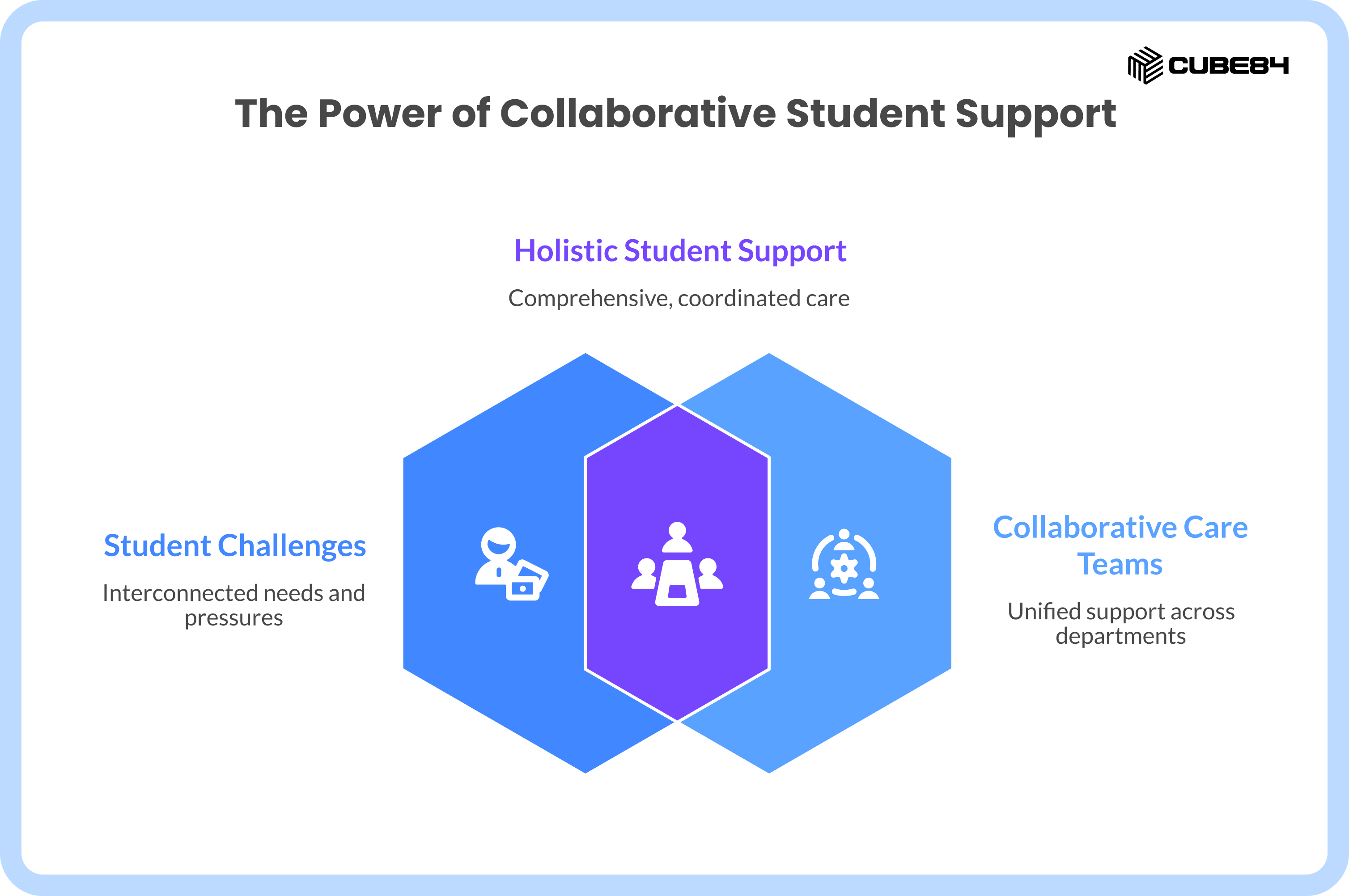
Student challenges rarely exist within a single department. A student experiencing financial stress may also face housing concerns or academic pressure.
Case teams allow multiple staff members to collaborate around one student case.
Field-level security allows institutions to protect sensitive information while still alerting advisors that additional support services are involved.
Tasks attached to the case record help ensure that follow-ups occur as planned. Each action can be assigned to a specific staff member with reminders and due dates.
Measuring What Matters
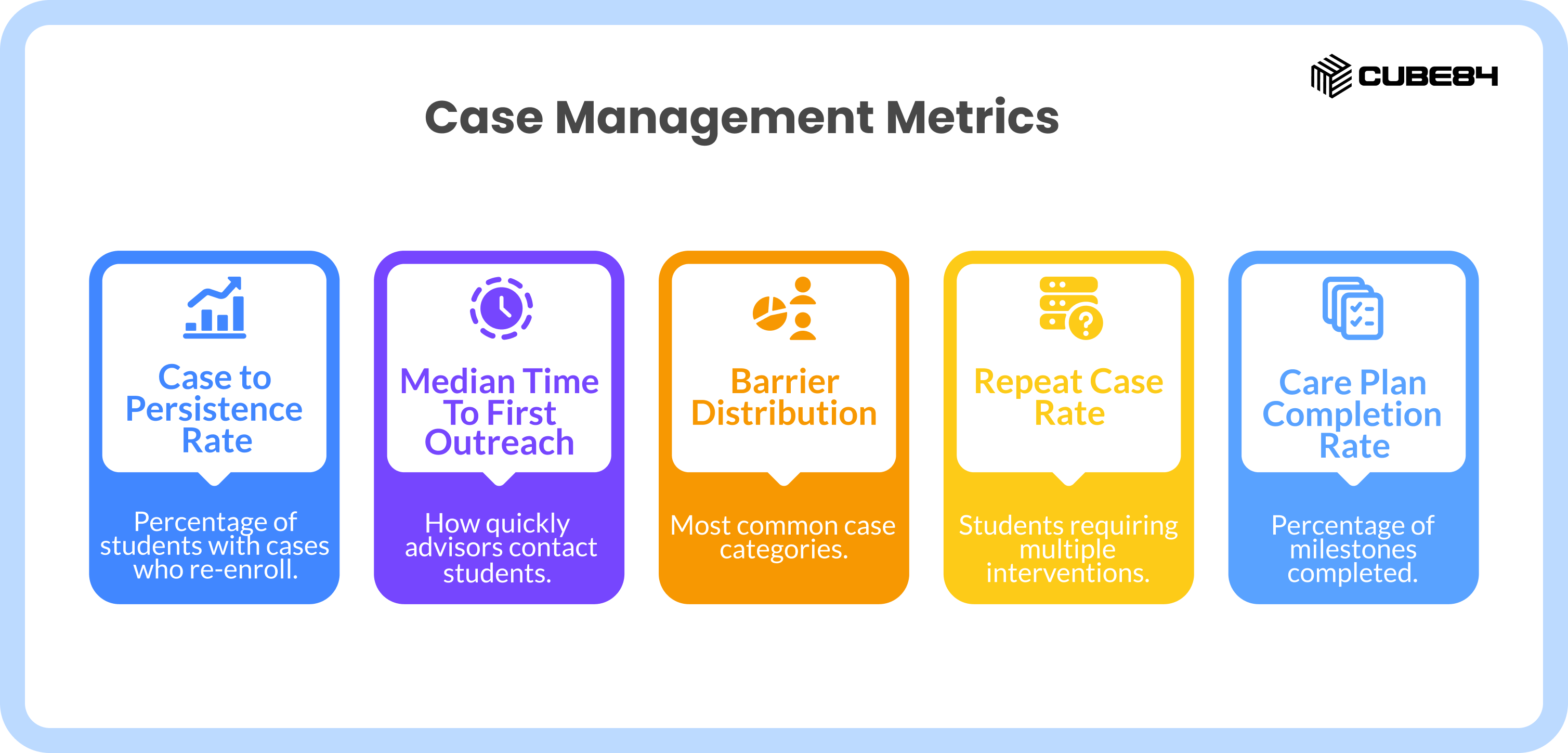
Retention programs often measure activity levels such as emails sent or meetings held. These numbers show effort but do not always reveal whether students remained enrolled.
Case management allows institutions to connect interventions with outcomes.
Over time, these reports often reveal institutional patterns.
For example, a large portion of cases involving financial barriers may involve delays in financial aid processing. Once these trends are visible, institutions can address the underlying process rather than focusing only on individual cases.
Salesforce analytics and AI tools can also analyze historical case data to highlight which interventions most often help students remain enrolled. Increasingly, these tools can also recommend next best actions, predict potential risks, and continuously refine intervention strategies based on outcomes.
Case management is no longer just a system of record. It is becoming a system of intelligence that continuously learns from student behavior, adapts interventions in real time, and guides advisors toward the most meaningful actions.
The Future of Case Management in Higher Education: From Rules to Intelligence
For many years, case management systems in higher education have been built on predefined rules such as record types, routing logic, status workflows, and escalation paths. While effective, these approaches rely on static triggers and predefined conditions.
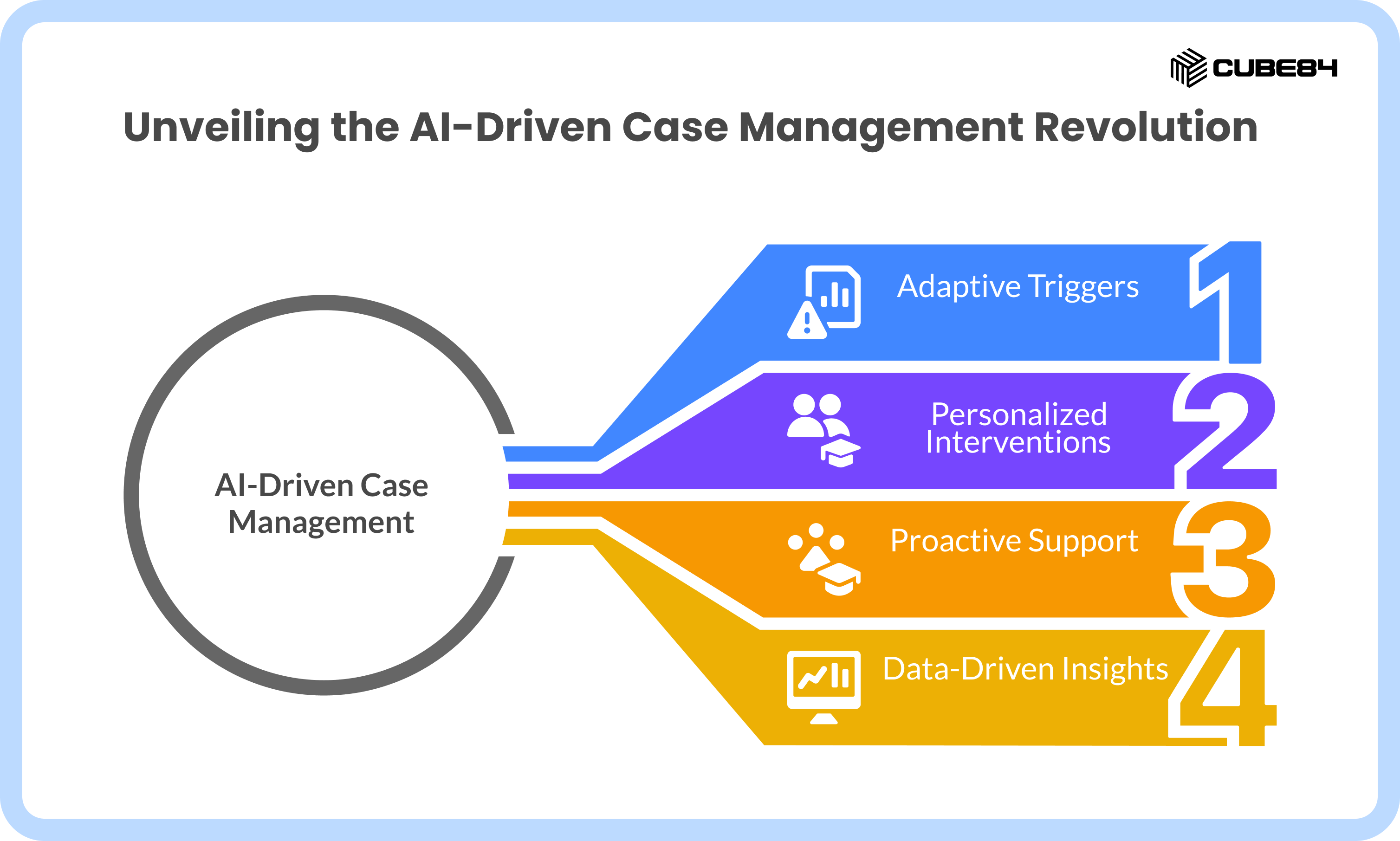
Today, institutions are beginning to move toward a more adaptive model powered by AI. In this model, case management is no longer driven solely by fixed rules but by intelligent systems that continuously learn from student behavior, historical outcomes, and real-time data.
Instead of relying on thresholds like “four days without LMS login,” AI models can identify patterns unique to each student and surface risks earlier. These systems analyze signals across the student’s Contact 360 view, including academic activity, financial indicators, engagement history, and prior interventions.
AI-driven case management can suggest the next best action for advisors, recommend relevant care plans, and even automate initial outreach. For example, the system may proactively create a case, notify the appropriate support team, and recommend personalized intervention steps based on similar past scenarios.
Triggers are no longer static. They evolve over time as the system learns which signals most accurately predict student risk and which interventions lead to successful outcomes.
This shift allows institutions to move from reactive support models to truly proactive and predictive student success strategies, where advisors are guided not just by process, but by intelligence.
Technology with a Human Purpose
Case Management is not about treating students as tickets or service requests. Its purpose is to organize support so that institutions can respond thoughtfully and consistently.
Advisors, counselors, faculty members, and financial aid staff already work hard to support students. When their efforts connect through a shared system, the institution can respond faster and with greater clarity.
Many universities find that retaining even ten to fifteen additional students each year can offset the cost of their CRM platform through preserved tuition revenue. More importantly, those students continue progressing toward their degrees.
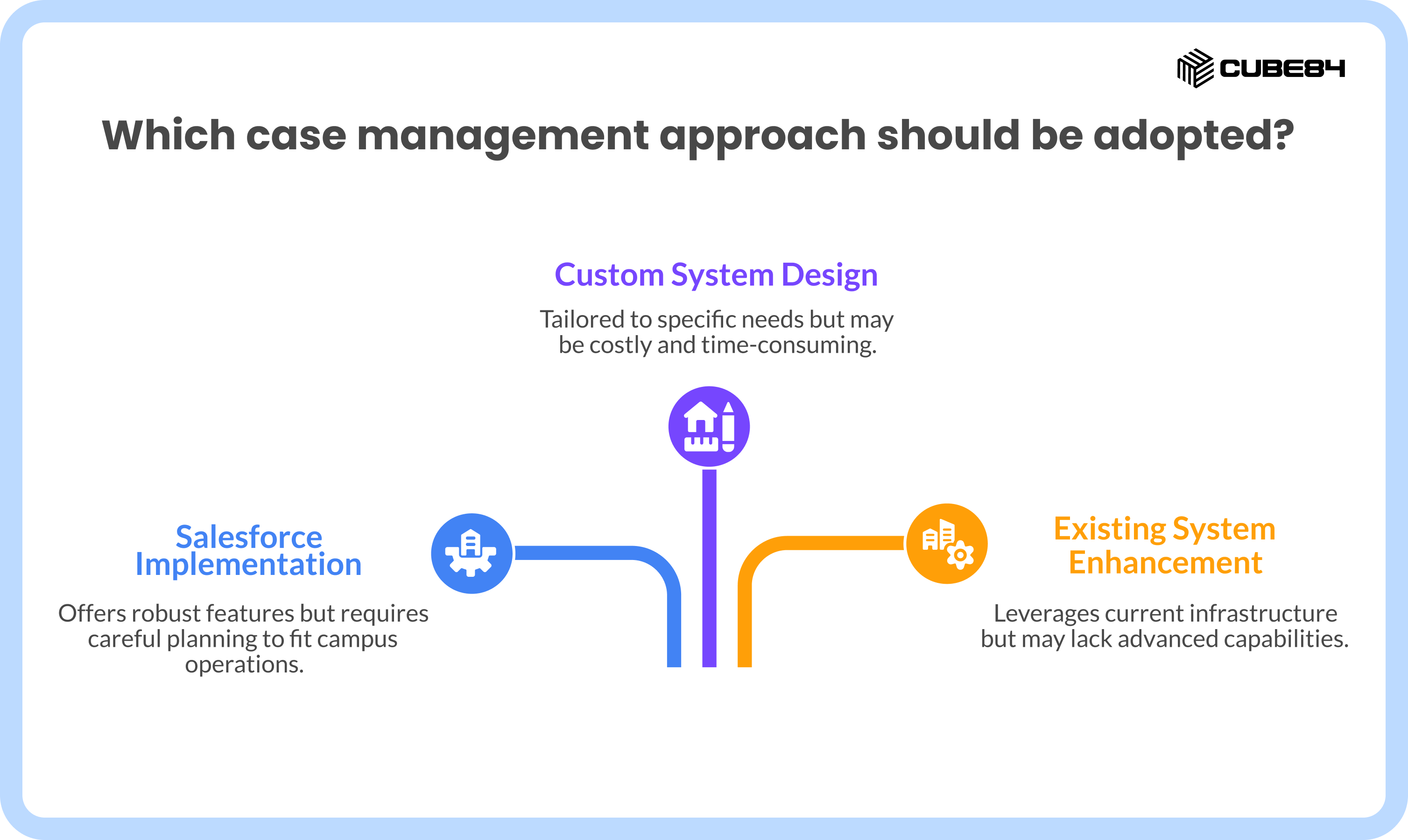
At CUBE84, we focus on helping institutions design systems that fit the way their campuses operate. Technology works best when it supports the people who are already committed to helping students succeed.
If your institution is exploring Salesforce and you are unsure which approach would work best for your student success strategy, we would be happy to talk it through with you. Every campus is different, and the right approach depends on your goals, your systems, and your students. Feel free to contact us to explore what could work best for your institution.