

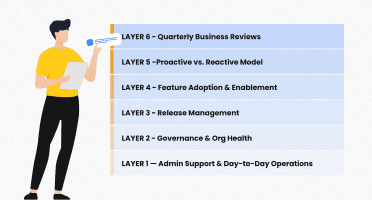
Businesses today rely on a range of platforms and software to streamline operations. Salesforce, as one of the most powerful CRMs, has the potential to unlock new efficiencies through integration solutions. However, without a well-defined strategy to integrate Salesforce with other systems—such as ERP, marketing tools, or databases—businesses risk losing valuable insights and compromising productivity.
As companies grow, bringing all your systems together is an ongoing, strategic necessity for large organizations. Integrating this data into your Salesforce instance is not just a one-time project; it requires a continuous, forward-thinking approach that includes regular updates and improvements.
While the need for integration can increase costs and resource requirements, working with experienced Salesforce consultants—particularly those with a Salesforce Navigator Expert Badge in Managed Services—can help reduce investment and maximize value. These consultants can ensure your integration strategy is cost-effective while delivering substantial returns on your Salesforce investment.

This blog offers a deep dive into Salesforce integration, addressing technical challenges, industry-specific strategies, and tools that facilitate seamless connectivity. It also explains why managed services is an ideal engagement model for addressing Salesforce integration needs.
What is Salesforce Managed Services Integration?
Salesforce managed services integration involves ongoing support and proactive management to connect Salesforce with other business systems, ensuring smooth data exchange and optimized workflows.
Managed Services Providers (MSPs) take charge of administration, troubleshooting, critical updates and improvements, so companies can focus on core business functions while staying agile. They help to build a roadmap giving clients the complete visibility on what to integrate and when. This model is particularly effective for organizations that lack in-house Salesforce consultants and professionals with technical architecture and robust product expertise but need scalable, future-proof solutions.
It bridges the gap between your CRM and other essential systems—such as ERPs (SAP, Oracle, Netsuite), marketing automation platforms (HubSpot, Marketo), Financial applications (Quickbooks, Sage, Xero), customer support tools (Zendesk, Freshdesk, ServiceNow), Collaborative tools(Microsoft teams, Slack, office 365 email integration, Egnyte) and eCommerce platforms(Magneto, Shopify).
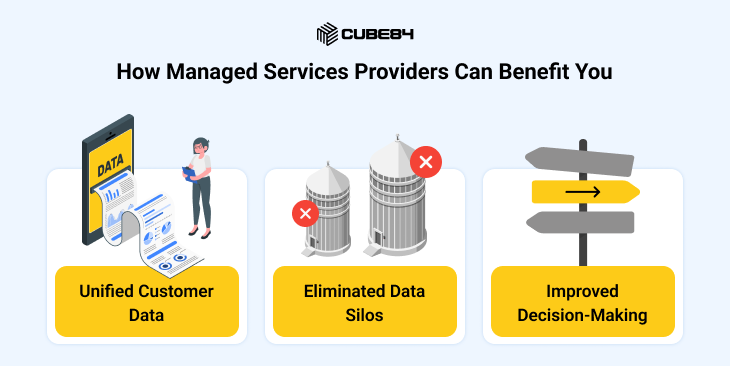
Key benefits include:
Unified Customer Data: Access a 360-degree view of customers by combining sales, marketing, and service data.
Eliminated Data Silos: Ensure real-time data flow, reducing manual entry errors and data duplication.
Improved Decision-Making: Enable business leaders to make data-driven decisions with unified dashboards.
Why choose a managed services engagement model for your Salesforce integration needs?
Expertise and Resources: Managed services provide access to specialized expertise that they have gained from past integration experience, which many organizations may lack in-house. This includes certified Salesforce professionals who understand the complexities of integration and can ensure best practices are followed. Managed Service Providers help building a roadmap giving client the complete visibility on what and when to integrate
Cost Efficiency: By outsourcing Salesforce integration to managed service providers (MSPs), businesses can reduce the costs associated with hiring, training, and retaining full-time employees. MSPs often offer scalable solutions that can be tailored to an organization’s needs, allowing companies to pay only for the services they require.
Focus on Core Business: With managed services handling integration tasks, organizations can focus their time on their core business activities rather than getting bogged down by technical challenges. This allows for more strategic resource allocation.
Proactive Maintenance and Support: Managed services include ongoing monitoring and maintenance, which helps identify and resolve issues before they impact business operations. This proactive approach minimizes downtime and ensures that integrations function smoothly over time.
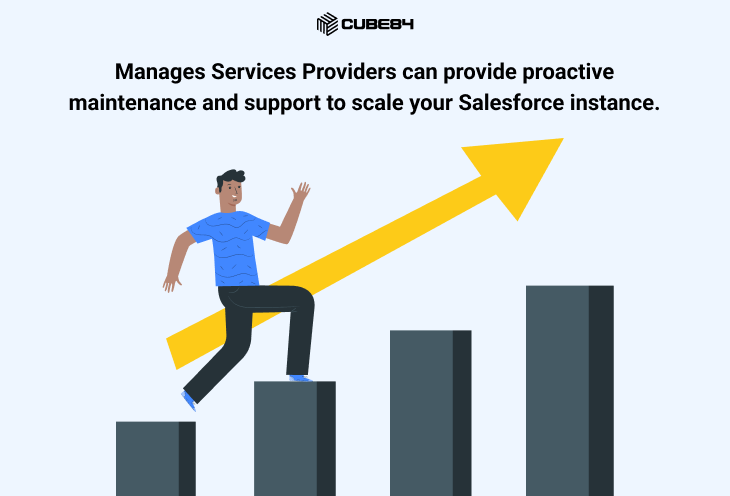
Scalability: As businesses grow and evolve, their integration needs may change. Managed service providers can easily adapt to these changes, providing the flexibility to scale services up or down based on current business demands.
Continuous Improvement: MSPs stay updated on the latest Salesforce features and integrations, enabling businesses to leverage new capabilities and enhancements. This ensures that companies remain competitive and can capitalize on innovations in the Salesforce ecosystem.
Common Integration Use Cases for Salesforce Managed Services
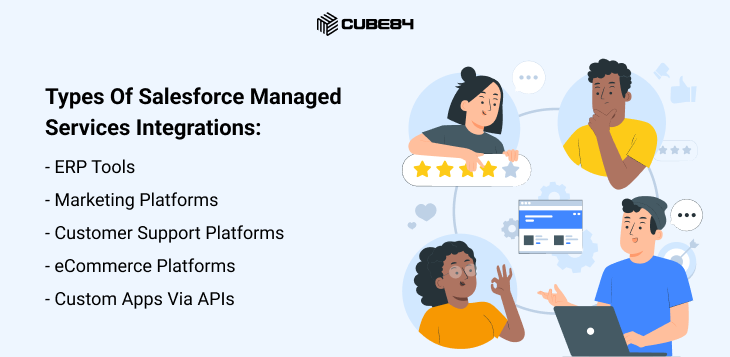
1. ERP Integration: Connect Salesforce with ERP systems like SAP or Oracle to align sales and financial operations. For example, a retail company can automate the flow of purchase orders and invoices between Salesforce and SAP, reducing order processing time.
2. Marketing Platform Integration: Synchronize Salesforce with HubSpot or Marketo to provide sales teams with lead scoring insights from campaigns in real-time.
3. Customer Support Integration: Use tools like Zendesk or ServiceNow with Salesforce Service Cloud to maintain a centralized view of support tickets and improve customer satisfaction.
4. eCommerce Integration: Integrate Salesforce with platforms like Shopify to track sales trends and streamline customer communication.
5. Custom App Integration via APIs: Utilize Salesforce APIs for unique use cases, such as integrating IoT systems or specialized software specific to certain industries.
How Managed Services Ensure Long-Term Integration Success
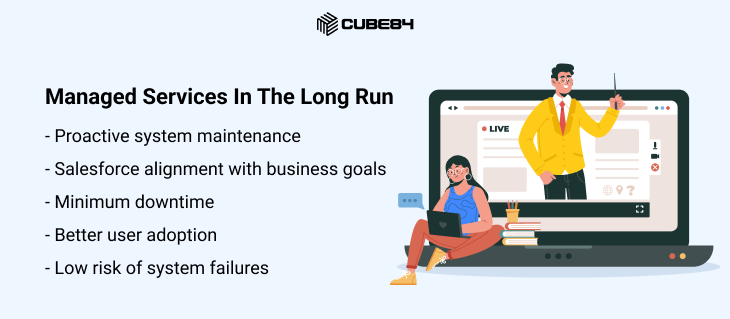
Managed services providers (MSPs) act as strategic partners, offering 24/7 support and proactive system monitoring. They ensure that integrations remain aligned with business goals by handling Salesforce’s regular updates and troubleshooting issues before they escalate. MSPs also offer release management services, minimizing downtime during new feature rollouts.
Additionally, managed services include user training and adoption programs, ensuring employees are well-versed in using integrated systems effectively. This holistic approach reduces the risk of system failures and promotes long-term growth.
Conclusion
Salesforce managed services integration is critical for large and complex businesses aiming to streamline operations, enhance data accuracy, and improve decision-making. By bridging Salesforce with ERP systems, marketing platforms, and other key applications, companies unlock new efficiencies and deliver superior customer experiences. However, achieving seamless integration requires careful planning, the right tools, and expert support.
Following best practices, leveraging MSPs, and monitoring relevant KPIs will ensure your Salesforce integrations drive sustainable business growth. Whether you’re in retail, healthcare, or financial services, having the right integration strategy and ongoing managed services will keep your business agile and competitive.
Looking to take the next step with Salesforce Managed Services? Whether you’re ready to connect with our team or just exploring what this model looks like in action, you can learn more about our Salesforce Managed Services and Support and how organizations are using this model to drive long-term Salesforce ROI