

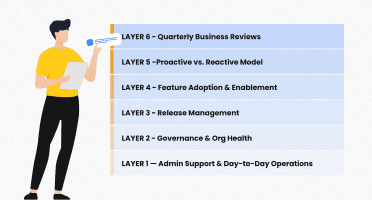
Introduction
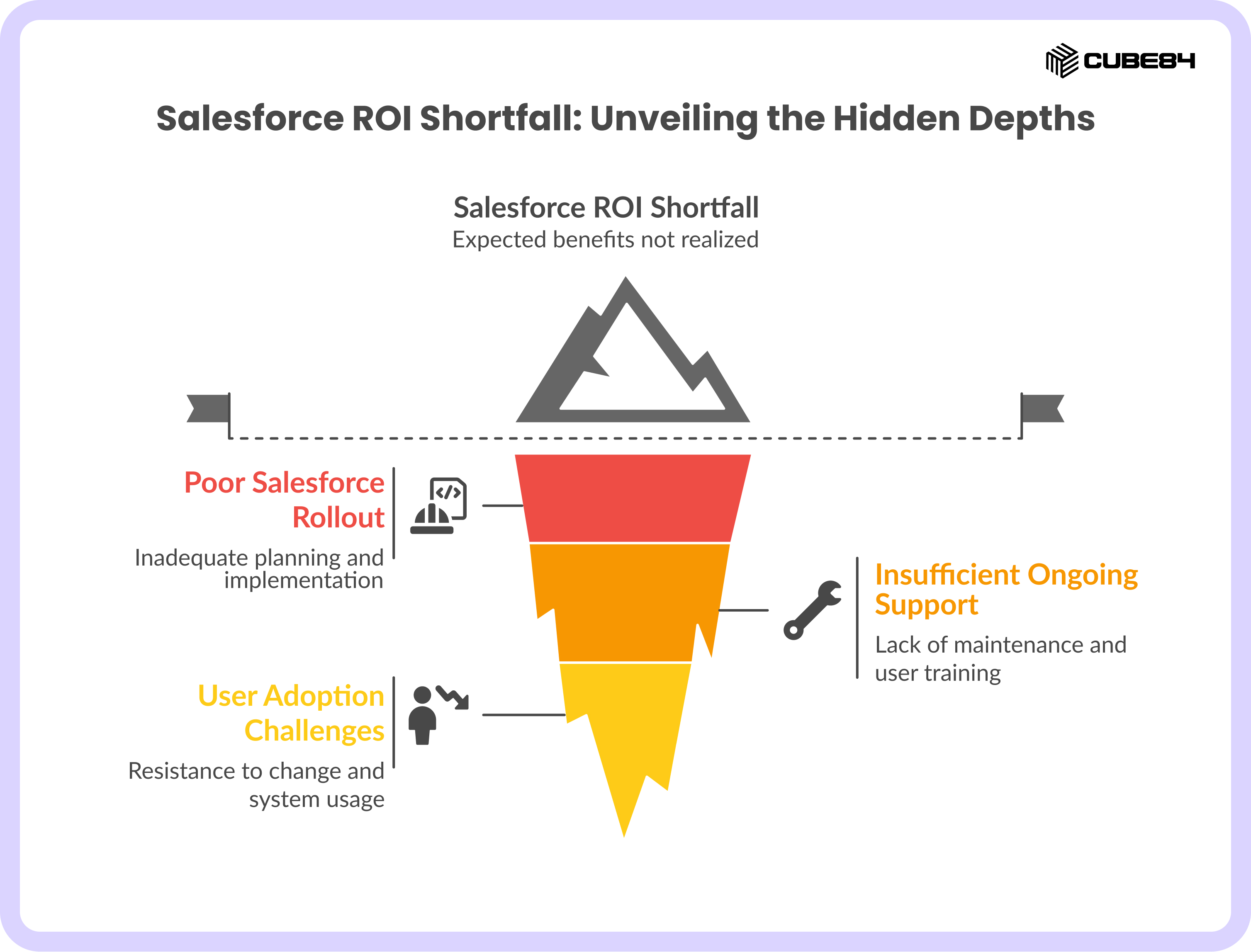
Many organizations put a great deal of time, money, and trust into Salesforce because they want their teams to work better together and have a clearer view of what is happening across the organization. They hope Salesforce will reduce time spent on manual tasks, bring information into one place, and support the way people actually work on a day-to-day basis.
But after Salesforce goes live, that expectation does not always match reality. Over time, fewer people log in, teams quietly return to spreadsheets or side tools, and leaders begin to question whether Salesforce is truly helping or simply existing in the background.
In most cases, this is not because Salesforce is the wrong choice. More often, it comes down to how Salesforce is rolled out and how it is supported once it becomes part of daily operations.
Where Things Tend To Break Down
After working with many organizations across different industries, a few common patterns tend to appear when Salesforce does not deliver the value people were hoping for.
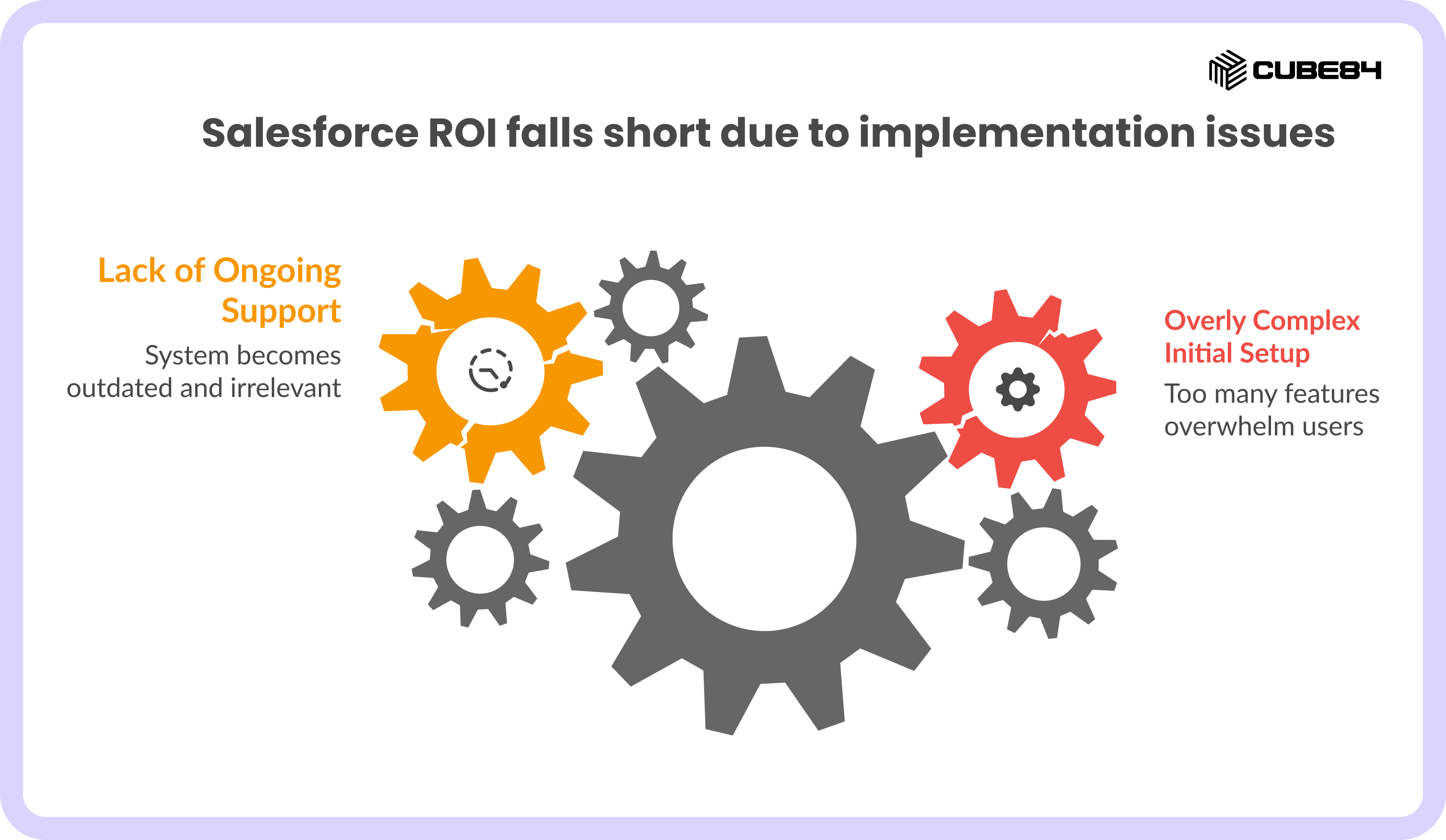
In some situations, teams try to do everything at once. They bring together multiple tools, complex setups, and a large number of custom features in the first build. The intention behind this approach is understandable. The idea is to get everything done up front so there is no need to revisit it later.
What usually happens instead is that the project becomes difficult to manage and even harder for users to adjust to. The system takes longer to go live, and once it does, people are unsure how it fits into their everyday work. Salesforce starts to feel complicated rather than helpful, and adoption slowly drops as confidence fades.
In other situations, Salesforce is treated as something that is finished once it goes live. Budget is approved, the system is delivered, and focus moves on to other priorities.
At first, people make an effort to use it. Over time, their work changes, new needs come up, and small improvements are requested. Without a team in place to support those changes, Salesforce begins to drift away from how the organization actually works, making it less useful with each passing month.
Neither of these situations happens because people are careless or uninterested. They happen because Salesforce is treated as something fixed, while the organization itself continues to evolve.
A More Practical Way To Think About Salesforce
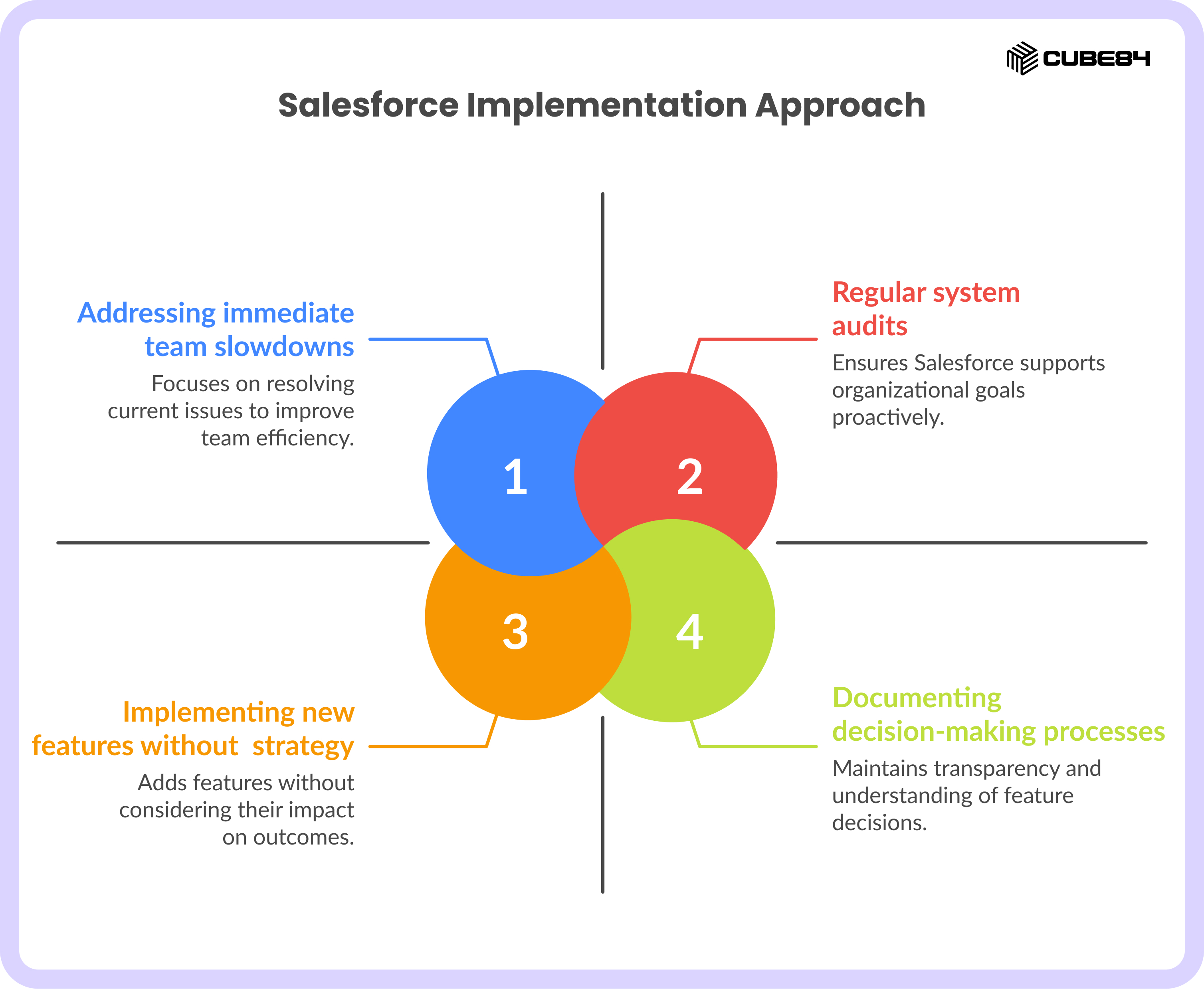
A more helpful way to think about Salesforce is to see it as something that needs steady attention and care over time, rather than as a one-time effort that can be checked off a list.
This means regularly asking clear and practical questions. What parts of the system are slowing teams down today? What information do leaders need but struggle to access? What work is still being done by hand that could be handled more smoothly with the right support?
When these questions guide decision-making, Salesforce becomes part of daily work instead of something people have to remember to log into. It starts to support real needs rather than sitting on the sidelines.
This way of working keeps the focus on outcomes rather than features. Systems are built thoughtfully so they can grow along with the organization without becoming hard to use. Just as important, the reasoning behind key decisions stays documented and understood, even as teams and roles change over time.
Support also becomes more proactive. Instead of reacting to issues only after they pile up, teams look for patterns early and address them before they turn into larger problems.
What This Looks Like In Real Life
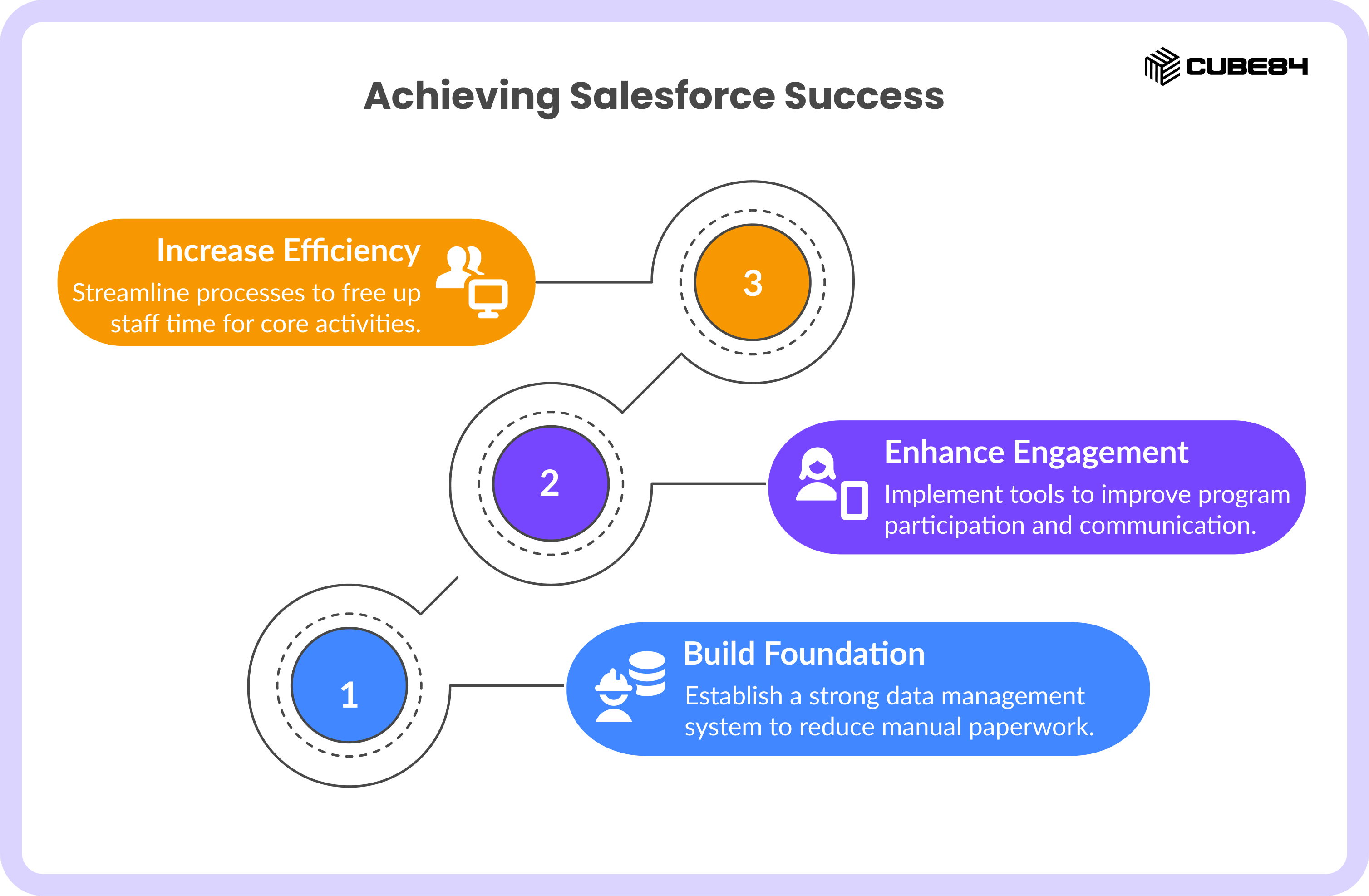
A good example of this approach can be seen in work done with the Center for Caregiver Advancement, a nonprofit based in California that supports thousands of caregivers through education and training programs.
Rather than trying to solve every challenge at once, the work was planned in clear stages, each with a specific purpose.
In the first stage, the priority was building a strong foundation. Salesforce was used to bring caregiver, trainer, and program information into one place, making it easier for staff to access and manage essential data. The main goal was to reduce manual forms and paperwork, which helped ease administrative strain.
In the next stage, attention shifted to engagement and participation. Attendance tracking, communication tools, multilingual support, and automated scoring were introduced so that programs could run more smoothly and reach more people. Class capacity increased, and interactions were captured more consistently.
Later, the focus moved to efficiency and staff time. The hours spent processing data were reduced significantly, allowing staff to focus more on supporting caregivers and expanding the reach of their programs.
At each stage, Salesforce played a clear role. It supported the work that mattered most at that moment, rather than trying to do everything at once.
What Managed Services Actually Involve
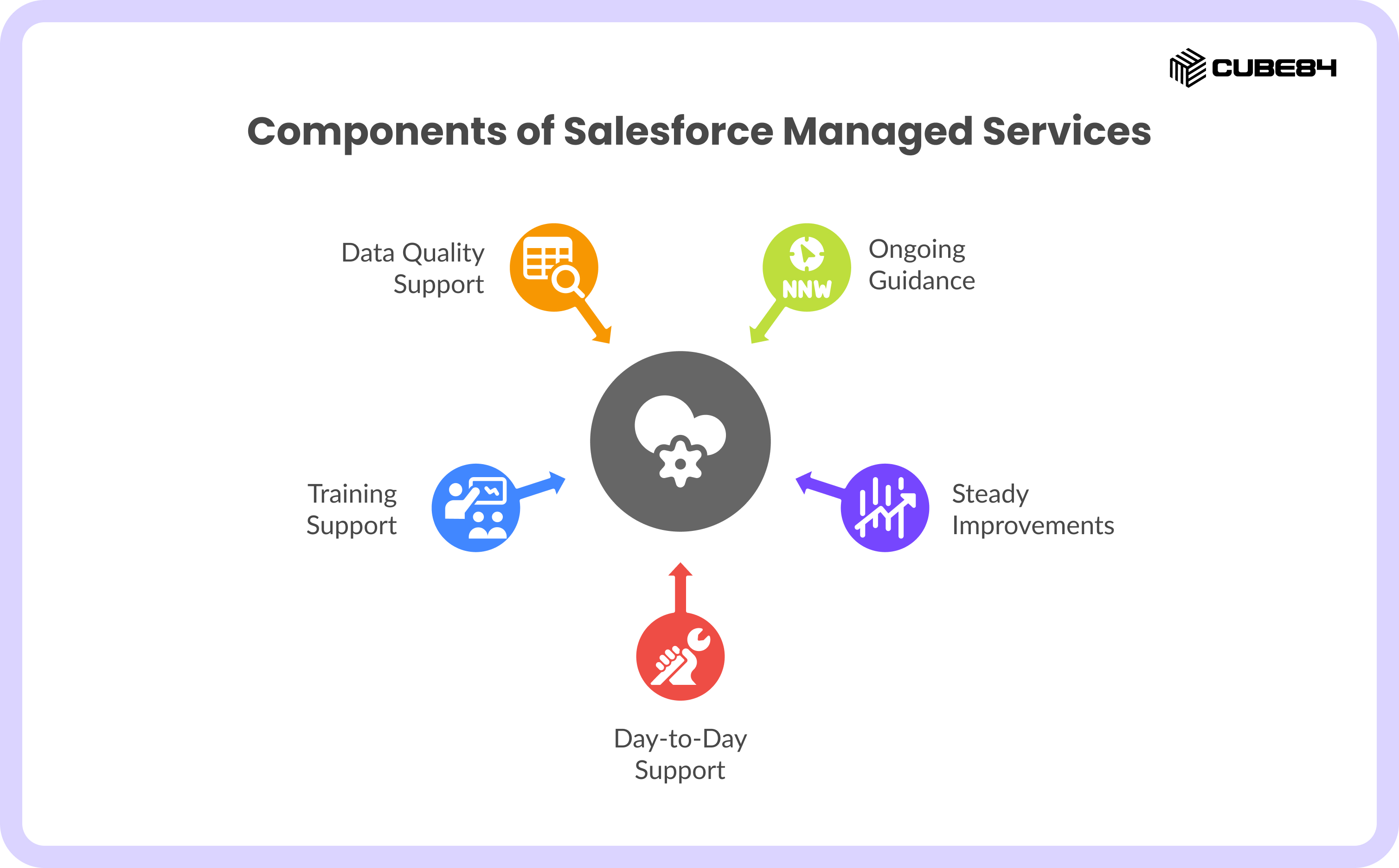
Salesforce Managed services can sound abstract at first, but in practice, they are very hands-on and practical.
They involve ongoing guidance and planning, steady improvements made over time, and support for day-to-day system needs. They also include help with training as teams grow and change, along with support for reports, dashboards, and data quality that many organizations rely on to make decisions. For teams comparing different ways to structure this support, this breakdown of Salesforce managed services vs in-house admin explains how responsibilities and outcomes differ as organizations scale
Different organizations need different levels of support depending on their size, structure, and pace of change. Some prefer consistent monthly help, while others need flexibility as priorities shift throughout the year. What matters most is having support that can adapt as needs change, without forcing teams to start from scratch each time.
For organizations that are still trying to understand what ongoing Salesforce support might look like, tools such as a managed services calculator can be useful. This type of tool helps estimate monthly support needs based on how Salesforce is used today and highlights a level of support that may be appropriate. It is often used as a starting point for internal conversations, rather than as a commitment.
Working Alongside Internal Salesforce Teams
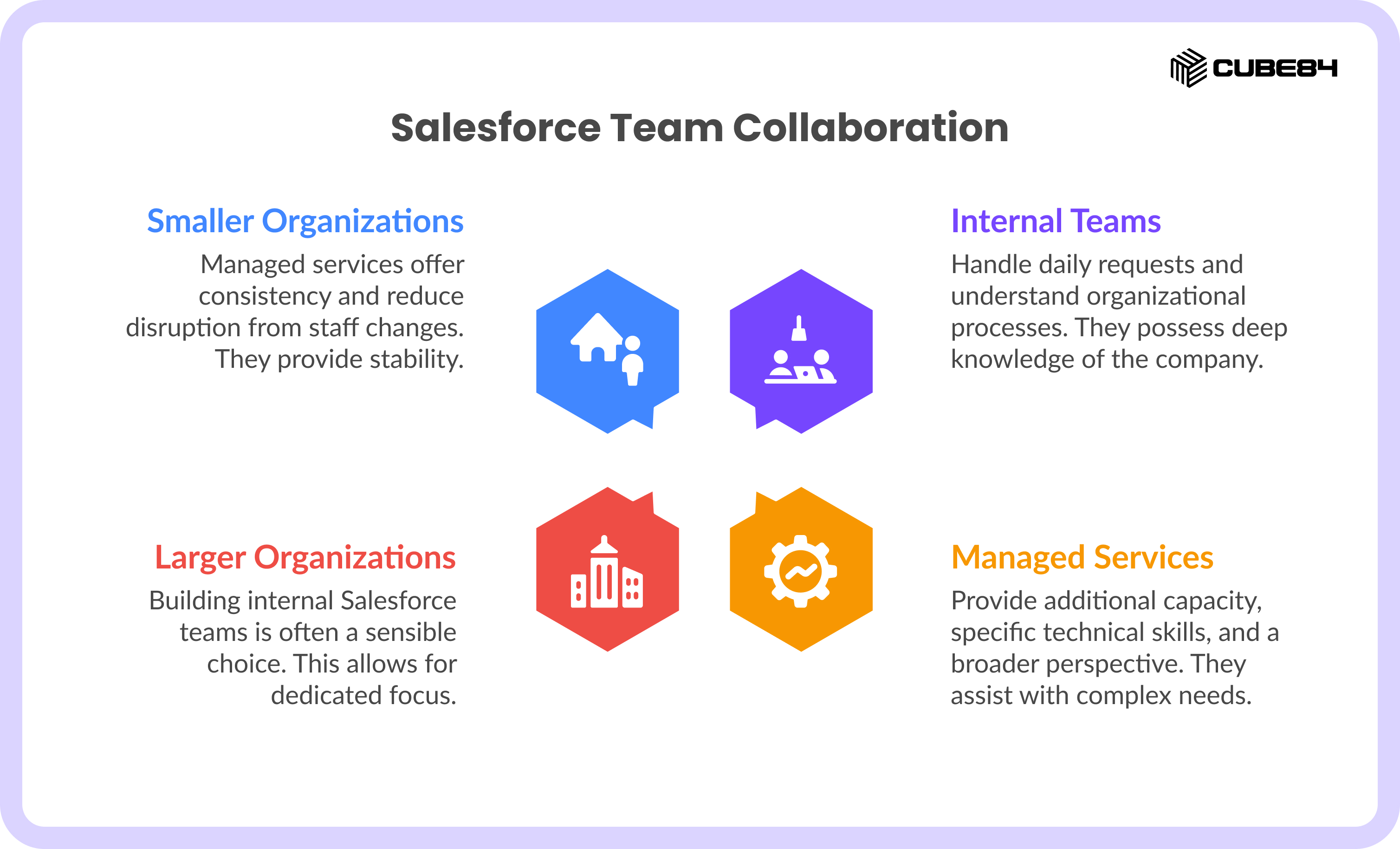
Managed services are not meant to replace internal Salesforce administrators. In many cases, they work best when paired together.
Internal teams usually handle daily requests and have a deep understanding of the organization’s processes. Managed services can provide additional capacity, specific technical skills, or a broader perspective when more complex needs arise.
For larger organizations, building internal Salesforce teams often makes sense. For smaller and mid-sized organizations, managed services can provide consistency and reduce the disruption that can come with staff changes.
There is no single approach that works for everyone. The right setup is the one that supports the organization steadily over time.
A Final Note
These ideas were explored in more depth during a recent conversation focused on Salesforce adoption and ongoing support. If you would like to hear the full discussion and learn more about the examples shared, you can watch the webinar here.
If you would like to talk through how ongoing Salesforce support might fit into your organization, or simply want help thinking through what comes next, feel free to reach out to us.