


The State of Nonprofit Technology in 2025
If you speak to nonprofit leaders today, most of them will agree on one thing. The last year felt intense.
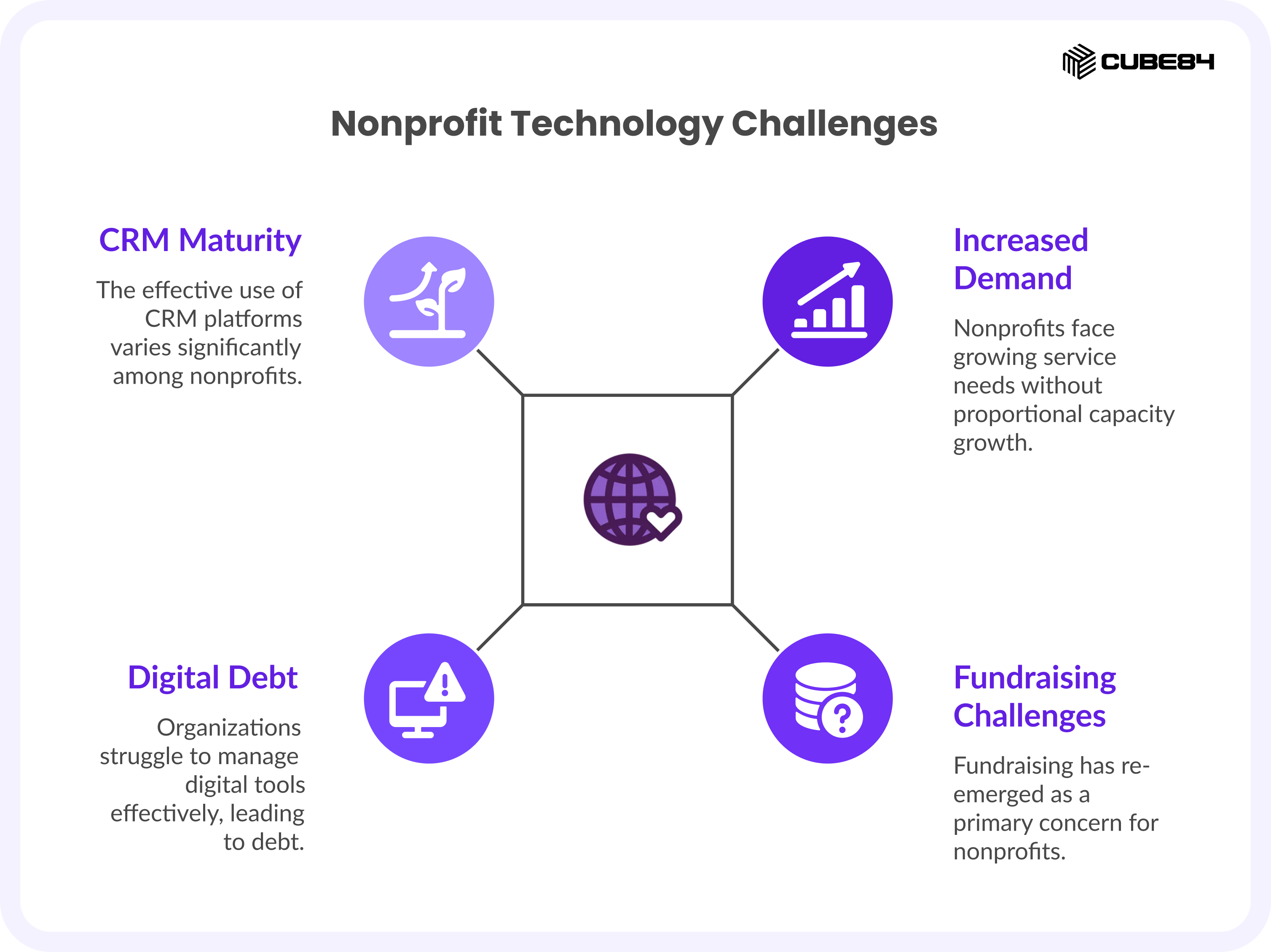
Demand for services kept climbing while internal capacity did not grow at the same pace. According to the Salesforce Nonprofit Trends Report, 7th Edition, nearly half of nonprofits report increased demand for their services, but only about a third say their capacity has grown enough to keep up.
At the same time, fundraising returned as the number one challenge for nonprofits after several years where staffing shortages dominated the conversation.
This combination created what many teams felt throughout 2025. Pressure everywhere. More people to serve, more programs to run, more donors to engage, and the same or smaller teams trying to manage it all.
Technology was supposed to help, and in many cases it did. But the outcomes were not the same for everyone. We’re calling it the Digital Rubicon. For many orgs, 2025 was the point of no return. You either figured out how to make your CRM work for you, or you started drowning in digital debt.
From what we have seen working with nonprofits, many organizations already had the same platform in place, Salesforce. The difference was not the tool itself. It was CRM maturity.
Some organizations used Salesforce as the operating system for their fundraising, programs, and engagement. Others still treated it like a digital filing cabinet for donor records.
2025 exposed that gap very clearly.
What Actually Worked
1. The Hybrid Fundraising Model
One of the clearest trends we saw in 2025 was that nonprofits stopped thinking in terms of digital versus traditional fundraising. The strongest organizations simply connected the two.
According to Salesforce research, about 90% of nonprofits now use at least one digital channel for fundraising or outreach. But that does not mean traditional engagement has disappeared. Direct mail, events, and personal outreach still play a huge role.
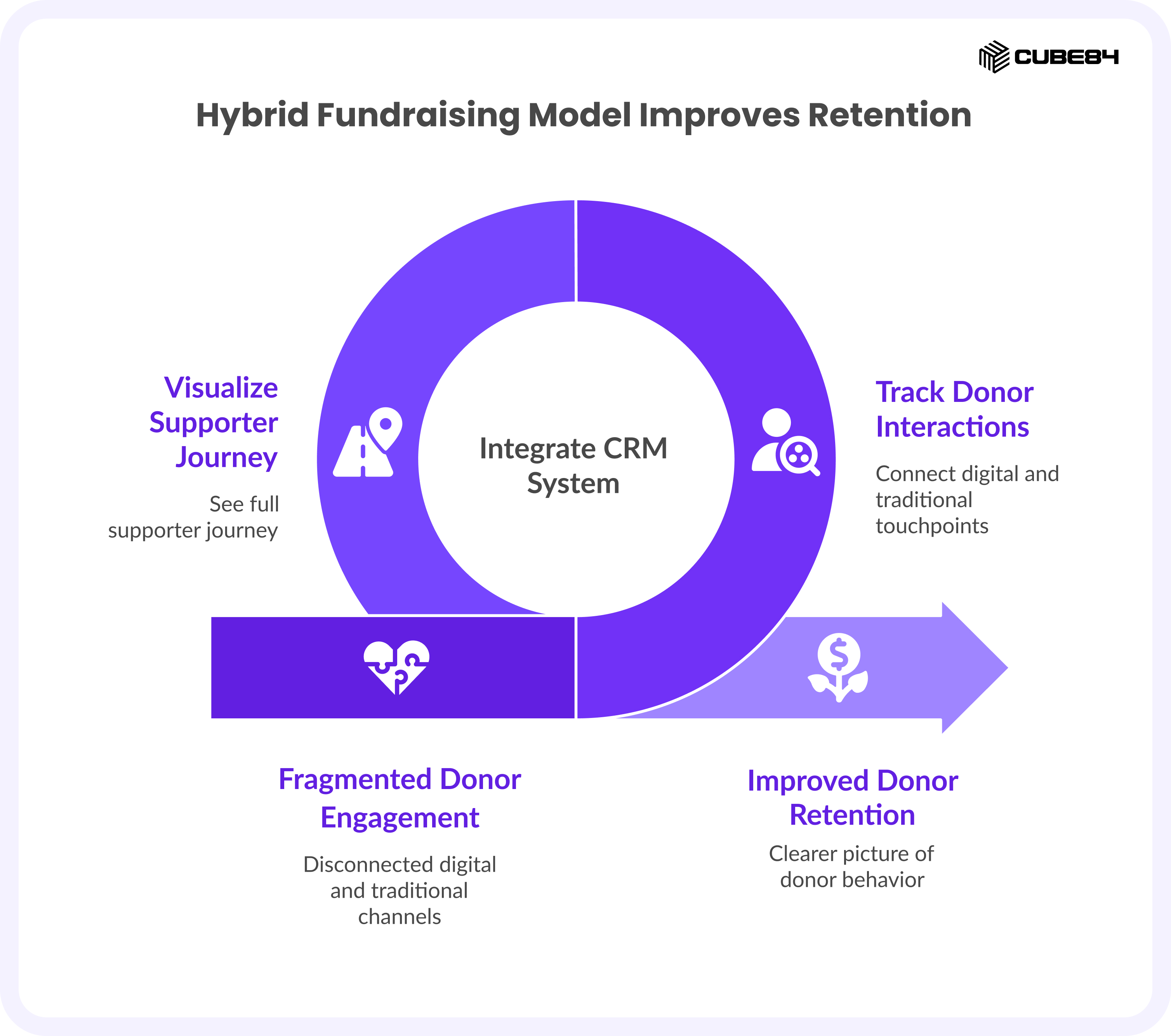
What worked well was when organizations connected those touchpoints inside their CRM.
For example, a donor might receive a direct mail appeal, visit the website, and then engage with a campaign on social media. When those interactions are tracked together inside Salesforce, teams gain a clearer picture of donor behavior.
From what we have seen with many nonprofit implementations, retention tends to improve when fundraising teams can see the full supporter journey rather than individual transactions.
This is also where a CRM becomes a decision tool.
2. Unified Data Instead of Fragmented Systems
Another big win in 2025 came from organizations that focused on consolidating their data rather than adding more tools.
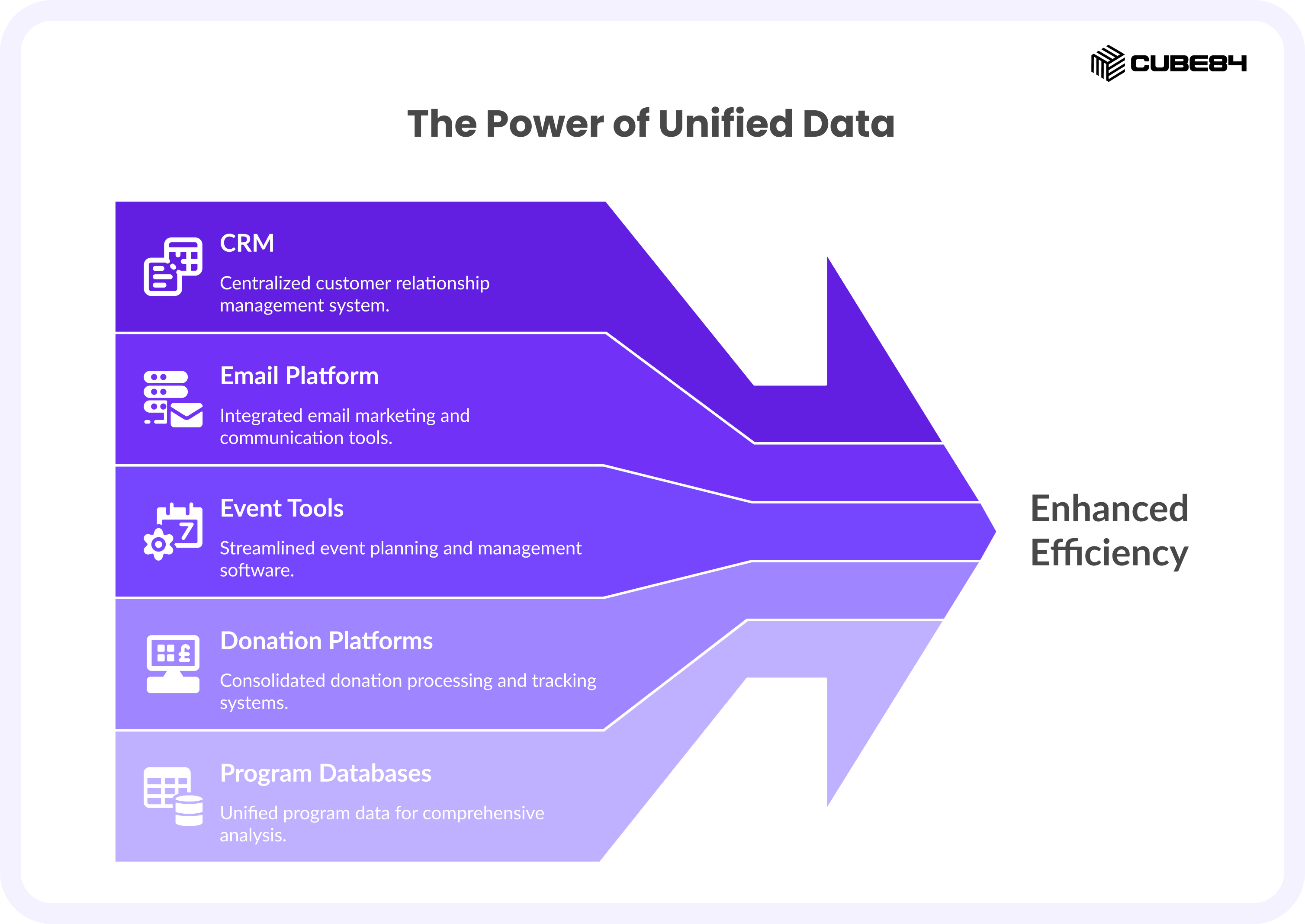
Many nonprofits still operate with several disconnected systems:
A CRM
An email platform
Event tools
Donation platforms
Program databases
We’ve seen it a hundred times: a nonprofit with five different apps that don't talk to each other.
In 2025, the organizations that prioritized Data Cloud or the newer Nonprofit Cloud (NPC) to create a single source of truth were the ones that saw the biggest gains.
One insight from the Salesforce Nonprofit Trends Report shows that 41% of U.S. nonprofits use automation tools to create unified stakeholder profiles, far higher than in other regions globally. This is the shift that matters.
When supporter data is unified, staff do not have to manually piece together information from different systems. Instead, they see the entire relationship in one place.
At CUBE84, one of the first things we usually look at when a nonprofit comes to us is whether their supporter data lives in one place or across multiple disconnected systems.
More often than not, efficiency gains do not come from adding new features. They come from cleaning up and connecting the data that already exists.
3. AI for High-Volume, Low-Complexity Work
AI was easily the most talked about technology topic in 2025.
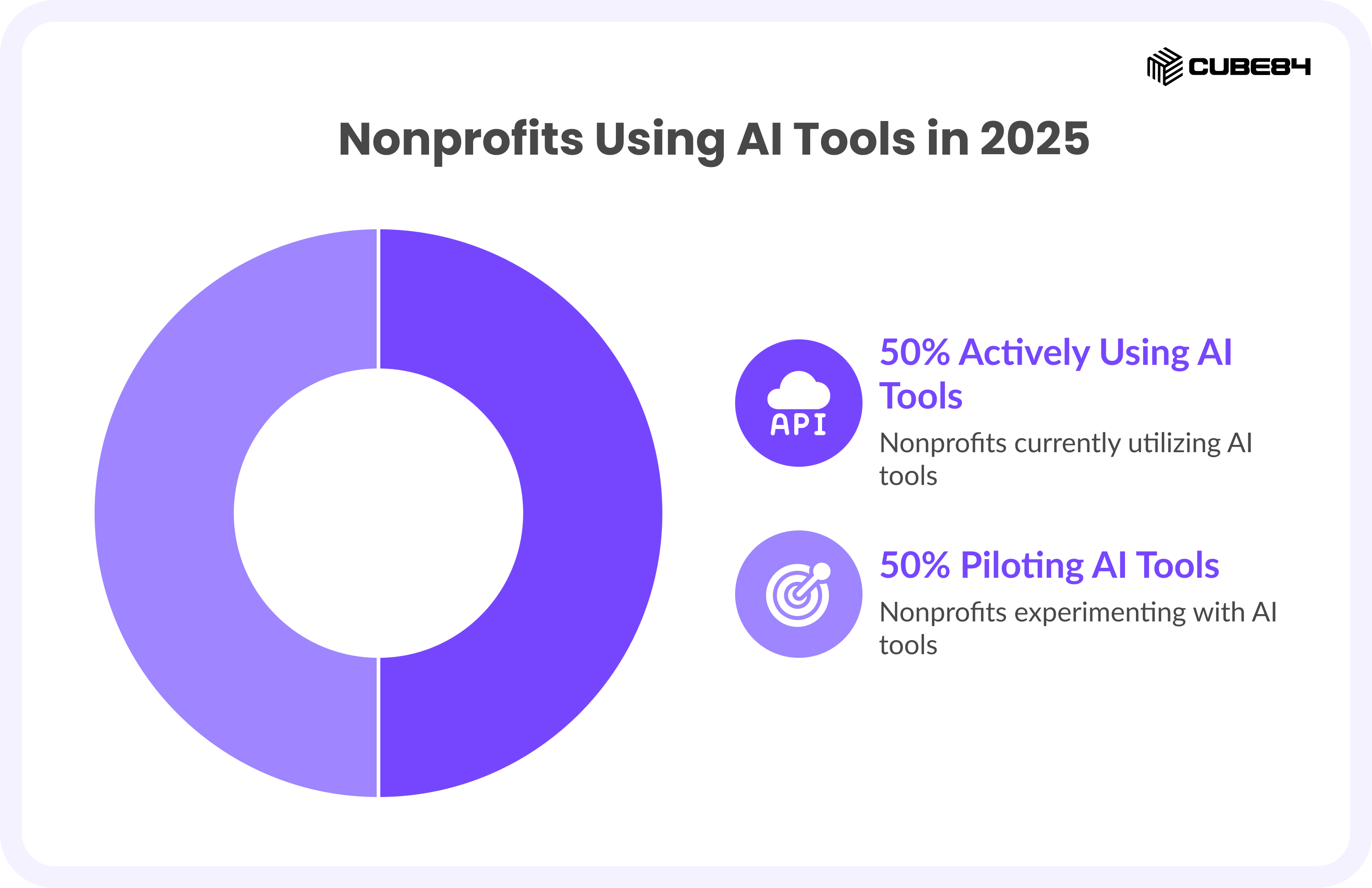
The Salesforce Nonprofit Trends Report found that more than half of nonprofits are already piloting or actively using AI tools, a huge increase compared to previous years. But the interesting part is where AI actually delivered value.
From what we have seen across many nonprofit teams, the most effective use cases were surprisingly simple.
AI worked best when it helped with tasks that were:
Repetitive
High volume
Time consuming
For example:
Drafting donor acknowledgment messages
Assisting with impact report summaries
Helping staff structure program updates
Generating first drafts of fundraising content
In these situations, AI did not replace staff work. It reduced the time spent on the first draft. Previously, teams may have started with a question like, “How do we write this?”, but now teams could start with a draft and ask “How do we improve this?”
This small shift saved hours across fundraising and communications teams.
What Didn’t Deliver
While some approaches worked well, others created new problems. Yes, a few orgs learnt that not everything that glitters is gold or good for your ROI.
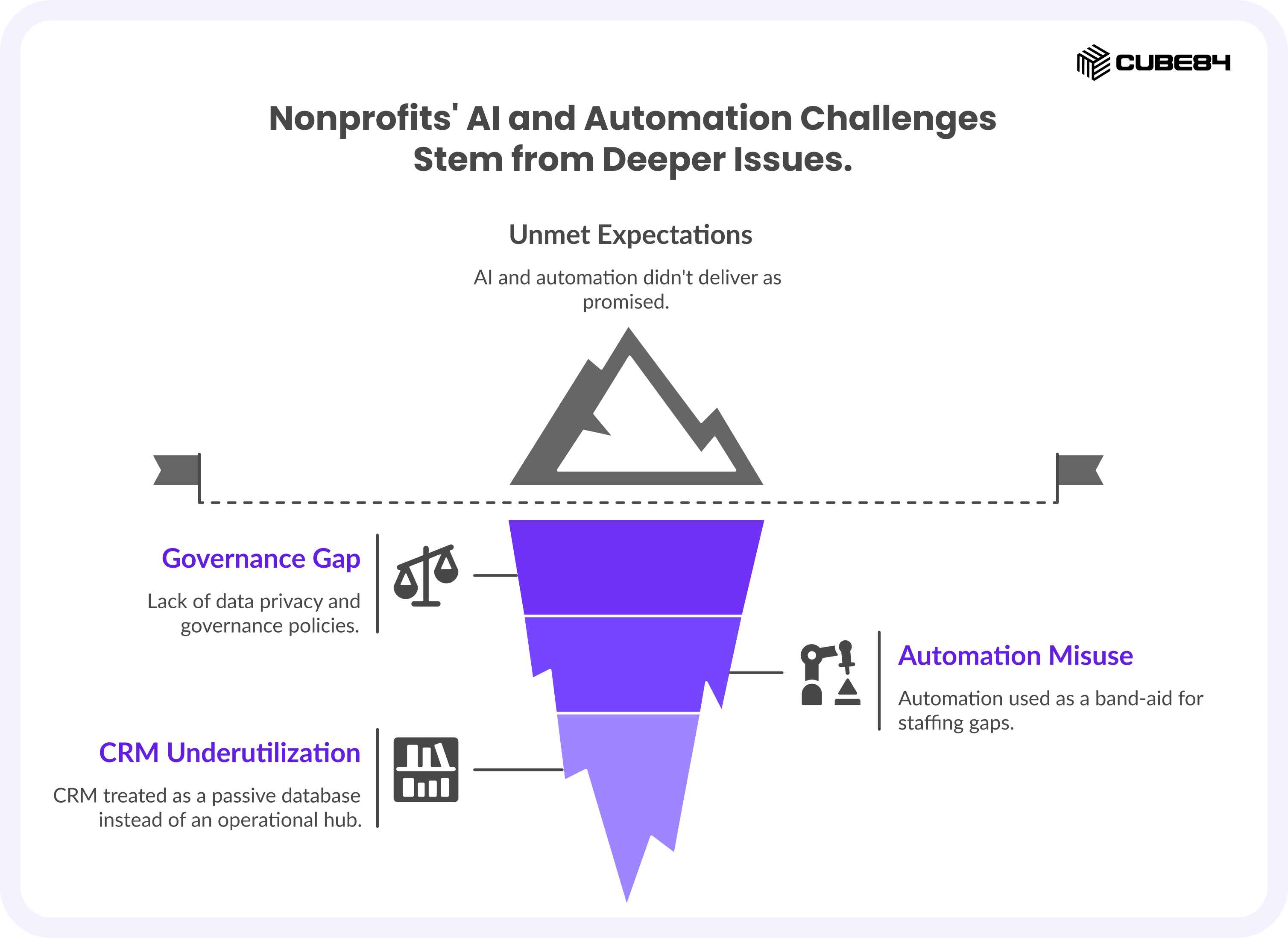
1. The Governance Gap: Turning AI from a Risk into a Resource
Many nonprofits jumped into AI in 2025. But quite a few soon ran into challenges around data privacy, governance, and hallucinations.
This created two common issues.
First, organizations discovered their data quality was weaker than expected.
Second, teams realized that AI tools still require governance.
Many nonprofits are still building these policies. One industry survey found that nearly half of nonprofits have no formal AI governance policy in place yet. Without clear data standards and policies, AI outputs become unreliable. And when teams cannot trust the output, they stop using the tools.
We’ve seen what happens when you invest in AI without a data governance policy. This is where teams fall into workslop, the unusable, generic outputs that actually damage donor trust. If your data is messy, AI won’t fix it, it will just make your mistakes faster. This is why we always suggest that the first conversation around AI should start with data.
2. Automation as a Band-Aid for Staffing Gaps
Automation was another area where expectations sometimes exceeded reality. Many leaders thought Salesforce Flow could replace missing staff members. In reality, it cannot replace missing team capacity.
Technology will only optimize existing processes and cannot fix a broken business model. If your team is under-resourced and your processes are a mess, automating them just creates a faster mess.
We have also seen cases where nonprofits tried to automate processes that were not clearly defined in the first place. The result? Complex workflows that staff did not fully understand and could not maintain.
When automation works well, it usually follows a simple rule: fix the process first, automate it second.
3. Treating the CRM as a Passive Database
Another pattern we still see often is organizations using Salesforce mainly to store donor records. Indeed, it is best to store all data there. But when you use it only for storage, the system becomes a place where data lives, not a place where decisions happen. When that happens, the CRM is not driving engagement, it is only documenting it after the fact.
We do understand why nonprofits worry about storing sensitive donor data in their CRM, especially when privacy and compliance come into play. That is why organizations should adopt a privacy-first approach by selecting platforms with strong built-in security, such as those that provide data encryption and strict access controls, like Salesforce.
The nonprofits that saw the biggest gains in 2025 treated Salesforce differently. They used it as an operational hub. Campaign planning, donor engagement, reporting, and program insights all happened through the same system. That is where the real value appears.
Having said that, we also have to talk about the elephant in the room: the transition from the legacy Nonprofit Success Pack to the newer Salesforce Nonprofit Cloud. Many orgs treated this like a simple update, only to realize it is a full reimagining of their data model. In our audits, we have seen that organizations that rushed this transition without a roadmap often ended up with more technical debt than they started with.
The ROI of CRM Maturity
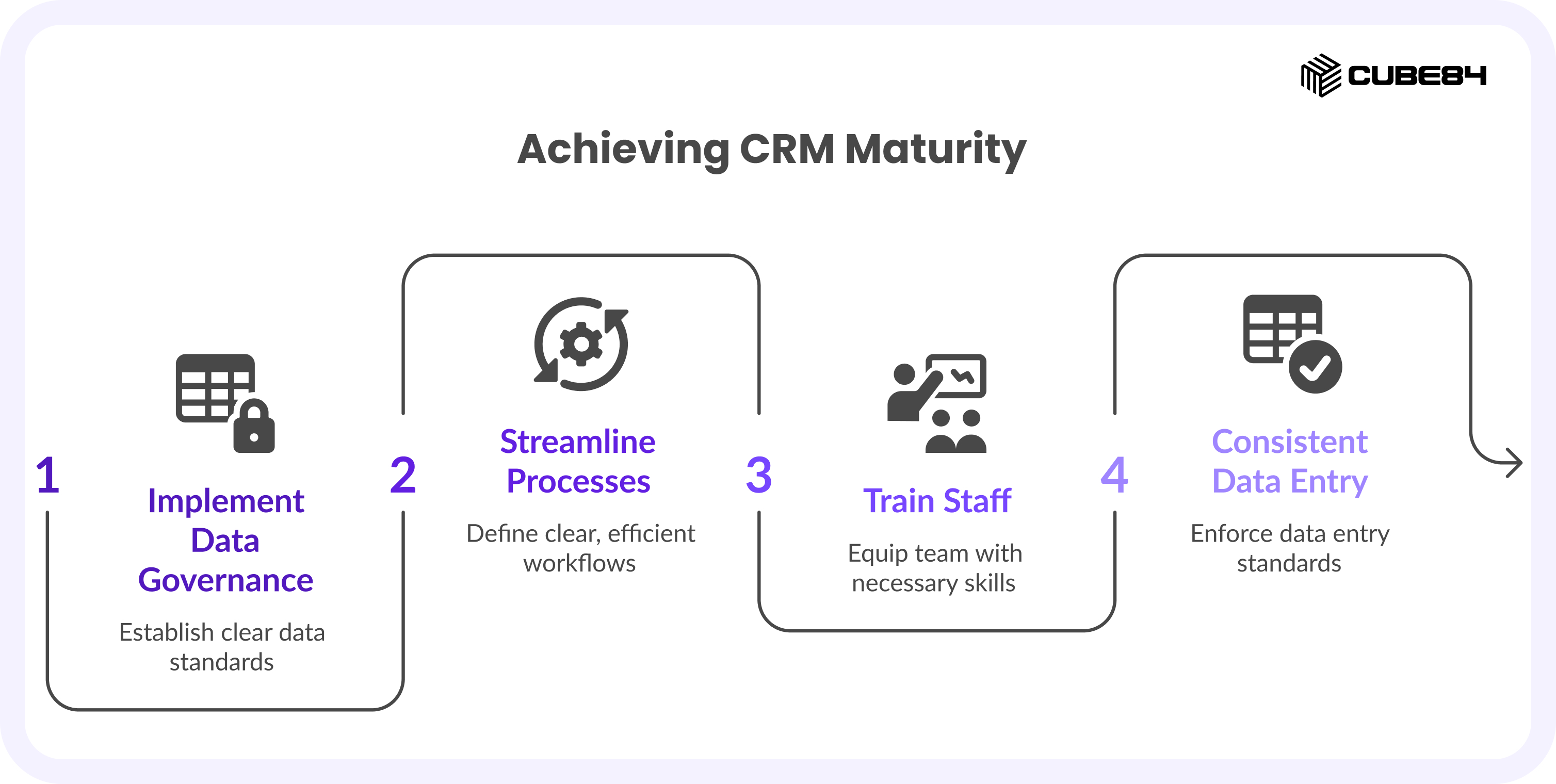
The biggest lesson from 2025 was not about AI, automation, or any specific tool. It was about maturity. Two organizations can have the exact same Salesforce platform and see completely different results. One team may struggle with reporting, duplicate records, and inconsistent data. Another may use the same platform to coordinate fundraising, track program impact, and guide strategic decisions. If you notice, the difference is not the software but the structure around it.
Things like:
Data governance
Clear processes
Trained staff
Consistent data entry standards
For the first time in years, fundraising is back as the #1 challenge, but managing workload and staff burnout is a close second. When Salesforce is implemented poorly (too many clicks, messy data, no training), it actually contributes to burnout. We’ve had clients come to us completely frustrated because their CRM felt like an anchor rather than a sail.
Moving from static dashboards to Salesforce Data Cloud’s real-time actionable insights means your team spends less time hunting for data and more time talking to humans.
When leadership asks for a report and your team still cannot generate it in minutes, even with modern CRM tools and AI, something is clearly broken. We’ve helped many clients with customized dashboards that allow them to generate reports instantly, saving manual hours and reducing burnout.
These may not be the most exciting topics in technology conversations, but they are often the ones that deliver the biggest returns. When those foundations are missing, technology can actually increase staff frustration. Instead of reducing workload, it adds more systems to maintain.
Looking Toward 2026
If 2025 taught the nonprofit sector anything, it is that momentum and maturity are not the same thing. Many organizations adopted new technologies rapidly. AI tools, automation, digital engagement platforms, and data tools all grew rapidly, but adoption is only the first step.
The nonprofits that will benefit the most in 2026 are likely the ones focusing on fundamentals. Clean data. Clear governance. Connected systems. Our leaders keep insisting nonprofits aim for efficiency.
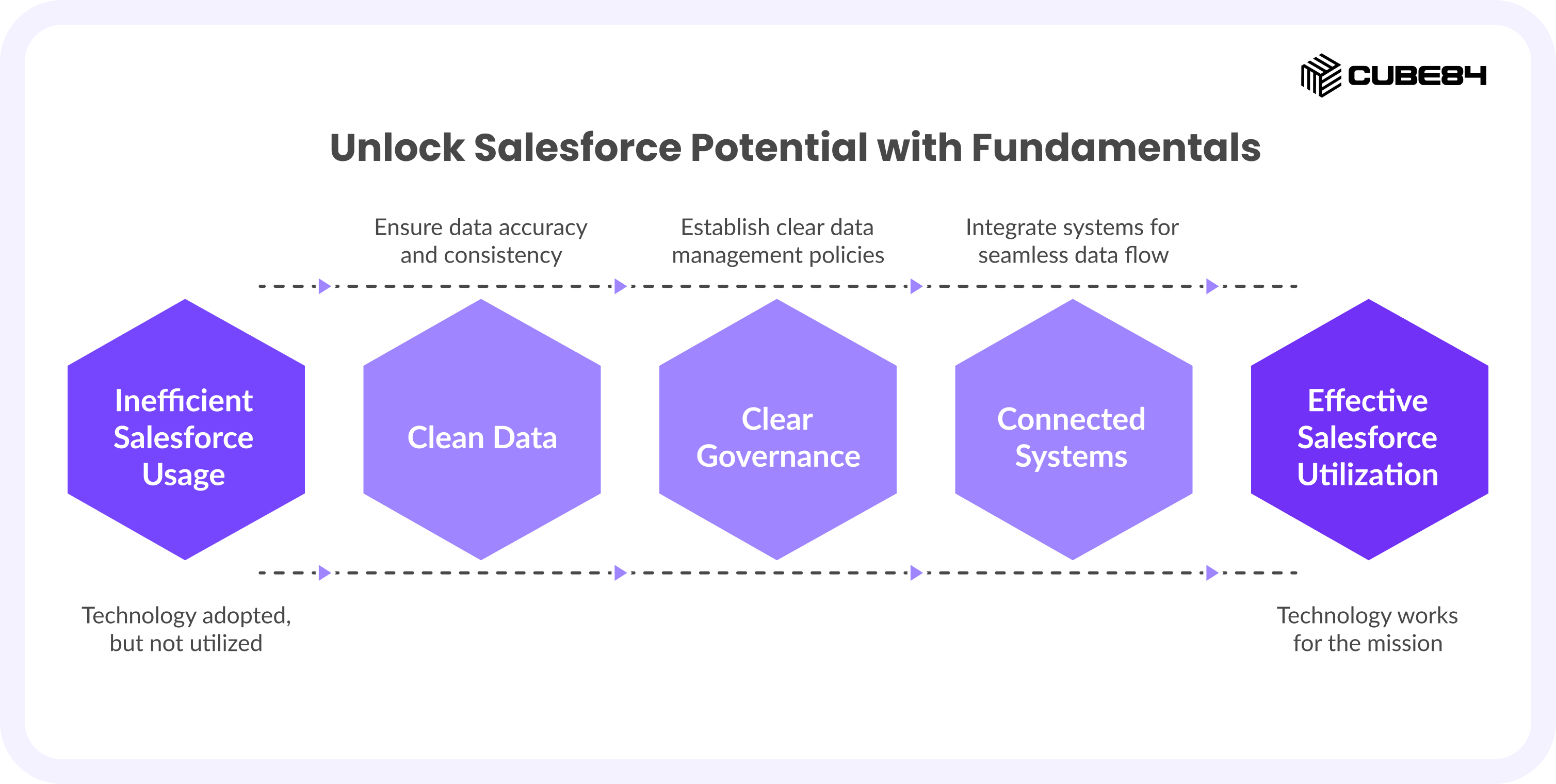
From what we usually tell nonprofit teams we work with, the goal is not to chase the next new technology. The goal is to make the technology you already have actually work for your mission. And most of the time, that journey starts with something simple: cleaning the data that is already inside your CRM.
Salesforce is a powerhouse, but it is only as good as the team running it and the data feeding it.
Ready to audit your 2025 Salesforce performance and prepare for 2026? Let’s talk.