

Why Staff Augmentation Isn’t Always the Right First Move
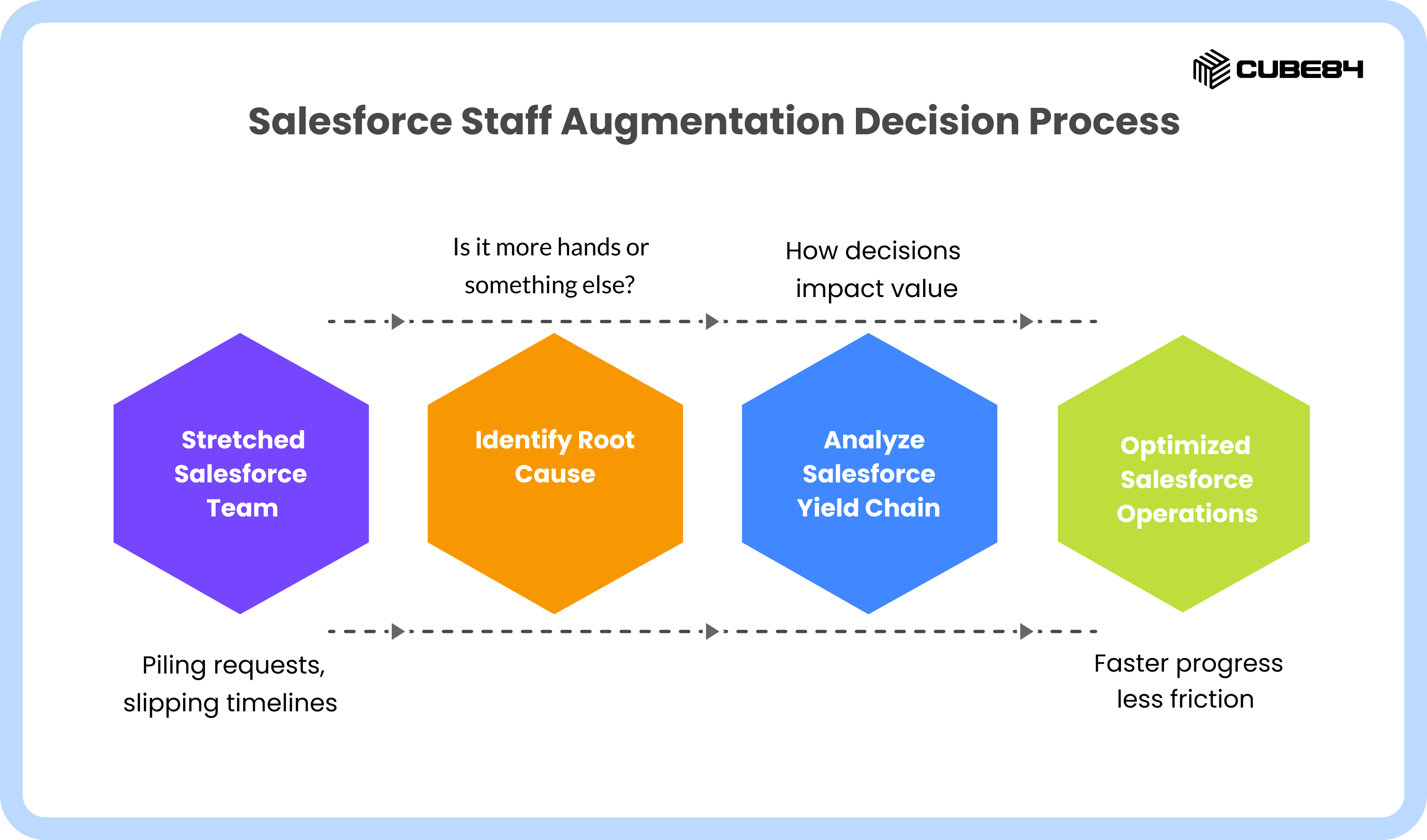
A lot of teams reach a point where Salesforce starts feeling stretched, requests are piling up, timelines are slipping, and the first instinct is to bring in more people. That is usually when Salesforce staff augmentation services come into the picture, because on the surface, it feels like the quickest way to move things forward without going through long hiring cycles.
At its core, Salesforce staff augmentation means bringing in external Salesforce professionals who work as part of your team and follow your direction, rather than handing over a project to a consulting partner who owns everything end-to-end.
Sometimes this works really well and helps teams move faster with very little friction, but in other cases, it leads to confusion, wasted time, and work that does not quite land the way it should. The difference usually comes down to whether the situation actually calls for more hands or something else entirely.
In this blog, we will walk through the situations where Salesforce staff augmentation services genuinely help, where they tend to fall short, and how to tell the difference before you commit to it.
Behind all of this is something we like to think of as your Salesforce Yield Chain, which is simply how every decision you make about people, partners, and processes either adds to the value you get from Salesforce or slowly drains it over time.
Understanding the Real Gap: Do You Need More Hands or Different Skills?
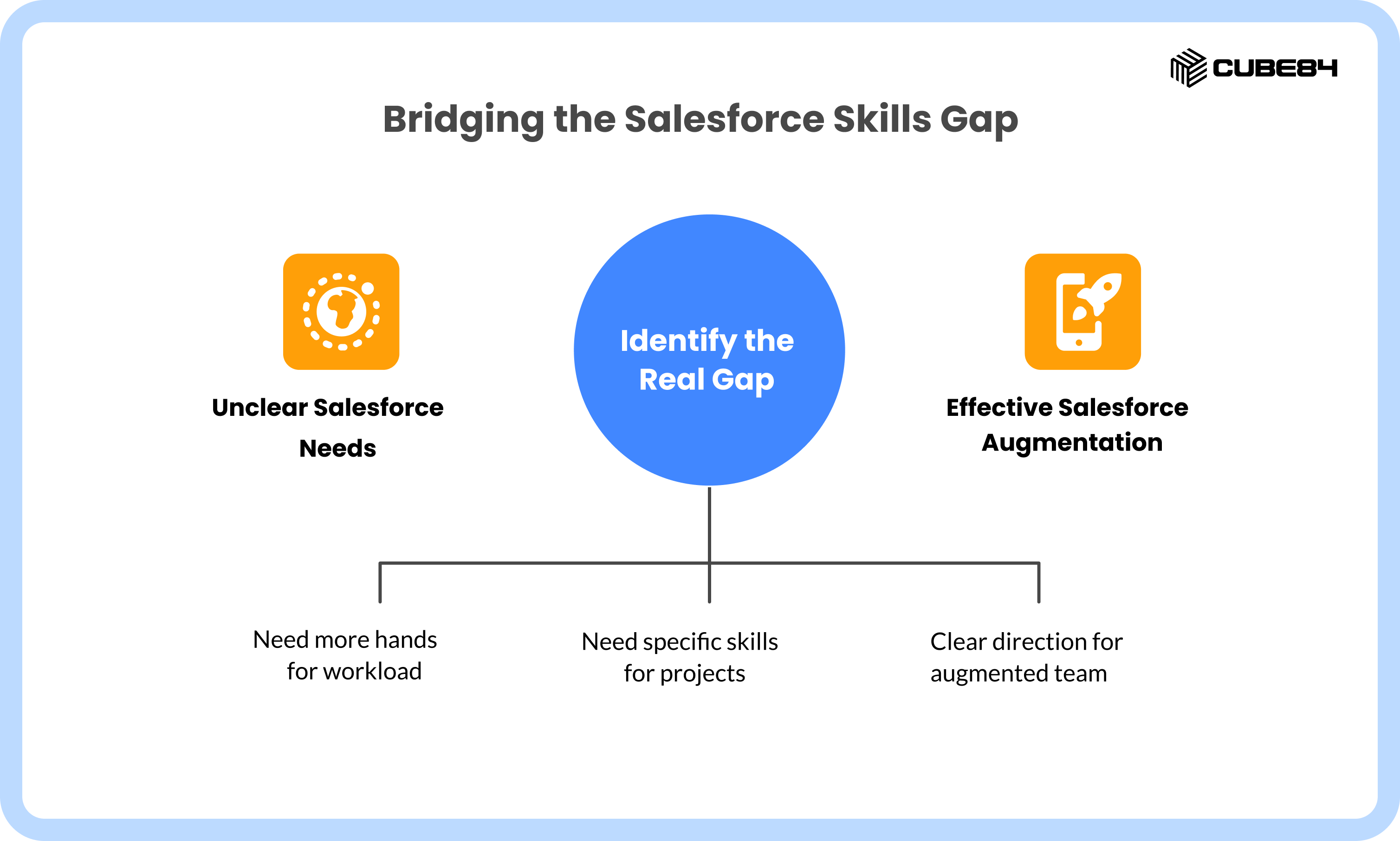
Before deciding whether Salesforce staff augmentation is the right move, it helps to pause and understand what kind of gap you are actually dealing with, because not every problem is solved by adding more people.
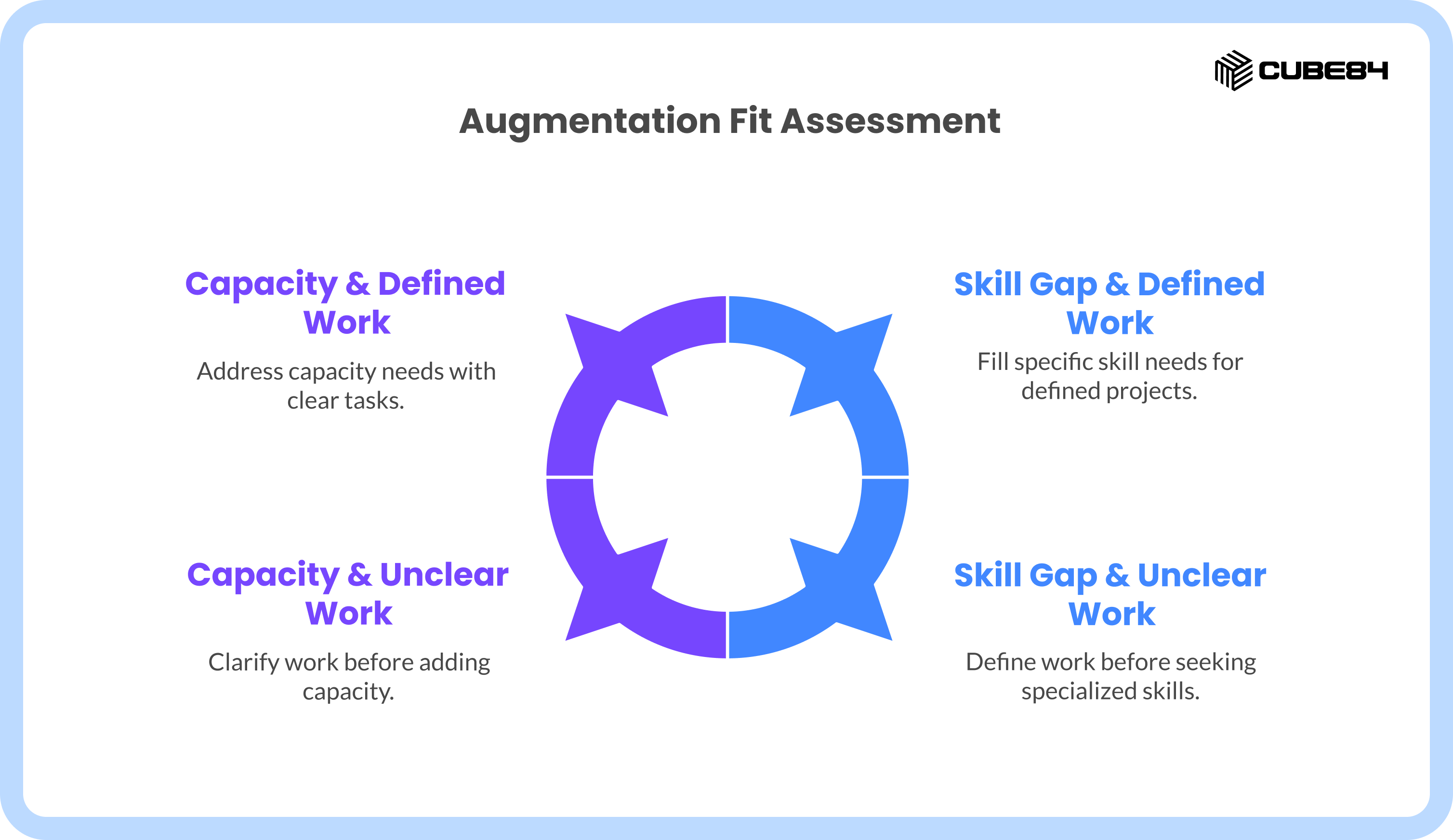
In some cases, the issue is a capacity gap, which means your team already knows what needs to be done, the roadmap is fairly clear, and the only thing missing is enough hands to get through the work at a reasonable pace. This often shows up as a growing backlog, delayed releases, or one admin trying to support multiple teams at the same time.
In other cases, the issue is a capability gap, where the team is comfortable handling day-to-day work but does not have the specific skills needed for what is coming next, whether that is a CPQ implementation, a Data Cloud setup, a Marketing Cloud journey, or a more complex integration that requires deeper technical experience.
Salesforce staff augmentation services tend to work best when you are dealing with one of these two gaps: either you need more capacity, or you need a specific skill for a defined period of time.
Where things get tricky is when the real issue is neither of these, but instead a lack of direction or ownership, where no one is clearly deciding what should be built, what matters most, or how success is measured, because in that kind of situation, adding more people usually creates more movement but not more progress.
One simple way to think about this is what we call the Staff Aug Fit Line, where on one side you have clear ownership and well-defined work, which makes Salesforce staff augmentation a strong fit, and on the other side you have unclear goals and scattered priorities, where even the best augmented team will struggle to make a real impact.
When Salesforce Staff Augmentation Services Actually Work Well
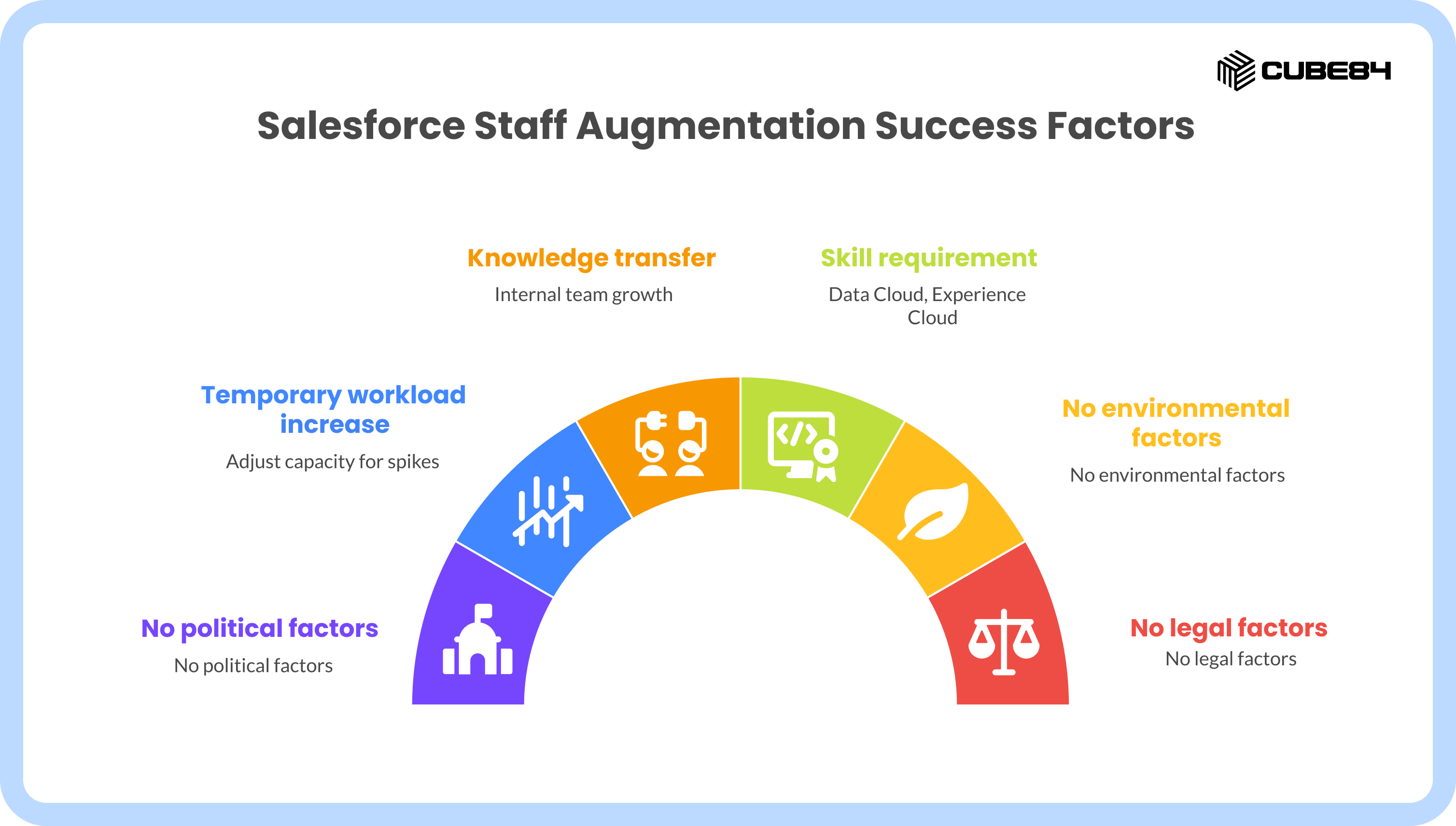
There are a few situations where Salesforce staff augmentation services tend to fit naturally into how a team is already working, and in these cases, the added support usually makes a visible difference fairly quickly.
When You Have a Clear Plan but Not Enough Time to Deliver It
This is one of the most common and most successful use cases, where a team already has a strong internal lead, whether that is a product owner, an architect, or an experienced admin, and there is a clear backlog of work that needs to be delivered.
The structure is already in place, with regular planning, standups, and defined priorities, so the challenge is not figuring out what to do next, but finding the time and capacity to actually get through it.
In this situation, Salesforce staff augmentation services work well because additional developers or admins can step into an existing system and start contributing without needing to define direction themselves, which helps increase delivery speed without adding confusion.
When You Need a Specific Skill for a Defined Period
Sometimes the need is not ongoing, but tied to a specific initiative that requires skills your team does not currently have, such as working with Data Cloud, Experience Cloud, Marketing Cloud, or handling a more complex Salesforce integration.
Instead of hiring full-time for something that may only be needed for a few months, Salesforce staff augmentation allows you to bring in that expertise for a defined period, while still keeping the work closely connected to your internal team.
When this is done well, the external resource not only completes the work but also helps transfer knowledge back to your team, so you are in a better position once the engagement ends.
When You Want Your Internal Team to Grow While Work Continues
There are many teams that have capable junior or mid-level Salesforce resources, but do not want to rely entirely on external consultants for more advanced work.
In these cases, bringing in a more experienced augmented resource can create a balance where work continues to move forward while internal team members learn through real project experience.
This kind of setup often works best when there is intentional collaboration, where the external resource works closely with the internal team, shares context, and helps establish better patterns that stay even after they step away.
When You Have a Temporary Spike or Need Broader Coverage
There are also situations where the workload increases for a known period of time, such as a major release, a seasonal surge, or a business change that requires additional support.
Instead of committing to permanent hires, Salesforce staff augmentation services allow you to adjust capacity for that period and then scale back once things settle.
This is also useful when teams need coverage across time zones or regions, where having additional support helps maintain continuity without overloading a single team.
In all of these situations, the common thread is that the direction is already clear, the team knows what needs to be done, and Salesforce staff augmentation is simply helping them move faster or fill a specific gap.
When Salesforce Staff Augmentation Services Usually Don’t Work
There are also situations where Salesforce staff augmentation services are brought in with the hope that they will fix deeper issues, and this is where things tend to fall apart.
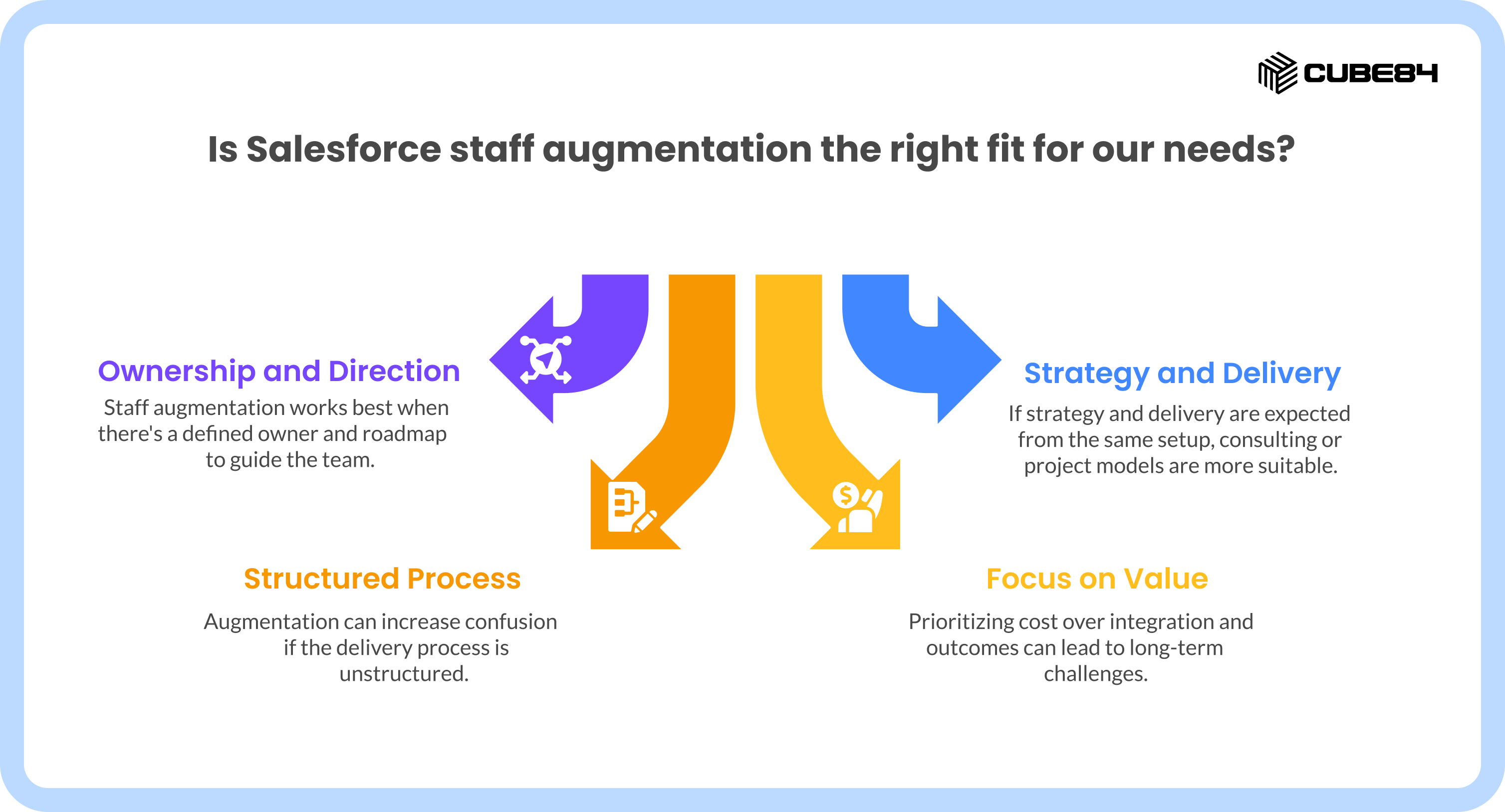
When There Is No Clear Ownership or Direction
If there is no clear owner for Salesforce, no one is setting priorities, and no shared understanding of what should be built, then adding more people usually leads to scattered work rather than meaningful progress.
In this kind of setup, external resources may complete individual tasks, but without a clear direction, it becomes difficult to connect those tasks to larger outcomes.
Before bringing in Salesforce staff augmentation, it is usually more helpful to establish ownership and define a roadmap so that any additional support has something solid to plug into.
When You Expect Strategy and Delivery from the Same Setup
Sometimes teams expect augmented resources to both define what needs to be built and also execute it, which is more aligned with a consulting or project model rather than staff augmentation.
This mismatch in expectations often leads to frustration on both sides, because the vendor is operating as a support layer while the client is expecting full ownership.
If the need is to define direction and then deliver on it, it usually makes more sense to start with a defined project or consulting engagement before bringing in Salesforce staff augmentation services.
When Your Delivery Process Is Still Unstructured
If there are no clear environments, no consistent way of managing changes, and work is handled in an ad hoc manner, adding more people to that setup can increase confusion rather than reduce it.
Without a basic structure, it becomes harder to maintain quality, track changes, and ensure that work is moving in the right direction.
In these cases, putting some simple processes in place first can make a big difference before expanding the team.
When Decisions Are Driven Only by Cost
Choosing Salesforce staff augmentation services based only on hourly rates or the lowest cost option often leads to short-term savings but long-term challenges.
When resources are spread too thin, rotated frequently, or not given enough context, the work delivered may not align with what the business actually needs.
A more effective approach is to focus on how well the augmented team integrates with your setup and contributes to meaningful outcomes, rather than just how much they cost on paper.
A Simple Way to Decide If Staff Augmentation Is the Right Fit
If you are trying to decide whether Salesforce staff augmentation services make sense for a specific initiative, it helps to step back and ask a few simple questions.
Do you have a clear internal owner who understands your Salesforce setup and can guide priorities, because that creates a strong foundation for any external support to work effectively?
Is your main challenge related to capacity or a specific skill gap, since those are the situations where Salesforce staff augmentation tends to work best?
Is the work reasonably defined, with a backlog or clear outcomes, or are you still figuring out what needs to be done, because unclear work usually benefits from a different approach first?
Do you have basic processes in place, such as environments, review steps, and a way to manage changes, so that additional people can contribute without creating confusion?
Do you know what success should look like within the next one to three months, so that you can tell whether the engagement is actually helping?
If most of these answers are yes, then Salesforce staff augmentation is likely to be a good fit, and if not, it may be worth addressing those gaps before bringing in additional support.
How We Typically Approach Salesforce Staff Augmentation
In our experience, Salesforce staff augmentation works best when it is used with a clear purpose rather than as a default solution.
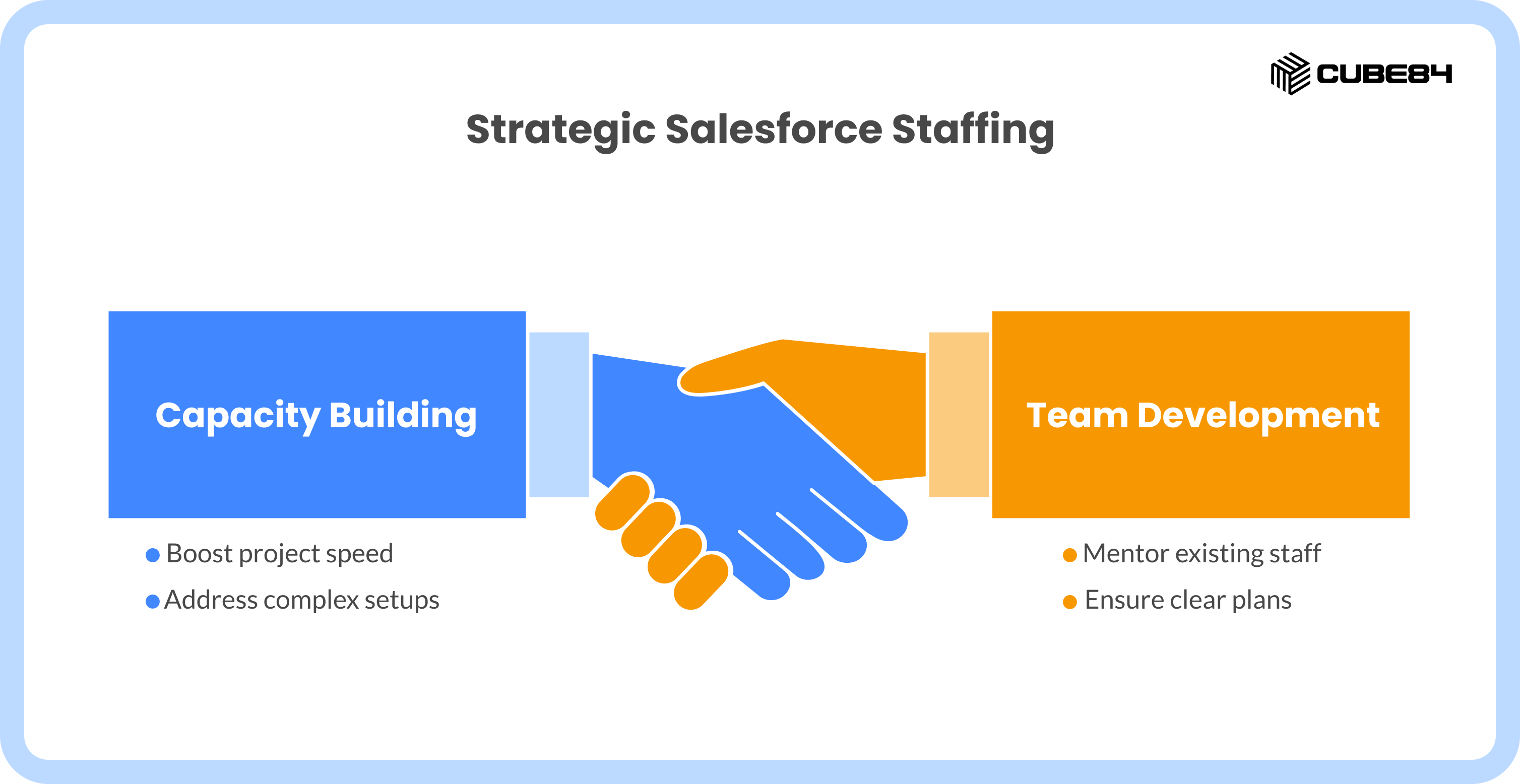
Sometimes it is used to add capacity to a team that already has strong internal ownership and a clear roadmap, where additional resources can step in and help deliver work faster.
In other cases, it is used to bring in specific skills for a defined period, especially when teams are working with newer Salesforce products or more complex setups.
There are also situations where it is used as a way to support internal team growth, where more experienced resources work alongside existing team members and help them build confidence over time.
At the same time, there are cases where we recommend holding off on Salesforce staff augmentation until certain basics are in place, such as clearer ownership, better structure, or a more defined plan, because that usually leads to better outcomes once the additional support is introduced.
Conclusion
Salesforce staff augmentation services can be incredibly useful when they are used in the right context, especially when your team already has direction and simply needs more capacity or a specific skill to move things forward.
At the same time, they are not a solution for every situation, and using them without clear ownership, structure, or defined goals can lead to more effort without much progress.
If you came across this while trying to decide whether Salesforce staff augmentation is the right move for your team, it can help to take a step back and look at what your current setup actually needs.
And if you would like a second perspective on your situation or want to talk through what might make the most sense for your next step, feel free to reach out to us. We are always happy to help you think it through.