



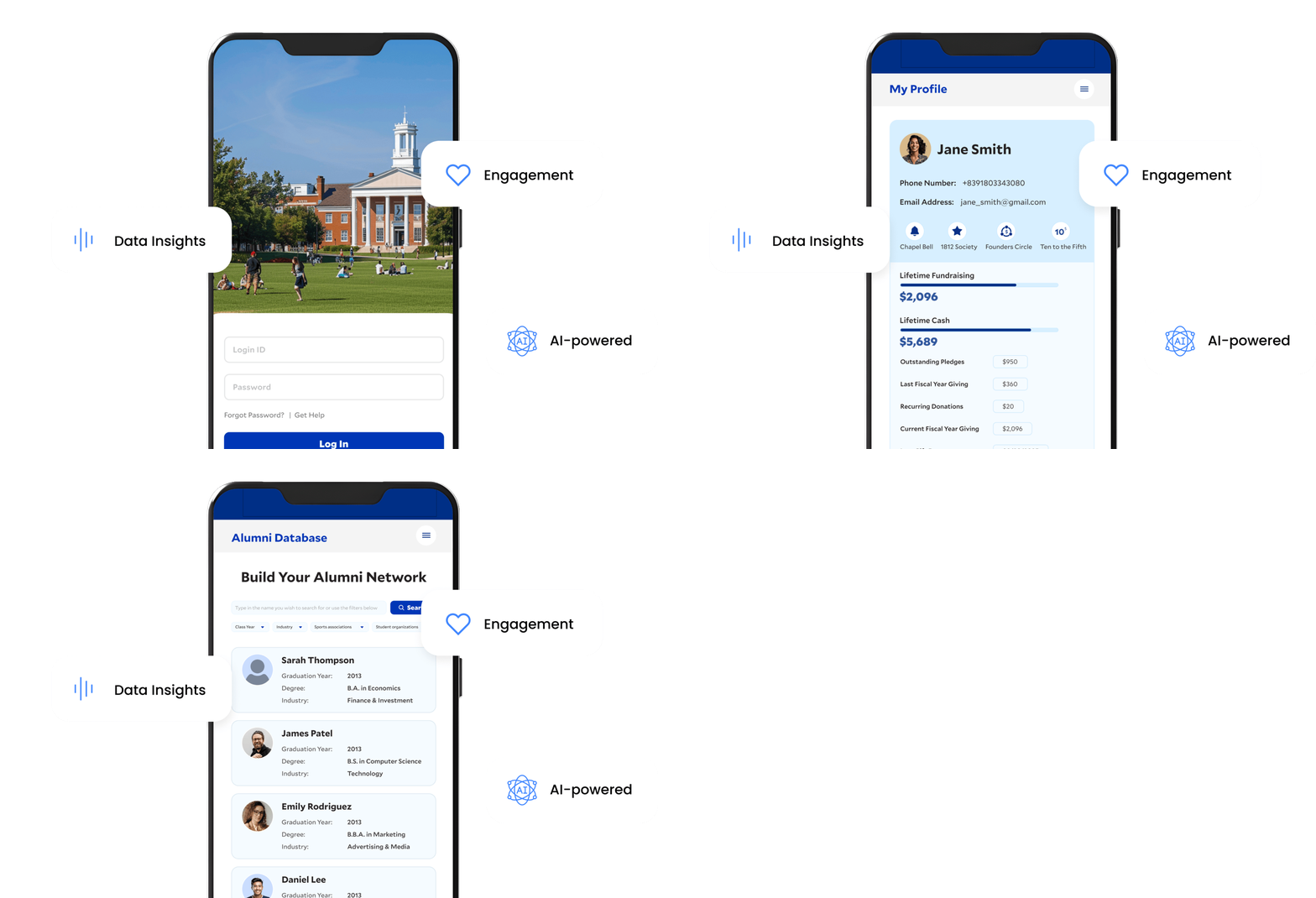
A live AI-powered alumni portal with a college, a forward-looking proof point for what AI can mean for advancement when the data underneath it is right.

Enrollment decline. Advisor capacity. Data unification. AI expectations. Alumni engagement. Every one of these moves across the institution.
We've spent years inside these environments, working with student affairs, advancement, and central IT. We know the vocabulary, the politics, and the pace.
We connect the systems you already run, give staff the visibility they need to act, and build the portals and apps your constituents actually use. Real progress, without the weight of programs that don't fit the moment.

We didn't need another system. We needed the systems we already have to actually work together, and someone who understands why that's hard in a university.

Between the 2025 peak and 2041. The enrollment cliff is no longer a forecast, it is arriving.
The long-term pipeline problem, not just aone-year story. Fewer annual givers today means fewer major donors a decade from now.
Six-year completion has held at recent levels across four consecutive cohorts. Completion shapes rankings, accreditation, and state funding.

"How do advisors see a complete picture of a student before it's too late to act?"
Students don't show academic trouble first. They stop coming to club meetings. They skip the events they used to attend. Their LMS logins drop. By the time their grades slip, the warning signs have been there for months. We build the portals, mobile apps, and advising workflows that make those earlier signals visible, plus AI that surfaces who to reach out to, so your staff can act when an intervention still matters.

"How do we deepen the alumni relationship beyond giving?"
Alumni show up in more ways than one. They come back for events. They volunteer. They join affinity groups. They mentor students. They stay connected through digital communities long before they ever give. We build the alumni portals, community experiences, unified engagement and giving views, and AI-powered personalization that make all of that visible, so your engagement teams and gift officers see the full relationship, not just the giving history.

"How do we get more from the advancement platform we run, and give donors a giving experience worth coming back to?"
Advancement teams have the platform. What's missing is two things. The platform working as hard as it should for the gift officers who depend on it. And the public-facing giving experience donors actually want to use. We optimize your advancement platform, build donor 360 views your team will use daily, and design the public giving pages and portals that turn intent into action. Our work pairs deep platform optimization with the design strength that makes giving easy.

"What does our institution's full relationship with our top corporate partners actually look like?"
Corporations show up in more places than one. They hire your students. They sponsor research. They partner with academic units. They give philanthropically. They sit on advisory boards. And the president's office holds the top-tier relationships that depend on all of it. But no one can show leadership the whole picture. We build the Corporate Engagement layer that brings every part of a corporate relationship into one place, with cross-unit reporting the president can use and the data unification that turns fragmented partnerships into coordinated ones.
One view of every person connected to your institution.
Most institutions already have rich constituent data. The challenge is that it lives in places that don't talk to each other. Enrollment sees one slice. The registrar and academic units see another. Student Success, Career Services, Advancement, and Alumni Relations each hold their own.
The work is bringing those views together, so any unit can draw from the full picture, and so the institution is ready for what AI can do once the data underneath is right.

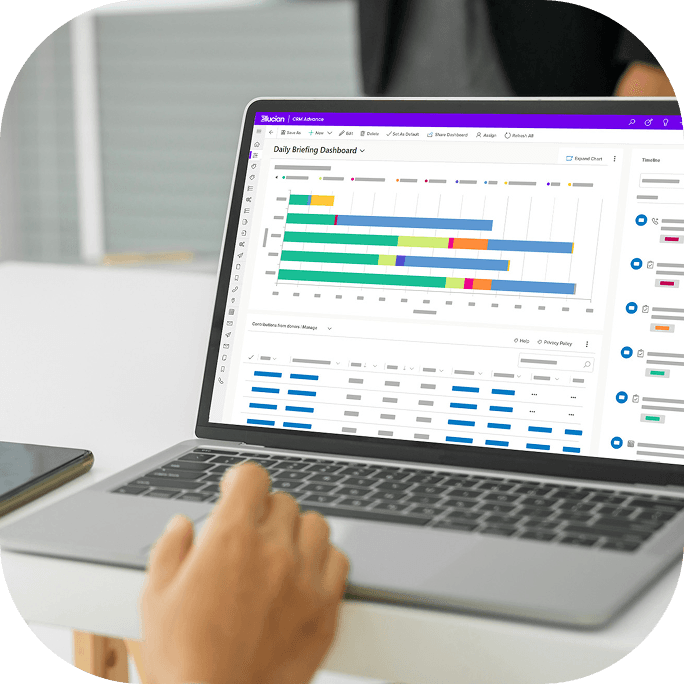
Banner, Colleague, Workday Student, Slate, Ascend, Hivebrite, Canvas, Ellucian. We work with these environments. We know what integration really costs, and how to minimize it.

Most Salesforce implementations in higher ed are technically correct and practically unused. We treat design as core, not polish. Portals, apps, and workflows built around how higher ed teams actually work.

10 years in higher ed. 20+ engagements delivered. 5 anchor institutions. 40+ Salesforce certified consultants across Education Cloud, Experience Cloud, Data Cloud, Service Cloud, Marketing Cloud, and Agentforce, building on what we’ve learned about how higher ed actually moves.
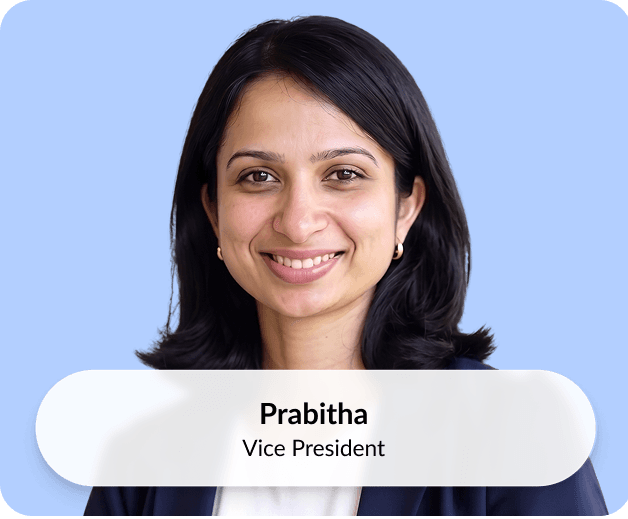
"Higher ed doesn't need another vendor pitching transformation. It needs a partner who understands the pace, the people, and the pressure."
Prabitha leads CUBE84's higher education practice and is responsible for how the firm delivers its work. She stays close to every engagement, focused on the kind of consistency, communication, and follow-through institutions actually need from a partner.
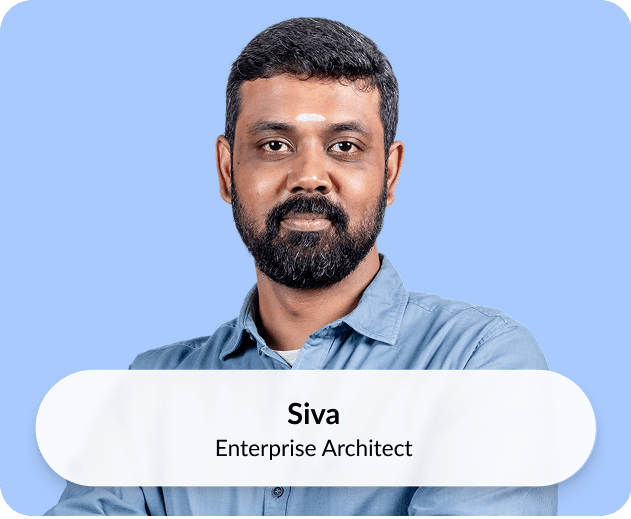
Technology should seamlessly integrate behind the scenes to let educators focus on what truly matters: the student journey.
Siddharth oversees technical architecture and data integration strategies, ensuring that complex multi-cloud ecosystems talk to each other seamlessly while maintaining institutional data security.
Yes, Salesforce is one of the strongest platforms for student engagement when implemented well.
These can come together as an integrated platform, or each can stand on its own. Many institutions start with one and add others as priorities evolve. We help you sequence what makes sense for where you are, not push the full stack on day one.
Salesforce acts as the operational layer that connects data, workflows, and visibility across teams.
Many nonprofits are already moving in this direction. According to the Salesforce 2025 Nonprofit Trends Report, over half of nonprofits are piloting or using AI in day-to-day work — including reporting and operations, not just content.
Our work aligns with how the sector is evolving.
Many of our best conversations start with "we're not even sure what we need yet." That's fine. Tell us what's not working and we'll go from there.